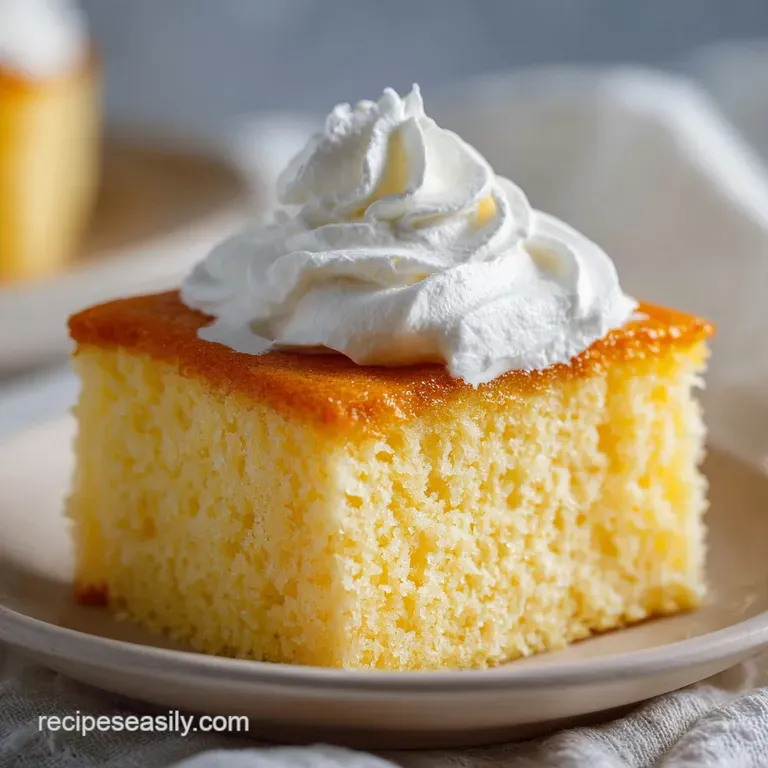
Authentic Tres Leches Cake
- Time: Active 25 minutes, Passive 4 hours 30 mins, Total 4 hours 55 mins
- Flavor/Texture Hook: Cool, creamy, and decadently saturated with a silky whipped topping.
- Perfect for: Summer potlucks, celebratory birthdays, or a weekend project that tastes like a professional bakery.
- The Best Tres Leches Cake Recipe: A Saturated Masterpiece
- Why This Saturated Sponge Actually Holds Its Shape
- A Component Analysis of the Ingredients
- The Essential Toolkit for a Successful Soak
- Selecting the Right Elements for Your Cake
- Bringing the Sponge to Life Step by Step
- Common Mistakes and Reliable Fixes
- Adjusting the Recipe for Different Needs
- Debunking Popular Kitchen Wisdom
- Preservation and Reducing Kitchen Waste
- Creative Ways to Serve Your Cake
- Recipe FAQs
- 📝 Recipe Card
The Best Tres Leches Cake Recipe: A Saturated Masterpiece
There is a specific sound when a fork slides through a chilled slice of Tres Leches Cake. It is a soft, wet "squish" that promises a texture somewhere between a custard and a cloud. I remember sitting in a tiny, sun drenched cafe in San Antonio, watching the baker pour a thick, pale stream of milk over a warm cake.
I thought for sure she was ruining it. I expected a soggy, falling apart mess. Instead, what arrived at my table was a structured, cool, and impossibly moist dessert that changed my entire perspective on what a cake could be.
That experience set me on a path to figure out how to keep the cake from collapsing under the weight of all that liquid. Most people assume any old sponge will do, but that is where the trouble starts.
You need a cake that is basically a structural sponge, built with enough air to hold the moisture but enough protein to keep from disintegrating. This recipe is the result of many afternoons spent poking holes in cakes and measuring exactly how much liquid is too much.
We are going for a crumb that is open and welcoming to the milk mixture. If you have ever had a Tres Leches Cake that felt dry in the middle or, conversely, like a bowl of porridge, you know the struggle. We want that perfect middle ground where every bite is saturated but the cake still stands tall on the plate.
It's a bit of magic, honestly, and it all starts with how we handle the eggs.
Why This Saturated Sponge Actually Holds Its Shape
The Physics of Foam: By beating the egg yolks and whites separately, we create a stable network of air bubbles that provide the structural "pores" needed to soak up the milk without collapsing the crumb.
Osmotic Balance: The high sugar content in the sweetened condensed milk doesn't just add sweetness, it increases the viscosity of the soak, allowing it to cling to the cake fibers rather than just pooling at the bottom.
Protein Reinforcement: Using five large eggs provides a significant amount of protein that sets firmly during baking, creating a sturdy "skeleton" that can support the weight of the three milk mixture.
Evaporated Concentration: Using evaporated milk instead of just regular whole milk provides more milk solids and less water, which leads to a richer mouthfeel and prevents the cake from feeling "watered down."
| Soaking Time | Texture Result | Best For | Visual Cue |
|---|---|---|---|
| 2 hours | Lightly moistened | Quick serving | Small dry spots in the very center |
| 4 hours | Fully saturated | Standard parties | No dry crumbs, cake is heavy |
| 12 hours | Custard like | Ultimate indulgence | Milk pools slightly when pressed with a fork |
Choosing the right soaking time is the biggest decision you will make. If you are in a rush, four hours is the minimum to ensure the milk has traveled all the way to the center. However, if you let it sit overnight, the flavors meld in a way that is truly special.
The cake becomes almost like a cold bread pudding but stays much lighter.
A Component Analysis of the Ingredients
| Component | Science Role | Pro Secret |
|---|---|---|
| Large Eggs (5) | Emulsification & Lift | Use room temperature eggs to achieve maximum volume when beating the whites. |
| All Purpose Flour | Structural Base | Sift the flour with the baking powder to ensure there are no clumps in the delicate foam. |
| Sweetened Condensed Milk | Sweetness & Viscosity | This acts as the "glue" for the soak, preventing the liquid from being too runny. |
Before we get into the heavy lifting, it is worth noting that the quality of your vanilla really matters here. Since there is no butter in the sponge, the flavor relies heavily on the eggs and the vanilla. If you want to try a different flavor profile, you might enjoy the warm notes of my Southern pound cake as a comparison for how different fats affect crumb structure.
The Essential Toolkit for a Successful Soak
You don't need a kitchen full of fancy gadgets to make an authentic Tres Leches Cake, but a few specific items will make your life much easier. First and foremost, a 9x13 inch baking pan is the standard here. I prefer glass or ceramic because they look great on the table and don't react with the milk mixture.
A hand mixer or a stand mixer is almost non negotiable. You’ll be beating egg yolks until they are pale and thick, and then beating egg whites to stiff peaks. Doing this by hand is a workout that most of us don't want on a Saturday afternoon.
You also need a very clean bowl for the egg whites; even a tiny speck of fat or yolk will prevent them from fluffing up properly.
Finally, grab a sturdy fork or a wooden skewer. You are going to be poking hundreds of holes in this cake. A toothpick is often too thin and won't allow the thick condensed milk to penetrate deep into the sponge. A fork creates those wide channels that ensure no dry spots are left behind.
Selecting the Right Elements for Your Cake
- 1.5 cups all purpose flour: Why this? Provides the necessary gluten structure to hold up under the heavy milk soak.
- Substitute: Cake flour for an even softer, more delicate texture.
- 1.5 tsp baking powder: Why this? Ensures the sponge rises evenly and stays airy during the bake.
- Substitute: 0.5 tsp baking soda plus 1 tsp cream of tartar.
- 0.5 tsp salt: Why this? Sharpens the sweetness of the condensed milk and balances the dairy.
- Substitute: Sea salt or kosher salt (use slightly more if using coarse grains).
- 5 large eggs, separated: Why this? Separating them allows for maximum aeration and a sponge like consistency.
- Substitute: 1 cup of liquid egg substitute (though volume will be significantly lower).
- 1 cup granulated sugar, divided: Why this? Stabilizes the egg foams and sweetens the base cake.
- Substitute: Caster sugar for faster dissolving in the egg whites.
- 0.33 cup whole milk: Why this? Adds a touch of moisture to the initial yolk and flour batter.
- Substitute: 2% milk or almond milk (will slightly alter richness).
- 1.5 tsp vanilla extract: Why this? Provides the primary aromatic profile for the entire dessert.
- Substitute: Vanilla bean paste for those beautiful black flecks.
- 12 oz evaporated milk: Why this? Concentrated milk flavor without the excess water of regular milk.
- Substitute: Half and half (though the flavor will be less "toasted").
- 14 oz sweetened condensed milk: Why this? Thickens the soak and provides the majority of the sweetness.
- Substitute: Dulce de leche for a caramel flavored twist.
- 0.25 cup heavy cream: Why this? Rounds out the three milks with fat for a luxurious mouthfeel.
- Substitute: Coconut milk for a subtle tropical undertone.
- 1.5 cups heavy whipping cream, cold: Why this? The base for the stabilized whipped topping.
- Substitute: Whipped topping (Cool Whip) if you are in a time crunch.
- 3 tbsp powdered sugar: Why this? Sweetens and stabilizes the whipped cream topping.
- Substitute: Granulated sugar (whisk longer to ensure it dissolves).
- 1 tsp ground cinnamon: Why this? The traditional finishing touch that cuts through the richness.
- Substitute: Freshly grated nutmeg or cocoa powder.
- 1 cup fresh strawberries, sliced: Why this? Adds acidity and freshness to the heavy dairy components.
- Substitute: Maraschino cherries or fresh raspberries.
Bringing the Sponge to Life step-by-step
- Preheat and Prep: Set your oven to 350°F (175°C) and grease a 9x13 inch baking pan thoroughly. Note: Greasing ensures the edges don't stick, allowing the cake to pull away slightly for better soaking later.
- Whisk the Yolks: In a large bowl, beat the 5 egg yolks with 3/4 cup granulated sugar using a mixer. Keep going until they are pale yellow and form a ribbon when you lift the beaters.
- Hydrate the Base: Stir in the 0.33 cup whole milk and 1.5 tsp vanilla extract into the yolk mixture. Note: This thins the batter so the flour can be incorporated without overworking the gluten.
- Incorporate Dry Goods: Sift together the 1.5 cups flour, 1.5 tsp baking powder, and 0.5 tsp salt. Gradually fold these into the yolks with a spatula. Mix until just combined with no flour streaks.
- Whip the Whites: In a separate, perfectly clean bowl, beat the 5 egg whites until soft peaks form. Gradually add the remaining 1/4 cup sugar and beat until the peaks are stiff and glossy.
- The Gentle Fold: Incorporate the egg whites into the batter in three separate batches. Use a "cut and fold" motion with your spatula. Stop as soon as the batter is uniform to keep it airy.
- The Bake: Pour the batter into the pan and bake for 30 minutes. Check with a toothpick; it should come out clean and the top should be golden.
- The Cool Down: Place the pan on a wire rack and let the cake cool completely. Note: A hot cake will turn the milk soak into a gummy paste; patience is key here.
- The Piercing Ritual: Use a fork or skewer to pierce the entire surface of the cooled cake. Whisk the evaporated milk, condensed milk, and 0.25 cup heavy cream together, then pour slowly over the cake. Watch the milk disappear into the holes.
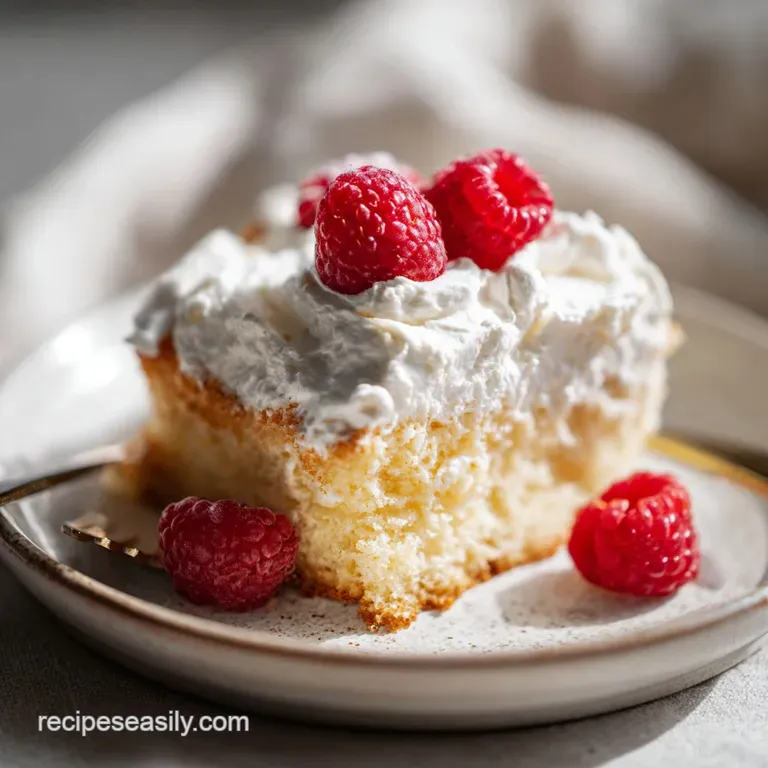
- The Chill and Top: Cover and refrigerate for at least 4 hours. Before serving, beat the 1.5 cups cold whipping cream and powdered sugar until stiff, velvety peaks form. Spread over the cake, dust with cinnamon, and top with strawberries.
Common Mistakes and Reliable Fixes
One of the most frequent issues people run into is a "rubbery" cake. This almost always happens during step 4 or 6. If you use the mixer for the flour or the egg whites, you'll knock all the air out. The air bubbles are the "straws" that drink up the milk.
Without them, the milk has nowhere to go, and it just sits on top.
Another heartbreak is the "leaky bottom," where all the milk drains out and sits in a pool at the bottom of the pan while the top of the cake stays dry. This usually happens if the holes weren't poked deep enough or if the cake was too cold and the milk was too cold.
Pouring the milk slowly in two stages often helps it absorb more evenly.
Why Your Sponge is Too Dense
If your cake feels like a brick rather than a sponge, you likely deflated the egg whites. When folding, don't stir in circles. Instead, cut through the middle with your spatula, scrape the bottom, and fold the batter over the whites. It should feel like you are handling a soufflé.
Fixing a Texture That Feels Rubberous
A rubbery texture is a sign of over developed gluten. All purpose flour is great for structure, but if you mix it too hard, it gets tough. Always fold the flour in by hand. If the cake is already baked and feels tough, give it a longer soak (up to 12 hours) to help soften the fibers.
| Problem | Root Cause | Solution |
|---|---|---|
| Milk pooling on top | Pores are closed or holes too small | Use a larger fork and poke more frequent holes into the base. |
| Cake is falling apart | Over soaked or weak crumb | Reduce heavy cream in the soak; ensure egg whites were beaten to stiff peaks. |
| Whipped cream is runny | Cream was too warm | Chill bowl and beaters for 15 mins before whipping the cream. |
Essential Quality Checklist
- ✓ Ensure the bowl for egg whites is completely free of grease or yolk.
- ✓ Sift the dry ingredients to prevent clumps that require over mixing.
- ✓ Let the cake cool to room temperature before adding the milk mixture.
- ✓ Pour the milk mixture slowly, allowing it to soak in before adding more.
- ✓ Refrigerate for at least 4 hours; the flavors need time to marry.
Adjusting the Recipe for Different Needs
If you are cooking for a large crowd, doubling this recipe is relatively straightforward. You can use two 9x13 pans or one very large catering pan. If you double it, I recommend only increasing the spices and salt by 1.5x rather than a full 2x to keep the flavors from becoming overwhelming.
For the milk soak, you can stick to the 2x ratio, but be mindful that a deeper cake might need an extra hour of chilling to fully saturate.
Scaling down is a bit trickier because of the 5 egg count. If you want to make a half batch in an 8x8 inch pan, use 3 small eggs or 2 very large ones and beat half of a third egg to get the right volume. Reduce the baking time by about 20% and start checking for doneness at the 20 minute mark.
For those who enjoy miniature desserts, you can actually bake this batter in a muffin tin to make Tres Leches cupcakes. You will only need to bake them for about 15-18 minutes. Once they are cool, poke a few holes in each and spoon the milk mixture over them while they are still in the liners. They are much easier to serve at parties! If you like the idea of bite sized treats, you might find my pink velvet cheesecake tips helpful for managing small scale dessert logistics.
| Fresh Component | Shortcut Alternative | Texture/Flavor Trade off |
|---|---|---|
| Homemade Whipped Cream | Frozen Whipped Topping | Shortcut is more stable but lacks the rich, buttery dairy flavor. |
| Fresh Sliced Strawberries | Strawberry Jam Swirl | Shortcut is sweeter and easier to store but lacks the fresh acidity. |
| Hand Separated Eggs | Liquid Egg Whites | Shortcut saves time but often results in a less stable foam. |
Debunking Popular Kitchen Wisdom
Some people claim that you should use stale cake for Tres Leches, similar to how you use stale bread for French toast. In my experience, this actually makes the cake more likely to fall apart. A fresh, springy sponge has better "memory" and will hold its shape even when saturated with liquid.
Stale cake tends to crumble into a paste once the milk hits it.
Another common belief is that you must use a specific brand of milk for it to be authentic. While certain brands are traditional in Mexico, the chemistry is what matters. As long as you have the right ratio of evaporated to condensed milk, you will get that signature flavor.
Don't feel like you have to hunt down specific imported cans if your local grocery store has a reliable house brand.
Preservation and Reducing Kitchen Waste
Storage: This cake is one of the few desserts that actually tastes better on day two. Keep it covered in the refrigerator for up to 4 days. The topping may lose some of its fluffiness after 48 hours, but the cake itself remains excellent.
Freezing: You can freeze the baked sponge (before soaking) for up to 3 months. Wrap it tightly in plastic wrap and then foil. When you're ready to eat, thaw it at room temperature, poke your holes, and proceed with the milk soak.
I do not recommend freezing the cake once it has been soaked, as the milk can separate and create a grainy texture upon thawing.
Zero Waste: If you find yourself with extra milk mixture, don't throw it away! It is essentially a delicious creamer. You can stir it into your morning coffee or use it as a base for a decadent bread pudding.
If you have leftover cake scraps from leveling the top, toast them in the oven and use them as a "Tres Leches Crumble" over vanilla ice cream.
Creative Ways to Serve Your Cake
While strawberries and cinnamon are the classic garnishes, don't be afraid to get a little adventurous. A drizzle of salted caramel or a sprinkle of toasted coconut can completely change the vibe.
If you want to lean into the Mexican heritage of the dish, a tiny pinch of cayenne pepper in the whipped cream can provide a surprising and delightful warmth.
For a summer variation, try using mango and lime zest instead of strawberries. The bright, tropical notes cut through the heavy cream beautifully. If you're serving this for a formal event, you can pipe the whipped cream in decorative swirls rather than spreading it flat.
It gives the cake an "elegant patisserie" look that belies how simple it actually was to put together.
I often serve this alongside a strong, dark roast coffee. The bitterness of the coffee is the perfect foil for the intense sweetness of the condensed milk. It turns a simple dessert into a full sensory experience. No matter how you serve it, just make sure it stays cold until the very moment it hits the table.
That temperature contrast between the cool cake and the warm room is part of what makes it so refreshing.

Recipe FAQs
Is tres leches cake soggy?
No, it is intentionally moist. The cake is designed to be fully saturated with a three milk blend, creating a pudding like texture rather than a traditional dry crumb.
Is Tres Leches Cake Spanish or Mexican?
It is Latin American. While popular throughout Mexico and Central America, it is widely considered a staple dessert of Latin American culinary heritage rather than originating from Spain.
How long should Tres Leches cake soak in the fridge?
Refrigerate for at least 4 hours. Allowing it to sit overnight is ideal, as this gives the crumb enough time to fully absorb the liquid mixture without becoming mushy.
What is the liquid in tres leches?
The liquid is a mixture of evaporated milk, sweetened condensed milk, and heavy cream. These three distinct dairy products provide the specific density and sweetness required for the cake to soak up the moisture properly.
How to keep the cake from becoming rubbery?
Fold the egg whites by hand instead of using a mixer. Using an electric mixer during step 5 destroys the air bubbles needed to absorb the milk; if you enjoyed learning how to maintain this delicate structure, you can practice similar aeration techniques when making our Persian Love Cake.
How to ensure the cake doesn't have a dry top?
Pierce the cake thoroughly with a fork or skewer before pouring the milk. Ensure you reach all the way to the bottom of the pan so the three milk mixture distributes evenly through the entire sponge.
Is it true the cake will fall apart if I don't use enough eggs?
No, this is a common misconception. The recipe relies on exactly five large eggs, separated to provide the necessary structure and leavening; altering this ratio will disrupt the balance between the sponge's density and its ability to hold the liquid.
Authentic Tres Leches Cake
Ingredients:
Instructions:
Nutrition Facts:
| Calories | 429 kcal |
|---|---|
| Protein | 10.0 g |
| Fat | 19.6 g |
| Carbs | 52.9 g |
| Fiber | 0.4 g |
| Sugar | 42.1 g |
| Sodium | 165 mg |
