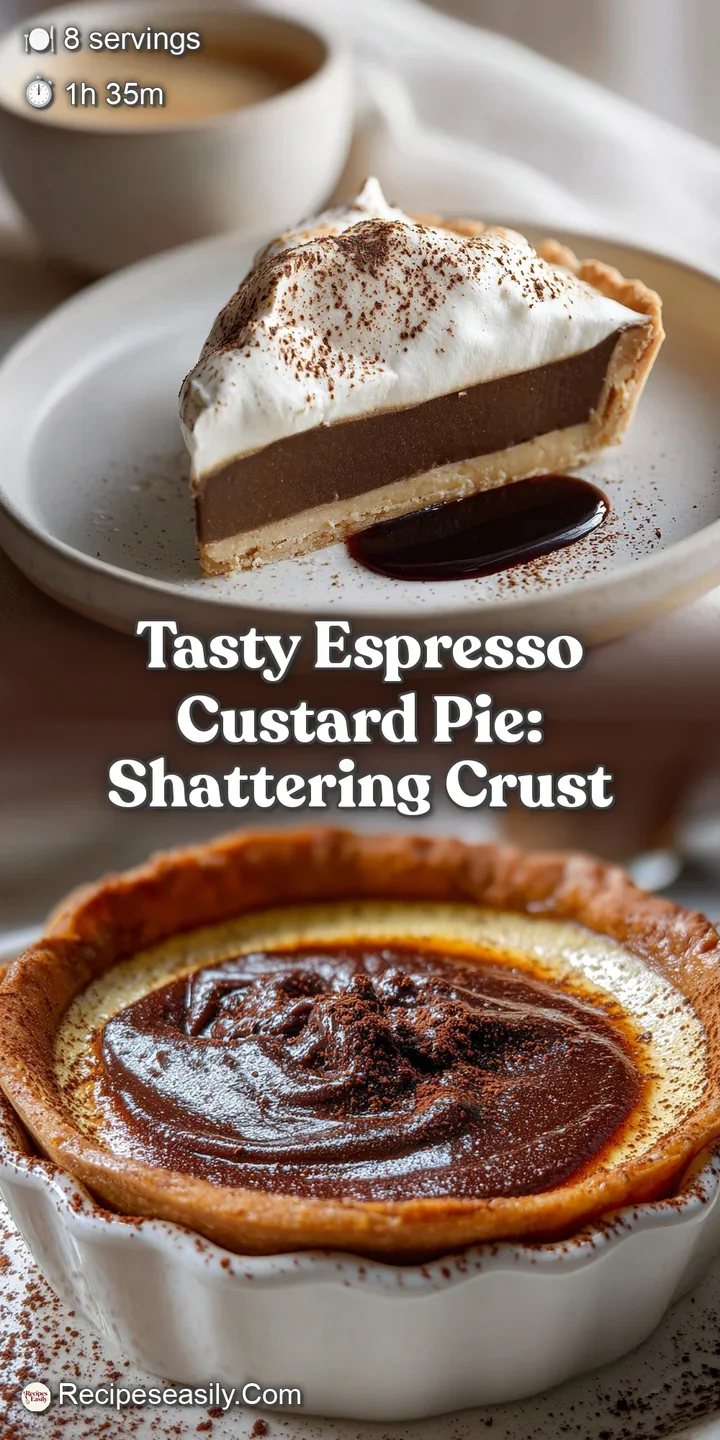
Tasty Espresso Custard Pie Recipe
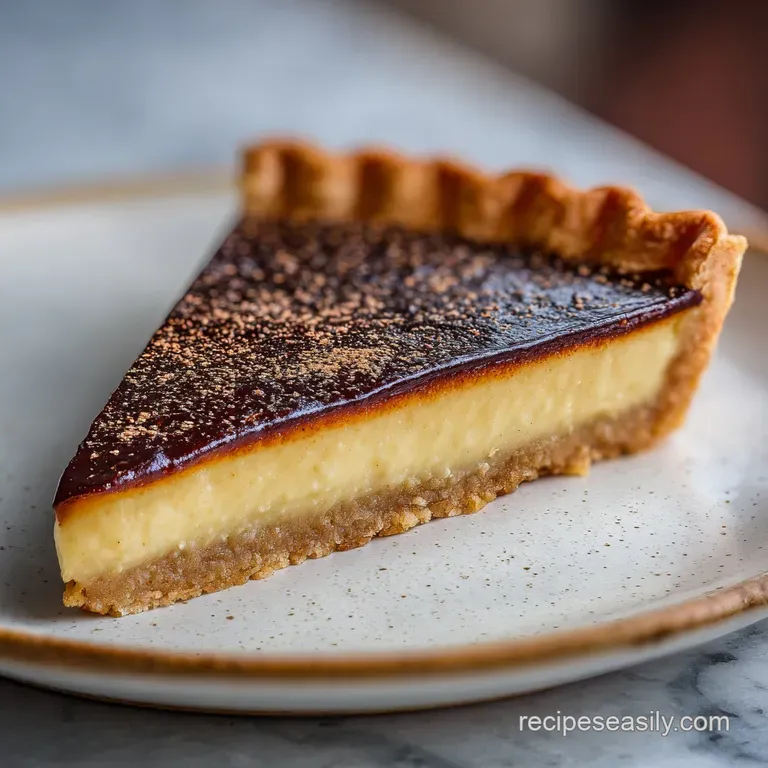
- Time: Active 30 minutes, Passive 50 minutes, Total 1 hours 20 mins
- Flavor/Texture Hook: Shattering All-Butter crust meets a velvety, aromatic coffee custard.
- Perfect for: Weekend brunch centerpieces or an impressive alternative to traditional holiday pies.
- The Secret to Success with Tasty Espresso Custard Pie
- The Molecular Dance of the Custard
- Essential Timing and Nutrition for This Custard Pie
- The Component Chemistry Behind Every Silky Slice
- Transforming Pantry Staples into an Elegant Dessert
- The Minimalist Toolkit for Bakeshop Results
- From Prep to Plate: Step-by-Step
- Correcting Common Pitfalls for a Flawless Finish
- Creative Adaptations for Different Flavors and Budgets
- Debunking Baked Custard Beliefs
- Keeping Your Leftovers Fresh and Flavorful
- Enhancing the Experience with Side Pairings
- Recipe FAQs
- 📝 Recipe Card
The Secret to Success with Tasty Espresso Custard Pie
The first time I attempted this dish, the aroma of roasting coffee beans hit the hot cream and filled my kitchen with a scent so thick you could almost chew it. I remember the rhythmic "clink" of my whisk against the glass bowl and the way the golden custard looked before it hit the oven. But my first bite?
A total disaster. I hadn't blind baked the crust long enough, and the bottom was a sad, pale puddle that couldn't support that rich filling.
I learned the hard way that a custard pie is only as good as the structural integrity of its base. We are looking for that specific sound the audible "crunch" when your fork breaks through the edge. It took three more tries to realize that the secret wasn't more heat, but more patience.
This recipe is the result of those messy afternoons, focused on getting that deep mocha flavor into a filling that stays firm but yields like soft butter.
We're going to treat the espresso with the respect it deserves, using a cold infusion technique that keeps the bitterness at bay. You don't need fancy equipment or expensive coffee pods to make this work; in fact, the budget friendly whole beans from the bulk bin often provide a cleaner flavor.
Trust me, once you see that wobble in the center of the finished pie, you’ll never go back to plain vanilla.
The Molecular Dance of the Custard
Mechanism: Egg proteins uncoil and link together during heating to form a mesh that traps liquid milk and cream. This creates a stable solid that feels liquid on the tongue, provided the internal temperature stays below the point of "weeping" or curdling.
Chef's Tip
Freeze your cubed butter for exactly 10 minutes before rubbing it into the flour. This ensures the fat doesn't melt prematurely, creating those tiny "pockets" that expand in the oven to create a shattering, flaky texture.
Essential Timing and Nutrition for This Custard Pie
Before we get our hands floury, let's look at how the cooking method impacts the final texture. Many people ask if they can skip the blind bake, but as we see below, the classic approach is the only way to avoid the dreaded "soggy bottom."
| Method | Time | Texture | Best For |
|---|---|---|---|
| Classic Blind Bake | 1 hours 20 mins | Shattering, crisp base | Formal dinners and clean slices |
| No Bake Prep | 45 minutes | Soft, cookie like base | Quick family snacks (uses graham crackers) |
| Par Bake Only | 1 hours | Slightly chewy edges | Rustic bakes where appearance matters less |
Choosing the right method depends on how much time you have, but for the most authentic experience, the classic blind bake is the gold standard. It ensures the crust is fully cooked before the wet custard even touches it.
The Component Chemistry Behind Every Silky Slice
Understanding why we use specific ingredients helps us make smarter choices at the grocery store. You don't always need the most expensive brand to get a professional result; you just need to understand the role each element plays in the chemistry of the bake.
For instance, using a mix of milk and cream provides enough fat for a velvety mouthfeel without being so heavy that it masks the coffee notes.
| Component | Science Role | Pro Secret |
|---|---|---|
| Cold Butter (113g) | Steam production | Cube it small so it distributes evenly without melting into the flour. |
| Large Eggs (3+2) | Protein structure | The extra yolks add lecithin, which creates a much smoother, richer emulsion. |
| Espresso Beans (3 tbsp) | Flavor infusion | Use whole beans to avoid "muddy" custard; the flavor steeps like tea. |
For the best results, stick to the whole milk and heavy cream ratio. If you're looking for a similar structural success in a different flavor profile, you might find my The Blueberry Pie Recipe helpful for mastering that flaky, fruit filled crust technique.
Transforming Pantry Staples into an Elegant Dessert
Gathering your ingredients is the first step toward a successful bake. We are using standard items that you likely already have in your cupboard, but with a few "budget smart" swaps that keep costs low while maintaining that high end flavor.
- 1.5 cups (190g) all purpose flour: The structural backbone of our crust.
- 0.5 cup (113g) cold unsalted butter: Provides the fat needed for flakiness. Substitute: Salted butter (just omit the extra sea salt).
- 1 tbsp (12g) granulated sugar: Helps with browning the crust.
- 0.5 tsp (3g) sea salt: Sharpens the buttery notes.
- 4 tbsp (60ml) ice water: Binds the dough without melting the fat.
- 3 large eggs + 2 yolks: These are the setting agents for our filling. Why this? Yolks provide fat and emulsifiers for a velvety texture.
- 0.75 cup (150g) granulated sugar: Sweetens the custard to balance the coffee.
- 1.5 cups (355ml) whole milk: The liquid base for our infusion. Substitute: 2% milk (it will be slightly less rich).
- 0.75 cup (175ml) heavy cream: Adds that essential "clothe your tongue" richness.
- 3 tbsp (18g) finely ground espresso beans: The soul of the pie. Why this? Finely ground offers more surface area for a faster, deeper flavor infusion.
- 1 tsp (5ml) vanilla bean paste: Adds floral depth. Substitute: Standard vanilla extract (cheaper and works perfectly).
- 0.25 tsp (1.5g) fine sea salt: A tiny amount to make the mocha notes pop.
The Minimalist Toolkit for Bakeshop Results
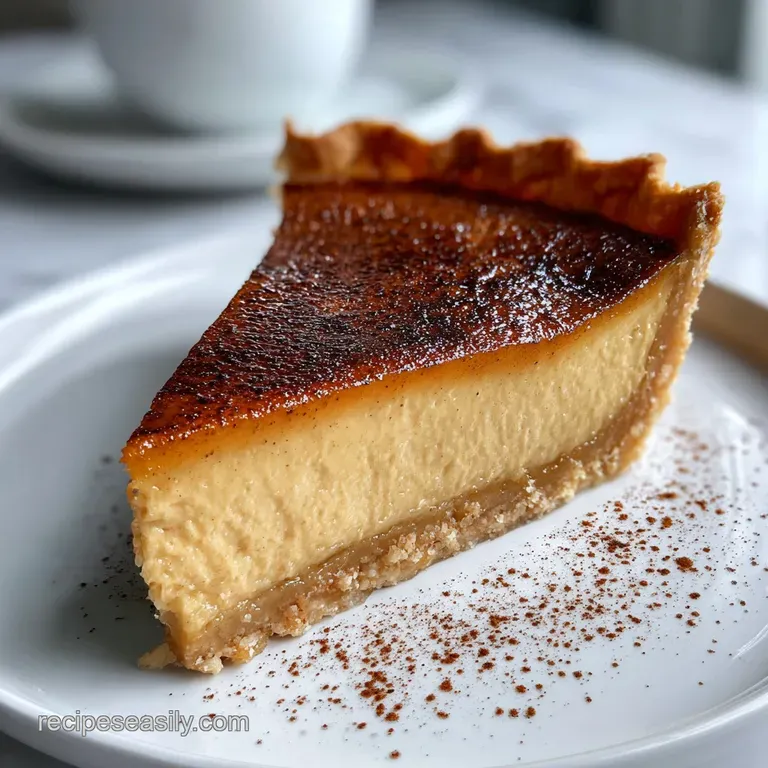
You don't need a professional kitchen to pull this off. A standard 9 inch pie plate (glass or ceramic works best for heat distribution) and a sturdy whisk are your best friends here. I usually use a simple pastry cutter, but two forks or even your cold fingertips can work the butter into the flour just as effectively.
From Prep to Plate: step-by-step
For the Shattering All-Butter Crust
- Combine 190g flour, 12g sugar, and 3g sea salt in a large bowl. Note: Whisking the dry ingredients first prevents salt pockets.
- Work 113g cubed cold butter into the flour until the mixture resembles coarse crumbs with pea sized bits of fat.
- Drizzle 60ml ice water over the mixture and stir with a fork until a shaggy dough begins to form.
- Wrap the dough tightly and chill for 30 minutes until firm and cold to the touch.
- Roll the dough on a floured surface and fit it into a 9 inch pie dish, trimming the edges.
- Blind bake at 375°F (190°C) with pie weights for 15 minutes, then remove weights and bake 10 mins more until the bottom is pale gold and dry.
For the Espresso Custard Filling
- Whisk 3 eggs, 2 yolks, and 150g sugar until the mixture is pale and slightly thickened.
- Scald 355ml milk, 175ml cream, and 18g espresso grounds in a saucepan until tiny bubbles form around the edges.
- Strain the hot milk mixture through a fine mesh sieve to remove the grounds.
- Temper the eggs by slowly whisking in the hot milk, then pour the mixture into the pre baked crust.
- Bake at 325°F (165°C) for 40 minutes until the edges are set but the center still jiggles like jelly.
Correcting Common Pitfalls for a Flawless Finish
Even the best bakers run into trouble with custards. The transition from liquid to solid is a delicate one, often influenced by oven calibration or even the humidity in your kitchen.
Why Your Custard is Weeping or Watery
This usually happens because the eggs were overcooked. When egg proteins get too hot, they contract too tightly and squeeze out the liquid they were supposed to hold. This results in a "weeping" pie with a watery layer at the bottom.
| Problem | Root Cause | Solution |
|---|---|---|
| Soggy Bottom | Under baked crust | Always blind bake until the dough is dry and matte. |
| Curdled Filling | Oven temperature too high | Use an oven thermometer; custards love a low, slow 325°F heat. |
| Cracked Surface | Over baking | Pull the pie when the center is still wobbly; it finishes setting as it cools. |
Common Mistakes Checklist
- ✓ Never skip the chilling step; warm dough leads to a shrinking crust.
- ✓ Strain your milk mixture twice if needed to ensure no gritty espresso bits remain.
- ✓ Use room temperature eggs to ensure they emulsify smoothly with the sugar.
- ✓ Let the pie cool completely at room temperature for at least 2 hours before refrigerating.
- ✓ Don't over whisk the custard once the milk is added, or you'll create unsightly bubbles on top.
Creative Adaptations for Different Flavors and Budgets
If you want to try a different spin on this, the possibilities are endless. For those who find espresso too intense, you can easily turn this into a "Mocha Custard Pie" by whisking 2 tablespoons of cocoa powder into the sugar before adding the eggs.
It creates a deeper, earthier profile that reminds me of a fancy latte.
If you are looking for a completely different texture, you might enjoy comparing this to my Coffee Panna Cotta recipe, which uses gelatin instead of eggs for the set. It’s a great "no bake" alternative for hotter months. Alternatively, for a heavier, creamier experience, The Paula Deen recipe for chocolate cream pie is a fantastic study in whipped cream toppings and decadent fillings.
Decision Shortcut
- If you want a deeper color: Add 1 teaspoon of molasses to the sugar.
- If you want a spice kick: Add a pinch of cinnamon and cardamom to the milk infusion.
- If you want it extra creamy: Swap the whole milk for half and half (1.5 cups).
Debunking Baked Custard Beliefs
Many people believe that you must boil the milk to infuse the coffee properly. In reality, boiling can scald the milk proteins and create an "off" flavor. You only need to reach a "scald" (about 180°F) where small bubbles appear on the side.
This is plenty of heat to extract the oils from the espresso without ruining the dairy.
Another myth is that adding more eggs will make the pie firmer and easier to slice. While eggs do provide the structure, adding too many makes the texture rubbery and "eggy" rather than velvety and rich.
The 3 eggs plus 2 yolks ratio in this Tasty Espresso Custard Pie is carefully balanced for the perfect yield to firmness ratio.
Keeping Your Leftovers Fresh and Flavorful
Storage: This pie must be kept in the fridge. Once cooled, wrap it loosely in plastic wrap or foil. It will stay fresh and hold its texture for up to 4 days. After that, the crust may start to soften as it absorbs moisture from the custard.
Freezing: I don't recommend freezing custard based pies. The freezing and thawing process breaks the delicate protein bonds, leading to a grainy texture and a separated, watery mess.
Zero Waste Tip: If you have leftover pie crust scraps, don't throw them away! Roll them out, sprinkle with cinnamon sugar, and bake them alongside the pie for 8-10 minutes. They make the perfect "chef's snack" while you wait for the main event to cool.
Enhancing the Experience with Side Pairings
The bitterness of the espresso in this custard calls for something slightly sweet or salty to balance the palate. A dollop of unsweetened whipped cream with a tiny pinch of flaky sea salt on top (often called a "Salted Coffee" style) is truly transformative.
It cuts through the richness of the heavy cream and makes the coffee flavor feel more vibrant.
If you’re serving this for a gathering, a small glass of cold pressed almond milk or even a sharp berry coulis on the side can provide a nice acidic contrast. The goal is to let the espresso be the star, while the accompaniments act as the supporting cast.
Enjoy the process, take your time with the blind bake, and you'll be rewarded with a pie that looks as good as it smells.
Recipe FAQs
What is George Clooney's favorite pie?
No, there is no public record stating that George Clooney has a specific favorite pie.
While he is often associated with Italian culture and Nespresso, specific pastry preferences are usually kept private.
What are the most common mistakes in making custard pie?
Under baking the crust is the most common structural failure, leading to a soggy bottom.
Over baking the custard causes the proteins to seize up, resulting in weeping or a rubbery texture.
What is Dolly Parton's favorite pie?
No, Dolly Parton has not publicly declared a single favorite pie over all others.
However, she has mentioned loving sweet treats, particularly desserts involving buttermilk or fruit, like peach cobbler.
What does custard pie slang mean?
It does not have a widely recognized or culinary slang meaning.
Generally, when referring to pie slang, people are discussing regional terms for crust texture or filling consistency, not the pie itself.
How to prevent the custard filling from cracking during cooling?
Pull the pie from the oven when the edges are set but the center still has a distinct wobble.
Rapid temperature shifts cause cracking; allow the pie to cool slowly on the counter for two hours before refrigerating.
Is it true that I must use an immersion blender to create a smooth espresso infusion?
No, this is a common misconception that introduces too much air.
For a truly silky custard, you should steep the whole beans in the hot milk and then strain them thoroughly; blending often creates foam or incorporates undesirable bitterness.
How to ensure the pastry crust does not shrink while blind baking?
Chill the rolled dough for at least 30 minutes immediately before lining the pie plate.
For an extra layer of security against shrinkage, use parchment paper and generously fill the shell with pie weights or dried beans right up to the rim before baking.
Espresso Custard Pie Recipe
Ingredients:
Instructions:
Nutrition Facts:
| Calories | 411 kcal |
|---|---|
| Protein | 7.5g |
| Fat | 23.9g |
| Carbs | 41.1g |
| Fiber | 0.6g |
| Sugar | 23.2g |
| Sodium | 237mg |
