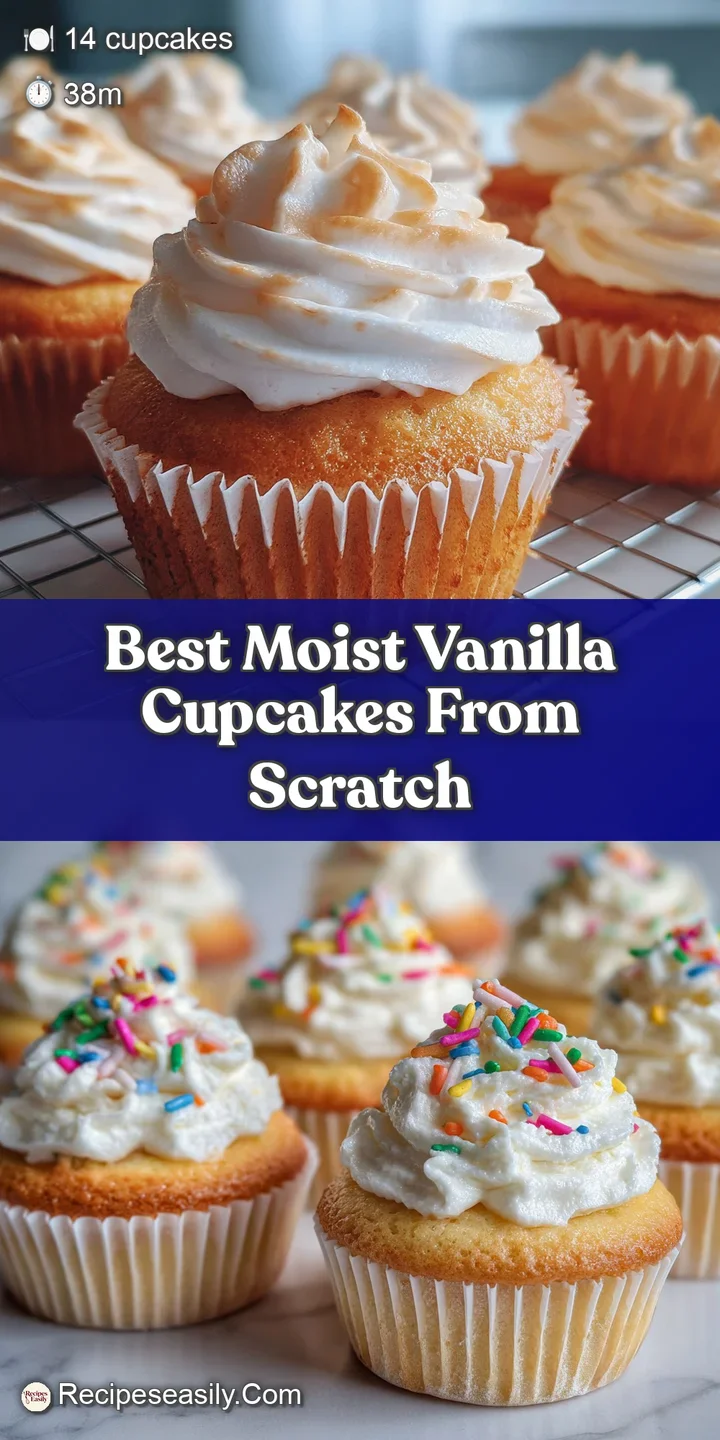
Best Moist Vanilla Cupcakes from Scratch
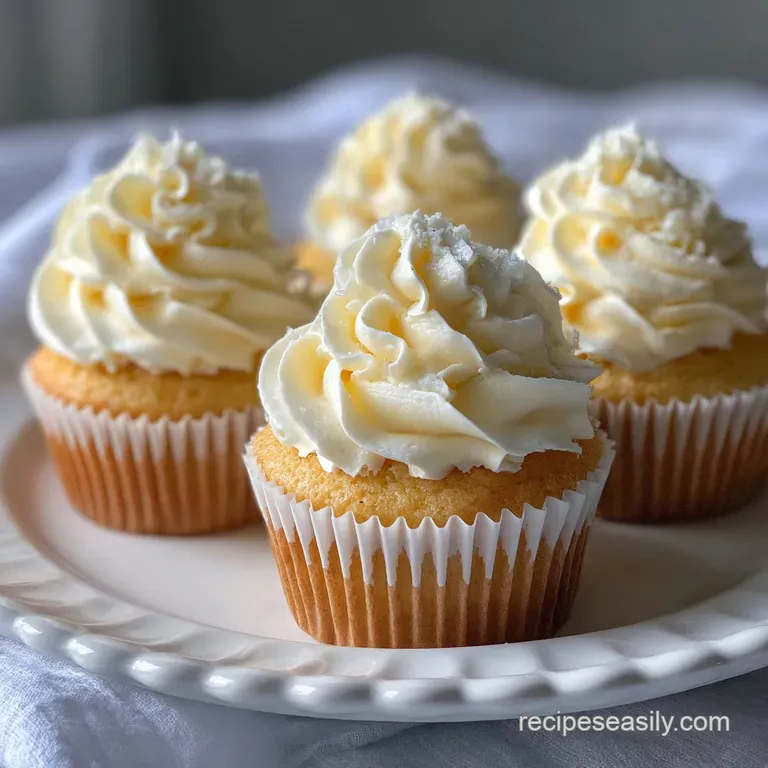
- Time: Active 20 minutes, Passive 18 minutes, Total 38 minutes
- Flavor/Texture Hook: Velvety, melt in-the mouth crumb with speckled vanilla bean flavor
- Perfect for: Birthday parties, weekend baking, or when you need a reliable win
- The Best Moist Vanilla Cupcakes From Scratch
- Why This Texture Wins Hearts
- The Physics of the Velvety Crumb
- Choosing Ingredients for Better Moisture
- Tools Needed for Fluffy Results
- Mixing and Baking the Batter
- Troubleshooting Your Cupcake Problems
- Simple Flavor and Ingredient Swaps
- Myths About Vanilla Cupcakes
- Storing and Freezing Your Treats
- Recipe FAQs
- 📝 Recipe Card
The Best Moist Vanilla Cupcakes From Scratch
I used to be a total box mix snob because every time I tried to make cupcakes from scratch, they came out like dry muffins. I’d spend hours measuring, only for the final result to be a choking hazard that required a gallon of milk to swallow.
It was honestly embarrassing, especially when I brought a batch of "vanilla rocks" to my best friend’s baby shower.
But I finally cracked the code, and it all came down to the fat. Most recipes choose a side: butter for flavor or oil for moisture. This recipe refuses to compromise. By using both, we get that nostalgic, buttery aroma while ensuring the cake stays soft for days.
The moment you pull these out of the oven, the smell of real vanilla bean paste fills the room, and you just know they're going to be special.
We are going for a texture that is light but tight crumbed, meaning it won't fall apart when you peel back the wrapper. If you've struggled with homemade cakes before, trust me, this is the one that changes everything.
It’t a straightforward process that yields a bakery quality result every single time you preheat the oven.
Why This Texture Wins Hearts
- Fat Hybridization: Combining butter and oil provides a rich flavor profile while keeping the crumb tender even when cold.
- The Buttermilk Effect: The acidity in 0.75 cup full fat buttermilk breaks down tough gluten strands for a more delicate bite.
- Protein Control: Using a single large egg (50g) provides just enough structure without making the cake feel rubbery or "eggy."
- Carbon Dioxide Boost: The combination of 1.5 tsp baking powder and 0.25 tsp baking soda ensures a rapid lift before the structure sets.
| Method | Time | Texture | Best For |
|---|---|---|---|
| Standard Oven | 18 minutes | Even rise, golden top | Traditional cupcakes |
| Stovetop Steam | 25 minutes | Ultra pale, very dense | Small batches without an oven |
| Toaster Oven | 15 minutes | Darker crust, fast | 4-6 cupcakes only |
If you're looking for something even faster that doesn't involve the oven at all, my Simple No Bake recipe is a total lifesaver for last minute cravings.
The Physics of the Velvety Crumb
The magic happens during the "reverse creaming" or hybrid mixing method where we coat the flour in fat before adding the bulk of the liquids. Coating the flour in 0.25 cup butter and 0.25 cup oil creates a waterproof barrier around the proteins, which physically prevents long gluten chains from forming.
This is why the cupcakes stay velvety instead of becoming tough or bread like.
| Ingredient | Science Role | Pro Secret |
|---|---|---|
| All purpose Flour | Provides structure | Weigh it (190g) to avoid dense, dry cakes |
| Vanilla Bean Paste | Flavor & Visuals | Use paste instead of extract for those beautiful black flecks |
| Granulated Sugar | Tenderizer & Sweetener | Sugar is a liquid in baking; it keeps the crumb moist |
| Baking Soda | Neutralizes acid | It reacts instantly with buttermilk to create air pockets |
Between these steps, it is important to remember that temperature matters just as much as the ingredients themselves.
Choosing Ingredients for Better Moisture
- All purpose Flour (1.5 cups): Provides the perfect mid range protein content. Why this? Bread flour is too tough; cake flour can be too fragile for heavy frosting.
- Granulated Sugar (1 cup): Essential for sweetness and moisture retention.
- Unsalted Butter (0.25 cup): Make sure it's softened to "room temp" (about 65°F).
- Neutral Vegetable Oil (0.25 cup): Keeps the cake moist even in the fridge. Why this? Butter solidifies when cold; oil stays liquid for a softer mouthfeel.
- Full fat Buttermilk (0.75 cup): Adds tang and incredible tenderness.
- Vanilla Bean Paste (2 tsp): Concentrated flavor that beats extract every time.
Chef's Tip: If you don't have buttermilk, add 1 teaspoon of lemon juice to 0.75 cup of whole milk and let it sit for 5 minutes until it curdles slightly.
Tools Needed for Fluffy Results
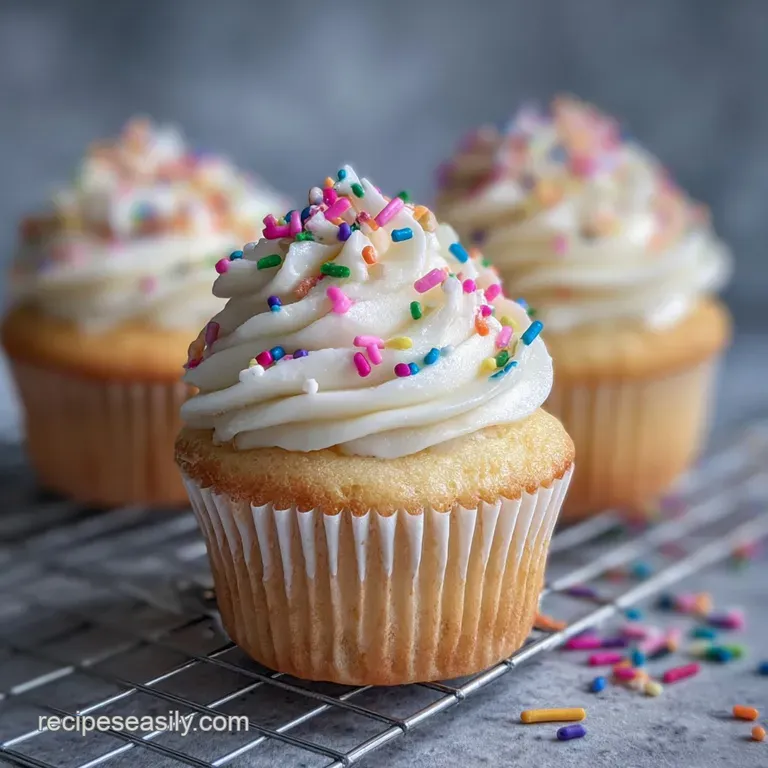
You don't need a professional kitchen, but a few specific tools make the best moist vanilla cupcakes from scratch much easier to achieve. A standard 12 cup muffin tin is essential, though this recipe makes 14, so you'll need a second tin or have to bake in two small batches.
I highly recommend using a digital scale to measure your 190g of flour because a "cup" can vary wildly depending on how you scoop it.
A stand mixer or a reliable hand mixer will save your arms when it comes to the frosting. For the batter, a simple whisk and a silicone spatula are often enough, as we want to avoid overworking the gluten.
If you want that perfect bakery "dome," use a spring loaded cookie scoop to ensure every liner has the exact same amount of batter.
Mixing and Baking the Batter
- Preheat the oven to 350°F and line your tins with paper liners.
- Whisk the 1.5 cups flour, 1 cup sugar, baking powder, baking soda, and salt in a large bowl.
- Add the 0.25 cup softened butter and 0.25 cup oil to the dry ingredients.
- Mix on low speed until the mixture looks like coarse sand with no large butter chunks. Note: This coats the flour in fat to prevent over developing gluten.
- Whisk the 1 large egg, 0.75 cup buttermilk, and 2 tsp vanilla paste in a separate jug.
- Pour the liquid mixture into the dry ingredients in two stages, mixing gently after each.
- Scrape the bottom of the bowl with a spatula until the batter is velvety and smooth.
- Fill each liner about two thirds full to leave room for the rise.
- Bake for 18 minutes until the tops spring back when lightly touched.
- Cool in the pan for 5 minutes before moving to a wire rack to prevent soggy bottoms.
And if you happen to have extra bananas on the counter while your oven is hot, you have to try this Banana Bread Recipe Moist next.
Troubleshooting Your Cupcake Problems
Why Your Cupcakes Sank
If your cupcakes look great in the oven but collapse the moment you pull them out, you likely over mixed the batter. When you mix too much, you incorporate too much air, which expands rapidly and then fails because the flour structure wasn't strong enough to hold it.
It can also happen if your baking powder is expired always do a quick fizz test in hot water if you aren't sure.
| Problem | Root Cause | Solution |
|---|---|---|
| Greasy Liners | Butter was too melted | Use "cool" room temp butter (65°F) |
| Dry Crumble | Too much flour | Use a scale (190g) or the spoon and level method |
| Peeling Liners | Trapped steam | Remove cupcakes from the tin after 5 minutes |
- ✓ Always use room temperature eggs and buttermilk to ensure a smooth emulsion.
- ✓ Check your oven temperature with a standalone thermometer; many run hot.
- ✓ Fill liners only 2/3 full to prevent "muffin tops" that spill over and sink.
- ✓ Stop mixing the second the last streak of flour disappears.
- ✓ Let the cupcakes cool completely before frosting, or the butter will melt into a soup.
Simple Flavor and Ingredient Swaps
If you need to scale this recipe down for a tiny celebration, it's actually quite easy. Since it uses one egg, to halve the recipe, just crack the egg, whisk it, and use 25g. Reduce the bake time by about 2 minutes and use a 6 cup tin.
When scaling up for a big party (28 cupcakes), simply double everything, but keep an eye on your mixer capacity so you don't splash batter everywhere.
| Original Ingredient | Substitute | Why It Works |
|---|---|---|
| Buttermilk (0.75 cup) | Greek Yogurt (0.75 cup) | Similar acidity. Note: Crumb will be slightly denser. |
| Vanilla Bean Paste | Vanilla Extract | Same ratio. Note: You lose the visual bean flecks. |
| Vegetable Oil | Melted Coconut Oil | Same fat content. Note: Adds a very faint coconut aroma. |
Myths About Vanilla Cupcakes
One of the biggest misconceptions is that "room temperature" butter means soft enough to poke a finger all the way through. In reality, if your butter is too soft, it won't hold the air bubbles needed for a light cake. It should be pliable but still feel slightly cool to the touch.
Another myth is that you must use cake flour for a "real" cupcake. While cake flour creates a very fine crumb, all purpose flour actually provides a better structure for the 1 cup of butter and 3.5 cups of powdered sugar used in the frosting.
Without that AP flour strength, the cupcake can feel too mushy when paired with a rich buttercream.
Storing and Freezing Your Treats
Storage: These cupcakes stay remarkably moist at room temperature for up to 3 days if kept in an airtight container. If you've already frosted them with the vanilla bean buttercream, they can still sit out unless your kitchen is very warm, in which case the fridge is safer.
Just remember to bring them back to room temperature before eating so the butter softens.
Freezing: You can freeze unfrosted cupcakes for up to 2 months. Wrap them individually in plastic wrap and then place them in a freezer bag. To thaw, just leave them on the counter for an hour.
Zero Waste: If you somehow end up with stale cupcakes, don't toss them! Crumble them up and mix with a little leftover frosting to make cake pops, or layer them with vanilla pudding and berries for a quick trifle. Even "failed" cupcakes make a great base for a dessert parfait.
Recipe FAQs
What makes these vanilla cupcakes extra moist?
Using both butter and oil. The butter provides flavor, while the oil keeps the cake tender and moist for days, preventing the dryness that often comes with scratch baking.
How do I prevent my cupcakes from being dry or crumbly?
Don't overmix the batter after adding liquids. Coating the flour in fat first with the reverse creaming method creates a barrier that limits gluten development, resulting in a tender crumb.
Can I use vanilla extract instead of vanilla bean paste?
Yes, but with a slight difference. You can substitute vanilla extract at a 1:1 ratio, but you'll miss out on the visible black flecks and the more intense, complex flavor that paste offers.
What's the best way to measure flour for these cupcakes?
Weigh your flour using a digital scale. Measuring by weight to 190g ensures accuracy, preventing too much flour which leads to dry, dense cupcakes.
How long should I bake these cupcakes?
Bake for approximately 18 minutes. They are done when the tops spring back lightly when touched; overbaking will result in dry cupcakes.
What if I don't have buttermilk?
Make a buttermilk substitute. Add 1 teaspoon of lemon juice or white vinegar to 0.75 cup of whole milk and let it sit for 5 minutes until it curdles slightly.
How should I store unfrosted cupcakes?
Store in an airtight container at room temperature. They will stay moist for up to 3 days, but frosting them first might require refrigeration if your kitchen is warm.
Moist Vanilla Cupcakes
Ingredients:
Instructions:
Nutrition Facts:
| Calories | 420 kcal |
|---|---|
| Protein | 2.5 g |
| Fat | 21.8 g |
| Carbs | 55.3 g |
| Fiber | 0.4 g |
| Sugar | 44.3 g |
| Sodium | 184 mg |
