Sugar Free Pepper Jelly: Vibrant and Zesty
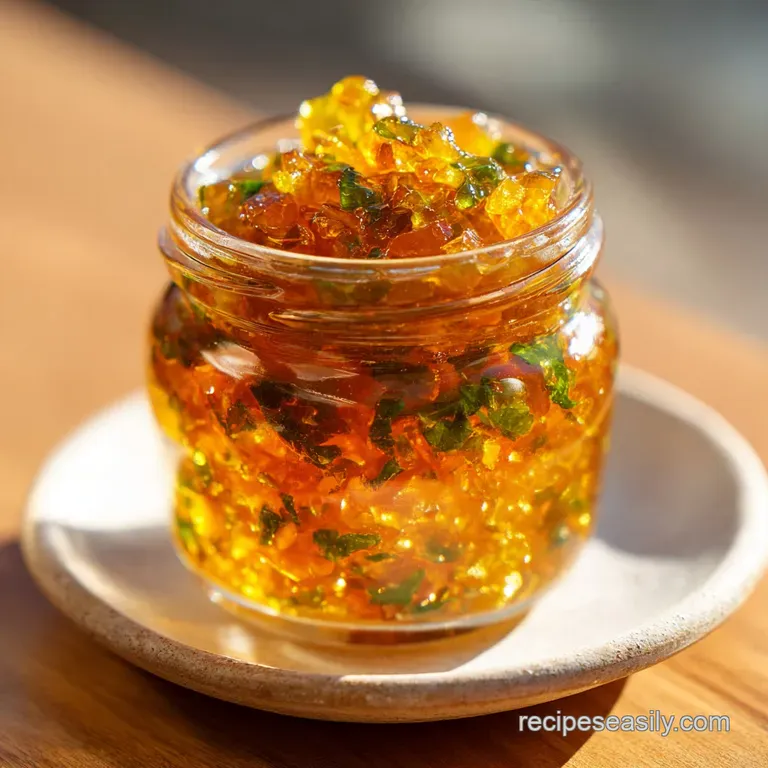
- Time: Active 20 minutes, Passive 20 minutes, Total 40 minutes
- Flavor/Texture Hook: Tangy and spicy with a translucent, bouncy gel
- Perfect for: Low carb charcuterie boards, holiday gifting, or budget-friendly pantry stocking
- Create Vibrant Sugar Free Pepper Jelly
- Low Methoxyl Pectin Gel Secrets
- Defining Your Heat Level Specs
- Smart Grocery Choices for Value
- Essential Tools for Successful Canning
- Mastering the Cook Process Flow
- Solutions for Common Texture Issues
- Creative Flavor Swaps and Adjustments
- Preservation and Scrappy Kitchen Habits
- Serving Styles for Visual Impact
- Debunking Jelly Legends
- Recipe FAQs
- 📝 Recipe Card
Create Vibrant sugar-free Pepper Jelly
You might have heard the old kitchen rumor that you absolutely need a mountain of white sugar to make a jelly set. For the longest time, I believed it too. I thought sugar was the "glue" holding the fruit together, and without it, I’d just end up with a sad, watery pepper soup.
But I’m here to tell you that’s a total myth. You don't need a single gram of cane sugar to get that iconic, bouncy, translucent wiggle we all love in a good preserve.
When you walk into the kitchen to start this, the first thing that hits you is the sharp, bright zing of the apple cider vinegar. It wakes up your senses immediately. Then there’s the rainbow on your cutting board the deep reds of the bell peppers and the forest greens of the jalapeños.
As you pulse them in the processor, the aroma is incredibly fresh, almost like a summer garden caught in a jar. It’s a sensory experience that feels much more expensive than the budget friendly ingredients actually cost.
We are going to use a special kind of pectin that relies on calcium rather than sugar to create a bond. This means we can keep the calories incredibly low just 5 kcal per serving while maintaining that glassy, velvety texture.
Whether you're spreading this over a block of cream cheese or using it as a glaze, the result is sophisticated and punchy. Trust me, once you see those little flecks of pepper suspended in the clear gel, you’ll never go back to the store-bought stuff that’s basically just spicy corn syrup.
Low Methoxyl Pectin Gel Secrets
The magic behind this sugar-free Pepper Jelly lies in the behavior of specific molecules. In traditional jams, you need high heat and a massive concentration of sugar to force pectin to network together. Without that sugar, regular pectin just stays loose.
We are bypassing that entire requirement by using Pomona’s Universal Pectin.
- Calcium Activation: Unlike standard pectin, this version requires calcium ions to form a mesh like structure. This is why we add "calcium water" to the base; it acts as the bridge that pulls the pectin chains together.
- Allulose Solubility: Allulose is a rare sugar that doesn't crystallize like erythritol does when cooled. It stays perfectly clear and liquid, which ensures the jelly doesn't turn "gritty" or opaque in the fridge.
- Acid Stabilization: The apple cider vinegar isn't just for flavor; the 5% acidity lowers the pH, which helps the pectin strands stay firm and prevents spoilage.
Masterpiece of Low Methoxyl Gelation
When the calcium water meets the pectin sweetener blend, a rapid reaction occurs. You’ll see the liquid transform from a thin vinegar tea into a thick, glossy syrup almost instantly. It is a satisfying moment that proves the science is working in your favor.
Balancing the Capsaicin Profile
We use a mix of peppers to control the heat. The red bell peppers provide the "body" and a mild sweetness, while the jalapeños bring the zing. If you choose to keep the seeds in the jalapeños, the capsaicin oil will infuse more deeply into the liquid, giving you a slow, lingering burn.
Stabilizing with Monk Fruit and Allulose
By combining 1 cup of granulated allulose with 0.5 cup of monk fruit, we achieve a sweetness profile that mimics real sugar without the cooling aftertaste often found in keto sweeteners. The allulose provides the "bulk" and mouthfeel, while the monk fruit rounds out the sweetness.
| Heat Level | Pepper Choice | Texture Impact | Visual Cue |
|---|---|---|---|
| Mild | 100% Bell Peppers | Soft, very sweet | Uniform bright red |
| Medium | 7 Jalapeños (seeded) | Crisp bite, balanced | Speckled green/red |
| Extra Hot | Add 1 Habanero | Sharp, intense sting | Orange flecks visible |
The table above helps you decide exactly how much "kick" you want before you even turn on the stove. If you're sensitive to spice, stick to the seeded jalapeños; they provide flavor without the pain.
Defining Your Heat Level Specs
This recipe is designed to be efficient. We aren't standing over a boiling pot for hours waiting for a "setting point" that might never come. Because we use a precise amount of pectin and calcium water, the set is guaranteed as long as your measurements are exact.
- Prep Time: 20 minutes (mostly chopping and seeding)
- Cook Time: 20 minutes (simmering and whisking)
- Total Yield: 80 servings (approx. 1 tablespoon each)
- Serving Size: 1 tbsp / 15g
| Component | Role in Jelly | Pro Secret |
|---|---|---|
| Apple Cider Vinegar | Acidic Base | Use 5% acidity for the safest, firmest set. |
| Allulose | Bulking Sweetener | Prevents the jelly from getting "crunchy" in the fridge. |
| Pomona's Pectin | Gelling Agent | Always mix with dry sweetener first to avoid lumps. |
You'll find that using the right vinegar is key. While white vinegar works, the apple cider version adds a fruity depth that complements the peppers beautifully. It’s a budget friendly way to add "premium" flavor without buying expensive extracts.
Smart Grocery Choices for Value
Buying peppers in bulk is the best way to keep this recipe affordable. I often head to the market on weekends when the large bags of "seconds" or slightly bruised bell peppers are on sale. Since we’re mincing them anyway, those little cosmetic imperfections don't matter at all!
- 3 large red bell peppers, finely minced (492g) Why this? Provides the base bulk and sweetness.
- 7 large jalapeños (175g) Why this? Adds the signature spicy kick.
- 1 habanero pepper, optional (7g) Why this? For those who love serious heat.
- 1.5 cups apple cider vinegar, 5% acidity (360g) Why this? Necessary for acidity and preservation.
- 1 cup granulated allulose (190g) Why this? Provides the best texture and clarity.
- 0.5 cup monk fruit sweetener (95g) Why this? Boosts sweetness without extra calories.
- 0.5 tsp sea salt Why this? Enhances the flavor of the peppers.
- 4 tsp Pomona’s Universal Pectin powder Why this? The only pectin that sets without sugar.
- 4 tsp calcium water Why this? Activates the pectin's gelling power.
For the Pepper Base
Choosing fresh, firm peppers is vital. Look for peppers with smooth, shiny skin. If they feel light or hollow, they might be drying out, which means less juice and flavor for your jelly.
For the Gel Sweetener
Don't skip the monk fruit blend. If you use 100% monk fruit, the jelly can sometimes develop a slight "aftertaste." The allulose acts as a buffer, making the sweetness taste much more natural.
| Original Ingredient | Substitute | Why It Works |
|---|---|---|
| Red Bell Peppers | Green Bell Peppers | Same texture, but the color will be muddier and the taste more "grassy." |
| Allulose | Erythritol | Note: The jelly will likely crystallize and become grainy once chilled. |
| Apple Cider Vinegar | Rice Vinegar | Similar acidity but a much milder, sweeter flavor profile. |
Choosing the right substitute can change the whole vibe of the dish. For example, using rice vinegar makes this lean more toward an Asian inspired dipping sauce, which is brilliant if you're serving it with spring rolls.
Essential Tools for Successful Canning
You don't need a high tech lab to make this, but a few specific tools make the process much smoother. My biggest tip? Use a food processor. Hand mincing ten peppers is a great way to accidentally rub your eyes with capsaicin later and regret your life choices.
- Food Processor: Essential for getting that uniform, minced texture without liquifying the vegetables.
- Stainless Steel Pot: Must be non reactive. Aluminum can react with the vinegar and give your jelly a metallic "tinny" taste.
- Clean Mason Jars: Use half pint jars for the best ratio of seal to surface area.
- Whisk: A sturdy whisk is better than a spoon for integrating the pectin mixture.
Chef's Note: If you don't have a food processor, use a sharp chef's knife and take your time. You want the pieces to be about the size of a grain of rice too big and they sink; too small and they disappear!
Mastering the Cook Process Flow
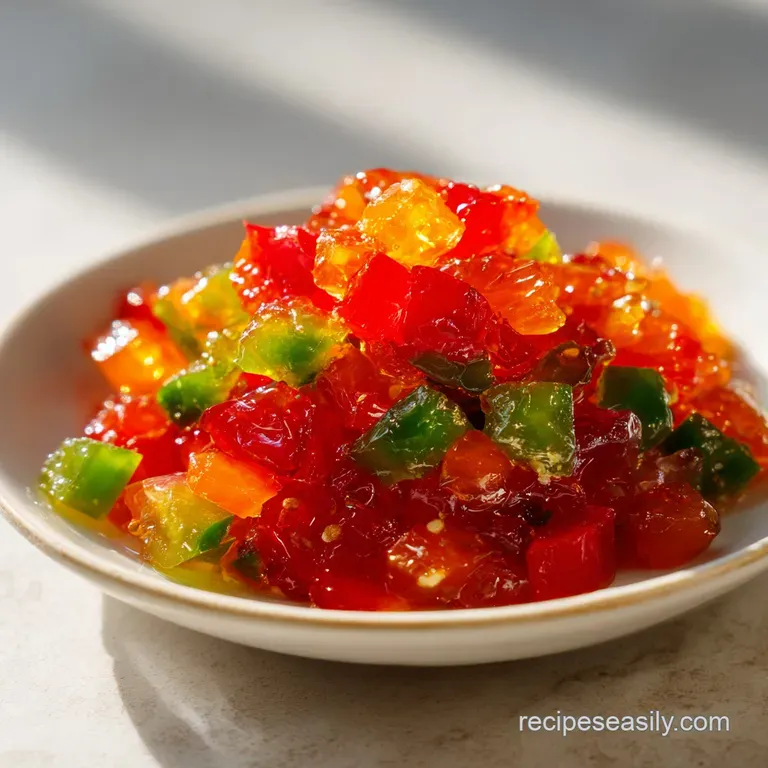
- Pulse the red bell peppers, jalapeños, and optional habanero in a food processor until finely minced. Stop before they turn into a smoothie. Measure exactly 4 cups of the mixture.
- Transfer the 4 cups of peppers into your large stainless steel pot.
- Pour in the 1.5 cups of apple cider vinegar, the 0.5 tsp sea salt, and the 4 tsp of calcium water.
- Bring the mixture to a rolling boil over medium high heat. You should see large, vigorous bubbles that don't stop when you stir.
- Reduce the heat and simmer for 5 minutes. Note: This softens the pepper skins so they don't feel "papery" in the finished jelly.
- While that simmers, whisk the 4 tsp of pectin powder into the dry allulose and monk fruit in a separate bowl. Do not skip this step; adding raw pectin to hot liquid creates "pectin bombs" (lumps) that never dissolve.
- Slowly whisk the dry sweetener and pectin mixture into the boiling pot.
- Stir vigorously for 1-2 minutes while maintaining a boil. The liquid will noticeably thicken and become shiny.
- Remove the pot from the heat immediately.
- Carefully ladle the hot jelly into jars, leaving 1/4 inch of headspace at the top.
Processing the Peppers
When you're pulsing the peppers, do it in short bursts. I usually do about 5-8 pulses. You want to see distinct little gems of red and green. If you over process, the peppers release all their juice and you end up with a cloudy jelly rather than a clear one with suspended bits.
Simmering the Acidic Base
During the 5 minute simmer, the vinegar is doing a lot of work. It’s extracting the color from the peppers, turning the liquid into a beautiful pink or red hue. This is also when the heat from the jalapeños really infuses into the vinegar.
Integrating the Sweetener Pectin
This is the most critical stage. You want to sprinkle the pectin sugar mix over the surface while whisking constantly. Think of it like making a gravy or a roux you want total integration. If you see any white clumps, use the back of a spoon to press them against the side of the pot.
Achieving the Final Set
Once you remove the pot from the heat, the gelling process begins almost immediately as the temperature drops. If you’re canning, move fast! The jelly is much easier to pour when it's piping hot.
Solutions for Common Texture Issues
Even the best cooks run into a "failed" set occasionally. Usually, it's just a matter of chemistry. If your jelly looks more like a syrup after 24 hours in the fridge, don't panic. It's totally fixable!
Fixing a Soft Set
A soft set usually happens if the pectin wasn't fully dissolved or if the vinegar was too weak. To fix it, you can empty the jars back into a pot, add another teaspoon of calcium water and a teaspoon of pectin (mixed with a little sweetener), and bring it back to a boil for 2 minutes.
Eliminating Air Bubbles
If you see tiny bubbles trapped in your jelly, it's usually because it was stirred too aggressively right before jarring. To prevent this, let the pot sit for 30 seconds after removing it from the heat, then give it one gentle stir to redistribute the peppers before ladling.
Preventing Sweetener Aftertaste
Some people are very sensitive to monk fruit. If you find the taste too "sharp," try adding a tiny pinch more salt. Salt is a miracle worker for masking the bitter notes in alternative sweeteners.
| Problem | Root Cause | Solution |
|---|---|---|
| Liquid/Runny | Pectin didn't activate | Re boil with more calcium water and pectin. |
| Cloudy Jelly | Over processed peppers | Pulse peppers fewer times; don't boil too long. |
| Peppers Floating | Jelly set too slowly | Turn jars upside down for 10 mins (then right side up) while cooling. |
The "floating pepper" issue is common. If all your pepper bits are at the top and the bottom is just clear gel, it means the jelly stayed hot and liquid for too long.
Common Mistakes Checklist
- ✓ Never use "low acid" vinegar; it must be 5% to ensure a safe and firm set.
- ✓ Don't forget to mix the pectin with the dry sweetener first (clumps are the enemy!).
- ✓ Ensure you use a non reactive pot to avoid a metallic taste.
- ✓ Don't skip the calcium water; the pectin simply won't work without it.
- ✓ Measure the 4 cups of minced peppers after pulsing, not before.
Creative Flavor Swaps and Adjustments
One of the best things about this sugar-free Pepper Jelly is how easy it is to scale. If you're cooking for a crowd, you can double the recipe, but be careful with the spices.
- Scaling Down: To make a single jar, divide everything by four. Use a very small saucepan so the liquid doesn't evaporate too quickly.
- Scaling Up: You can double the peppers and vinegar, but I recommend only increasing the salt and spices by 1.5x. Sometimes doubling the heat makes it exponentially spicier than intended!
- Baking Adjustments: If you're using this as a glaze for something like my Pepper Jelly Glazed Meatballs, add a splash of water to the pan to thin it out so it coats the meat evenly.
Infusing Herbaceous Notes
For a "gourmet" twist, try adding 1 tablespoon of finely chopped fresh cilantro or mint right at the end of the boiling process. It adds a beautiful green fleck and a fresh aroma that pairs perfectly with pork or fish.
Crafting a Fruit Fusion
If you want a sweeter, more complex jelly, replace 1 cup of the minced red bell peppers with 1 cup of finely minced fresh pineapple or peaches. This creates a "tropical" pepper jelly that is absolutely incredible on grilled chicken.
Preservation and Scrappy Kitchen Habits
If you don't want to deal with the whole water bath canning setup, you can simply keep this in the fridge. It will stay fresh for about 3 to 4 weeks. For longer storage, the freezer is actually a great option for this specific pectin.
- Fridge: Store in an airtight glass jar for up to 1 month.
- Freezer: Leave at least an inch of headspace (liquid expands when frozen!) and keep for up to 6 months. Thaw in the fridge overnight.
- Zero Waste Tip: Don't throw away the pepper stems or the seedy innards! Toss them into a freezer bag and use them later to flavor a vegetable stock or a spicy bone broth.
When you get to the bottom of the jar and there's just a little bit of jelly left, pour in a little olive oil and mustard, shake it up, and you’ve got an instant spicy vinaigrette for your salad. It's a great way to use every last drop.
Serving Styles for Visual Impact
The way you present this jelly can make a $5 block of cream cheese look like a $50 appetizer. I love to serve it in a small, clear glass bowl so the light catches the transparency of the gel.
- The Classic Block: Pour the jelly over a cold block of cream cheese and serve with gluten-free crackers.
- The Savory Tart: Use it as a base layer for a savory tart topped with goat cheese and caramelized onions. It adds a "pop" of flavor that cuts through the rich cheese.
- The Charcuterie Accent: Place a small jar on a board with sharp cheddar, salami, and Marcona almonds.
- The Dip Base: Stir a few tablespoons into a warm cheese dip I highly recommend trying this technique with my Pepper Jelly Cheese Dip recipe for your next party.
Debunking Jelly Legends
- Sugar is the only preservative: False! While sugar helps, the high acidity from the vinegar and the heat sealing process are what actually keep bacteria at bay.
- You can't freeze jelly: With this specific pectin, you absolutely can. Traditional jellies can sometimes get "weepy" after freezing, but low methoxyl pectin holds its structure much better.
- Pepper jelly must be red: Not at all! You can use all green jalapeños and green bell peppers for a "Verde" style jelly that looks stunning next to a white cheese.
| Feature | Fresh Homemade | store-bought Shortcut |
|---|---|---|
| Flavor | Vibrant, crisp, customizable | Often overly sweet, muted spices |
| Texture | Glassy with distinct pepper bits | Syrupy or gummy |
| Cost | ~ $0.15 per serving | ~ $0.60 per serving |
Making this yourself isn't just about the health benefits it’s about the quality. When you see those fresh bits of habanero and jalapeño floating in the jar, you know exactly what you’re eating. It’s a budget friendly win that feels like a total luxury. Enjoy the sizzle and the spice!
Recipe FAQs
Is there a sugar-free pepper jelly?
Yes, you can make a delicious version using allulose and monk fruit. By swapping traditional sugar for these sweeteners, you maintain the classic texture and spicy profile without the glycemic impact.
Is sugar-free jelly good for diabetics?
Yes, it is generally suitable for diabetics when using 1:1 sugar replacements like allulose and monk fruit. These sweeteners do not spike blood glucose levels, making them a safe alternative for those managing carbohydrate intake.
Do they make jelly with no sugar?
Yes, homemade sugar-free jelly is easily achievable using specific pectin types. You must use a calcium activated pectin, such as Pomona’s Universal Pectin, because standard pectins require high sugar concentrations to gel properly.
Can I make pepper jelly with Splenda?
No, stick to the recommended allulose and monk fruit blend. Splenda and other common artificial sweeteners often lack the bulk and heat stability required to form a proper, firm set with pectin in this recipe.
How to prevent the pectin from clumping in the pot?
Whisk the pectin powder thoroughly into the dry allulose and monk fruit before adding to the liquid. If you enjoyed learning how to prevent lumps here, you can apply this same dispersion technique to achieve a smooth texture in our silky pudding.
Is it true I can use any vinegar for this recipe?
No, this is a common misconception. You must use apple cider vinegar with at least 5% acidity to ensure both a safe environment for storage and a proper chemical reaction with the pectin.
How to get the perfect pepper consistency?
Pulse the peppers in a food processor until finely minced, stopping before they turn into a liquid. Measuring exactly 4 cups of this mince after pulsing ensures your set is firm and the balance of flavors remains consistent across all 80 servings.
sugar-free Pepper Jelly
Ingredients:
Instructions:
Nutrition Facts:
| Calories | 5 kcal |
|---|---|
| Protein | 0.1 g |
| Fat | 0 g |
| Carbs | 3.1 g |
| Fiber | 0.3 g |
| Sugar | 0.2 g |
| Sodium | 15 mg |
