The Best Guinness Beef Stew
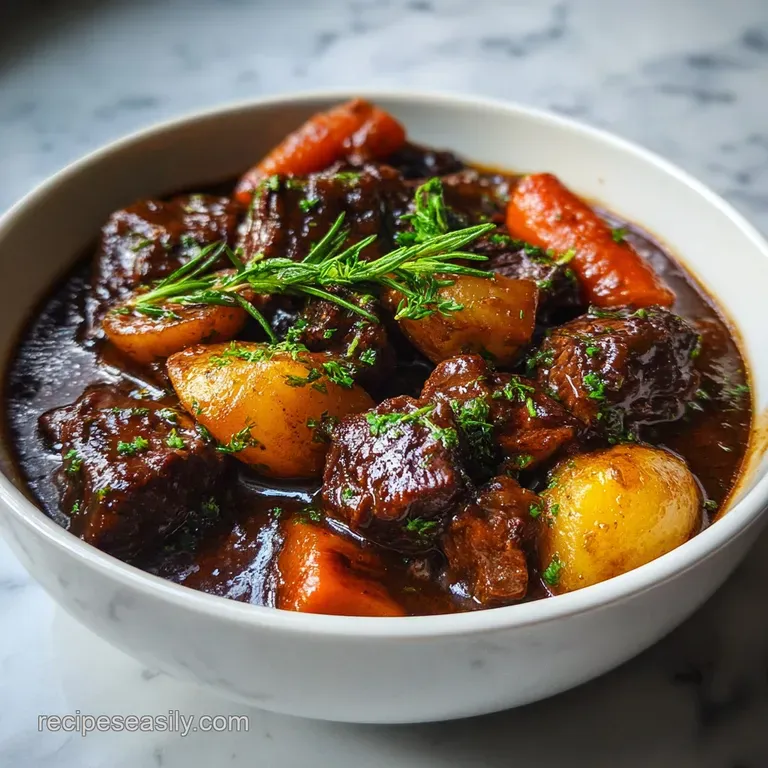
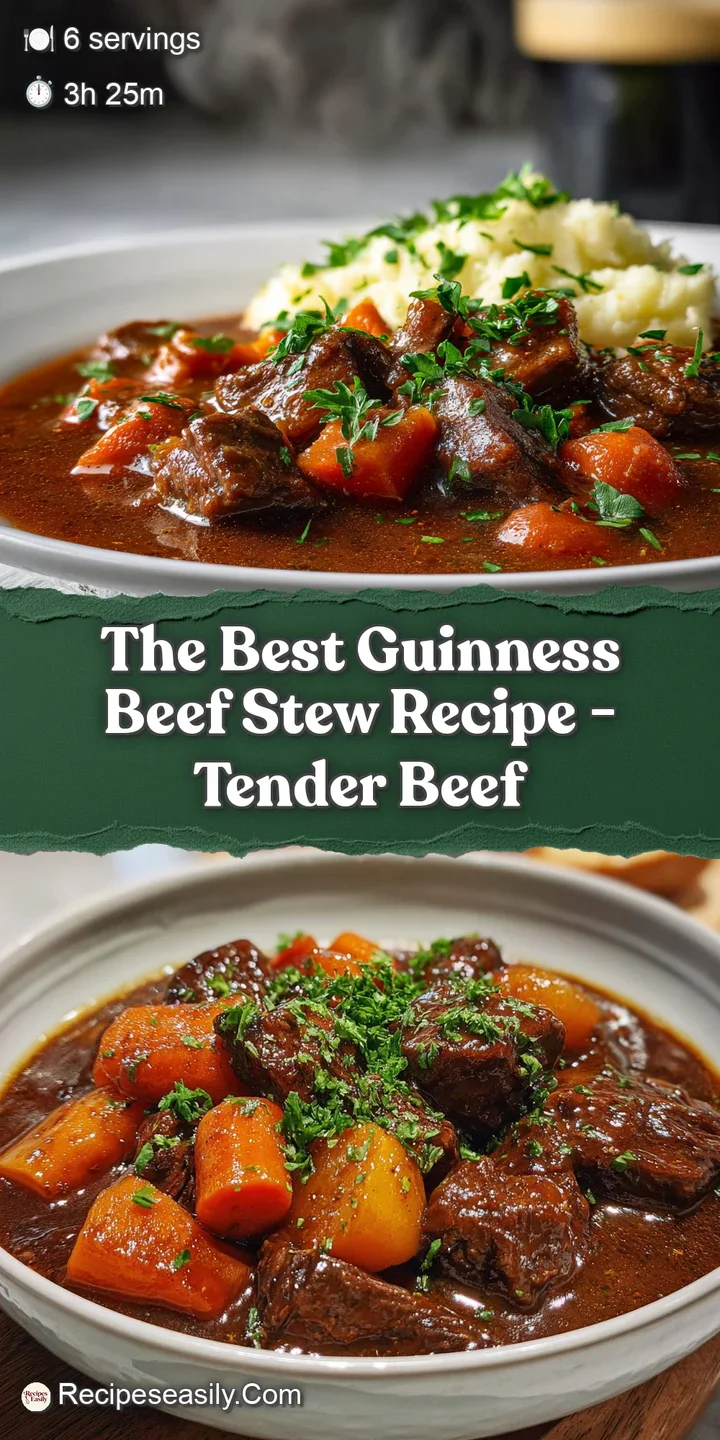
- Time: Active 25 minutes, Passive 3 hours, Total 3 hours 25 mins
- Flavor/Texture Hook: Tender, melt in-your mouth beef in a silky, malt forward sauce
- Perfect for: St. Patrick’s Day celebrations or a cozy Sunday family dinner
- Master The Best Guinness Beef Stew at Home
- Reasons This Hearty Irish Meal Succeeds
- Core Components for a Perfect Braise
- Simple Tools for Better Cooking Results
- Steps for a Rich Stew Base
- Fixing Common Texture and Flavor Issues
- Flavor Variations for Your Next Batch
- Storage and Using Leftover Ingredients
- Finishing Touches for a Restaurant Look
- Recipe FAQs
- 📝 Recipe Card
Master The Best Guinness Beef Stew at Home
I remember the first time I tried a real Irish Beef Stew Recipe in a tiny pub in Galway. It was pouring outside, the kind of rain that soaks through your bones, and the aroma of that stew hit me before the door even closed.
It wasn't just "beef soup" - it was thick, dark, and had this incredible depth that made every other stew I'd ever eaten feel like a pale imitation. I spent years trying to replicate that specific velvety texture and the balance of the Guinness without the bitterness taking over.
Most people make the mistake of boiling their beef or using a beer that's too light. If you want The Best Guinness Beef Stew, you have to respect the stout. It's about the way the sugar in the dark brown sugar interacts with the malt, and how the beef bone broth provides a foundation that regular stock just doesn't have.
This isn't a "throw it in and hope" kind of meal. It's a structured process that rewards patience with a sauce so rich you'll want to lick the bowl clean.
We are going to walk through this together, from the sizzle of the initial sear to that moment three hours later when the beef finally yields to the pressure of a spoon. You don't need a kitchen full of gadgets for this. A heavy pot and a little bit of time are the only real requirements.
Let's get that stove preheated and dive into why this specific method works so well compared to the watery versions you might have seen before.
Reasons This Hearty Irish Meal Succeeds
Cooking a Traditional Beef and Guinness Stew is a lesson in patience and chemistry. We aren't just heating things up, we're changing the literal structure of the meat and the liquid. When you combine the tannins in the beer with the gelatin from the bone broth, something magical happens in that pot.
- Maillard Mastery: Searing the beef in large 2 inch slabs instead of tiny cubes creates a massive surface area for browning without overcooking the interior before the braise even starts.
- Collagen Conversion: The 3 hours of low heat slowly breaks down the tough connective tissue in the chuck roast, turning it into gelatin which thickens the sauce naturally.
- Bitterness Balancing: Using dark brown sugar and tomato paste provides the necessary acidity and sweetness to cut through the heavy, roasted notes of the Guinness Draught.
- Starch Suspension: The Yukon Gold potatoes release just enough starch during the final hour to give the gravy a velvety mouthfeel without turning the whole pot into mush.
| Cooking Style | Time Required | Beef Texture | Flavor Profile |
|---|---|---|---|
| Fast Stovetop | 45 minutes | Chewy/Tough | Sharp, thin, and underdeveloped |
| The Classic Braise | 3 hours 25 mins | Fork tender | Deep, complex, and mellow |
| Slow Cooker | 8 hours | Shreddy | Mild but very consistent |
Choosing the classic braise is always worth the wait because it allows the liquid to reduce and intensify. If you try to rush a chuck roast, you'll end up with beef that feels like rubber bands in your mouth.
The slow simmer is the only way to get that "shatter on-your tongue" texture that defines a world class Irish stew.
Core Components for a Perfect Braise
The secret to an Authentic Guinness Beef Stew lies in the quality of the base. We are using beef bone broth because it contains way more natural gelatin than standard carton broth. This is what gives the sauce that "lip smacking" quality.
When you shop, look for the broth in the refrigerated section or a high-quality glass jar for the best results.
| Component | Science Role | Pro Secret |
|---|---|---|
| Beef Chuck Roast | Primary protein and fat source | Leave the fat cap on during the sear for extra flavor. |
| Guinness Draught | Acidic tenderizer and flavor base | Use the "can" with the nitrogen widget for a smoother sauce. |
| Tomato Paste | Umami booster and thickener | Fry the paste until it turns brick red to remove the raw metallic taste. |
| Dark Brown Sugar | pH balancer | This is the "magic" ingredient that cancels out the beer's hop bitterness. |
For the beef, I always grab a 3 lbs beef chuck roast and cut it myself. Pre cut "stew meat" is often a mix of different scraps that cook at different rates, which is a recipe for disaster. By cutting 2 inch slabs yourself, you ensure every bite is equally tender.
Also, don't skip the Worcestershire sauce; it adds a fermented funk that highlights the beefiness of the whole dish.
Chef Tip: Freeze your beef for about 20 minutes before cutting. It firms up the fat and makes getting those perfect 2 inch slabs much easier and safer.
Simple Tools for Better Cooking Results
You don't need a pantry full of specialized gear to make a legendary Irish Beef Stew Recipe. In fact, keeping it simple usually leads to better results because you can focus on the technique rather than the equipment. The most important player here is your pot.
A heavy bottomed Dutch oven (like a Lodge or Le Creuset) is the gold standard because it holds heat so evenly. If you use a thin stainless steel pot, you run the risk of scorching the bottom during the long 3 hour simmer. If you're looking for something a bit different, you might find the techniques in The Julia Childs recipe helpful for mastering the art of the French style braise which uses similar tools.
- Heavy Dutch Oven: 5 to 7 quart capacity is perfect for 6 servings.
- Sharp Chef's Knife: Essential for breaking down that 3 lbs chuck roast.
- Wooden Spoon: Best for scraping up the "fond" (the brown bits) after deglazing.
- Tongs: Much better than a fork for flipping beef slabs to get an even sear.
Steps for a Rich Stew Base
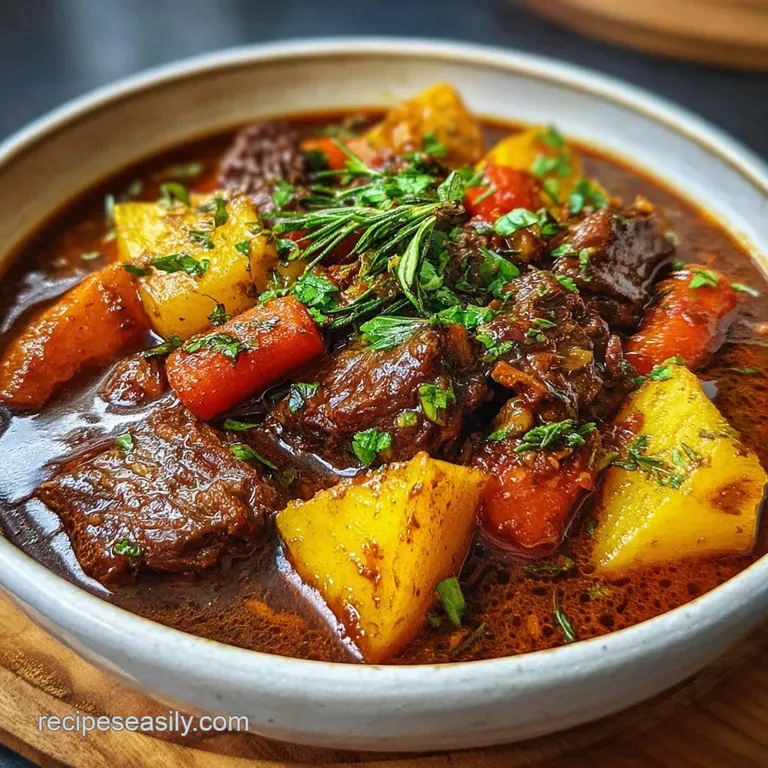
Creating this stew is a linear process. We start with over high heat energy and gradually move toward a gentle, over low heat finish. This transition is what develops the layers of flavor that make people ask for the recipe.
The Foundation and Aromatics
- Sear the beef. Heat 2 tbsp vegetable oil in your pot over medium high heat. Season the beef slabs with 1 tsp kosher salt and 0.5 tsp black pepper. Sear until a dark, crusty brown develops on both sides. Work in batches to avoid crowding.
- Sauté the onions. Remove the beef and add the 2 chopped onions to the same pot. Cook for 5 minutes until softened and picking up the brown bits from the beef.
- Add the veggies. Toss in the 2 stalks of diced celery and 3 large carrots chunks. Stir frequently until the vegetables look glossy and bright.
- Toast the paste and garlic. Stir in 4 cloves minced garlic and 2 tbsp tomato paste. Cook for 2 minutes until the paste smells sweet and slightly toasted.
Building the Braise
- Deglaze with Guinness. Pour in the 14.9 oz can of Guinness Draught. Use your wooden spoon to scrape every single brown bit off the bottom of the pot. Note: These bits are pure flavor "gold" called fond.
- Combine the liquids. Stir in 4 cups beef bone broth, 1 tbsp Worcestershire sauce, and 1 tbsp dark brown sugar. Add the 2 sprigs of fresh thyme and 2 bay leaves.
- Return the beef. Place the seared beef slabs (and any juices from the plate) back into the pot. Bring to a boil, then immediately drop the heat to the lowest possible simmer.
- The long simmer. Cover tightly and simmer for 2 hours. The liquid should barely bubble.
- Add the potatoes. Gently stir in 1.5 lbs halved Yukon Gold potatoes. Cover and cook for another 1 hour 30 mins until the beef is fork tender and the potatoes are buttery.
- Final rest. Turn off the heat and let the stew sit for 15 minutes before serving. This allows the fibers of the meat to relax and soak back up some of the gravy.
Fixing Common Texture and Flavor Issues
Even with the best intentions, things can go sideways. Maybe your stove runs hot, or your Guinness was particularly hoppy. Don't panic; most stew "disasters" are actually very easy to fix if you catch them early.
Handling Excess Bitterness
If you taste the gravy and it feels like a punch of bitter hops, it’s usually because the beer reduced too fast or didn't have enough sugar to balance it. Add another teaspoon of dark brown sugar or a tablespoon of heavy cream.
The fat in the cream coats the tongue and masks the bitter receptors, while the sugar chemically balances the acidity.
Correcting Thin Gravy
A watery stew is usually the result of the lid not being tight enough, or the potatoes not releasing enough starch. Don't just add flour directly to the pot you'll get lumps.
Instead, take a ladle of the hot liquid, mix it with a teaspoon of cornstarch in a separate bowl to make a slurry, then stir that back in and simmer for 5 minutes.
| Problem | Root Cause | Solution |
|---|---|---|
| Beef is Tough | Under cooked collagen | Simmer for another 30 mins. It will eventually yield. |
| Salty Gravy | Over reduction of broth | Add a splash of water or more potatoes to absorb salt. |
| Mushy Potatoes | Wrong potato type used | Next time, use waxy Yukon Golds. For now, enjoy the "thick" gravy. |
Common Mistakes Checklist
- ✓ Patting the beef dry: If the meat is wet, it will steam rather than sear, and you'll miss out on that deep brown flavor.
- ✓ Crowding the pan: Searing too much beef at once drops the temperature of the oil, preventing a proper crust.
- ✓ Boiling instead of simmering: A rolling boil will toughen the muscle fibers. You want "lazy" bubbles only.
- ✓ Skipping the rest: Letting the stew sit for 15 minutes at the end is the difference between "good" and "unforgettable."
- ✓ Using Russet potatoes: These will dissolve completely. Always stick to Yukon Golds for this recipe.
Flavor Variations for Your Next Batch
Once you've mastered the classic, you can start playing with the ratios. Some people prefer a more vegetable heavy version, while others want a thicker, almost "pot pie" style filling. If you're in a hurry and can't commit to 3 hours, you might want to try this simple slow cooker recipe which allows the machine to do the heavy lifting while you're at work.
- If you want a deeper flavor, add 1 oz of high-quality dark chocolate (70% cocoa) at the very end. It won't taste like chocolate, but it will make the Guinness taste twice as rich.
- If you want more texture, pearl onions added in the last 45 minutes provide a lovely sweetness and a pop of texture that chopped onions don't offer.
- If you want a smoky kick, swap the vegetable oil for bacon fat and stir in some crumbled bacon before serving.
| Method | Best For | Liquid Ratio | Time Adjust |
|---|---|---|---|
| Stovetop | Maximum flavor depth | As written | 3 hours 25 mins |
| Oven (300°F) | Most even heat | As written | 3 hours 45 mins |
| Slow Cooker | Busy schedules | Reduce broth by 1 cup | 8 hours (Low) |
Storage and Using Leftover Ingredients
This Easy Guinness Beef Stew Recipe is the gift that keeps on giving. Because of the high gelatin content from the bone broth, the sauce will turn into a thick jelly in the fridge. This is totally normal! It will melt back into a silky liquid as soon as you heat it up.
- Fridge Storage
- Keep it in an airtight container for up to 4 days. In fact, it's often better on day two or three because the starches in the potatoes have time to fully integrate with the beer.
- Freezer Storage
- You can freeze this for up to 3 months. However, be aware that potatoes can sometimes get a slightly "grainy" texture after being frozen and thawed.
- Zero Waste Tip
- If you have leftover gravy but no beef left, use it as a base for a shepherd's pie. Just sauté some ground lamb or beef, mix in the leftover gravy, and top with mashed potatoes. You can also save your carrot and celery scraps in a freezer bag to make your own broth later.
Finishing Touches for a Restaurant Look
Presentation might seem fussy for a rustic stew, but we eat with our eyes first. A bowl of brown liquid can look unappealing no matter how good it tastes. A few simple tricks can make this look like it came out of a professional kitchen.
Don't just dump the stew into a bowl. Use a shallow wide bowl and try to place a large piece of beef and a few intact potato halves right on top. Garnish with a generous pinch of fresh flat leaf parsley for color. The bright green contrast against the dark mahogany sauce is classic for a reason.
- The Crusty Bread Factor: Always serve with a side of soda bread or a thick slice of sourdough. You need something to mop up that velvety gravy.
- The Topping: A small dollop of horseradish cream (sour cream mixed with prepared horseradish) can provide a sharp, cold contrast to the hot, rich stew.
- The Pour: Serve it with a fresh pint of the same Guinness you used for cooking. The cold, creamy head of the beer perfectly cleanses the palate between rich bites of beef.
The Myth of Searing to "Seal in Juices"
You’ve probably heard that searing meat "seals in the juices." Honestly, that's just not true. If you weigh a seared steak and an unseared one, the seared one actually loses more moisture. We sear for one reason only: the Maillard reaction.
This is the chemical reaction between amino acids and reducing sugars that gives browned food its distinctive flavor. Without that sear, your stew will taste "boiled" and flat. Trust me, the extra 10 minutes spent browning those slabs is the most important part of the entire process.
The Myth of Alcohol Burning Off Instantly
Many people think that as soon as a sauce boils, the alcohol is gone. In reality, it takes a long time for alcohol to fully evaporate. After 30 minutes of simmering, about 35% of the alcohol is still there. By the end of our 3 hour braise, you're down to about 5%.
This is why the flavor of the Guinness remains so present it’s not just the malt and hops, it’s the way the remaining alcohol carries the flavor compounds of the other ingredients.
Recipe FAQs
What's the secret to a rich Guinness stew?
Searing the beef in large slabs and using beef bone broth. Searing creates the Maillard reaction flavor base, and the gelatin in the bone broth naturally thickens the sauce without needing flour. This richness is essential for cutting through the stout’s intensity.
Is Guinness good for beef stew?
Yes, it is essential for authentic flavor. Guinness Draught provides deep, malty, roasted notes and acidity that tenderize the meat during the long braise. Ensure you balance its bitterness with dark brown sugar.
What is the best cut of meat for Guinness stew?
Beef chuck roast is the best choice. This cut has the perfect amount of connective tissue (collagen) which slowly dissolves during the 3-hour simmer, turning tough fibers into melt-in-your mouth gelatin.
What spices enhance Guinness stew?
Thyme, bay leaves, and Worcestershire sauce are key enhancers. Thyme offers an earthy note that complements the malt, while Worcestershire adds necessary umami depth. If you enjoyed learning about deep flavor building here, see how that same principle of fermented flavor works in our Marry Me Butter recipe.
How do I prevent the sauce from tasting overly bitter from the stout?
Fry the tomato paste until brick red and add dark brown sugar. Frying the paste removes raw metallic notes, and the sugar provides the sweetness needed to chemically balance the stout's inherent hop bitterness.
How long should I simmer the stew for maximum tenderness?
Simmer for at least three hours total, covered, on the lowest heat. The slow, gentle heat breaks down the collagen, which is the chemical process responsible for achieving that fork tender texture you want in a braise.
Should I add flour to thicken the stew during the braise?
No, thickening should happen after the beef is cooked. Adding flour early results in a gummy texture; instead, use the natural starch released by Yukon Gold potatoes or create a cornstarch slurry with reserved liquid at the very end.
Best Guinness Beef Stew Recipe
Ingredients:
Instructions:
Nutrition Facts:
| Calories | 742 kcal |
|---|---|
| Protein | 51g |
| Fat | 42g |
| Carbs | 36g |
| Fiber | 5g |
| Sugar | 9g |
| Sodium | 980mg |
