Chicken Stew Recipe with Potatoes
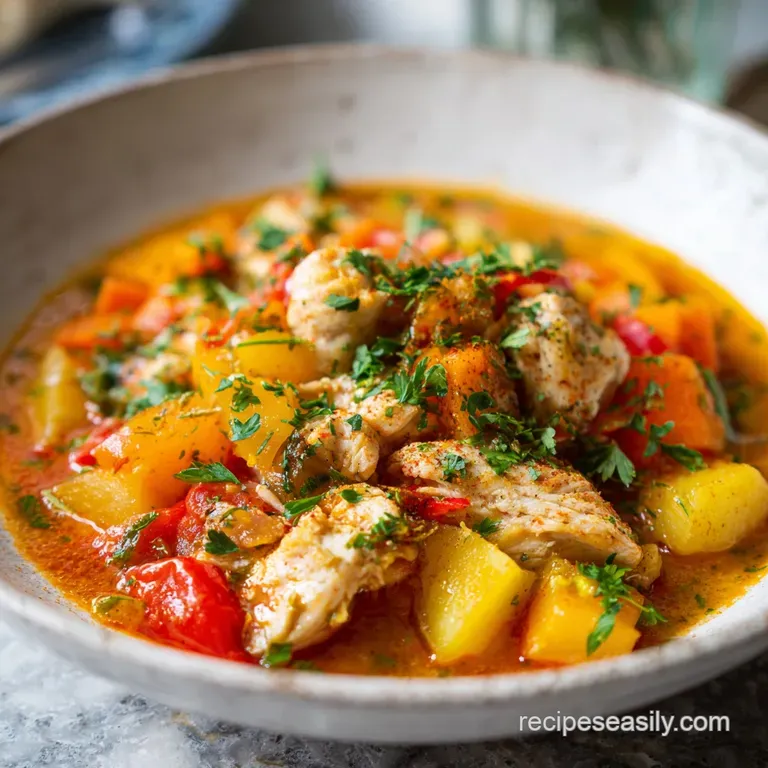
- Time: Active 20 minutes, Passive 50 minutes, Total 1 hours 10 mins
- Flavor/Texture Hook: Silky broth with fork tender chicken
- Perfect for: Stress free Sunday prep or a cozy family dinner
- Master the Ultimate Chicken Stew Recipe Tonight
- Core Metrics and Prep Times
- Science of the Essential Ingredients
- Kitchen Tools for Success
- Step-by-Step Flavor Building Guide
- Fixing Common Cooking Errors
- Budget Swaps and Tasty Variations
- Budget Cooking Method Variations
- Leftover Storage and Food Waste
- Sides and Perfect Pairings
- Chicken Stew FAQs
- 📝 Recipe Card
Master the Ultimate Chicken Stew Recipe Tonight
The sizzle of chicken thighs hitting a hot Dutch oven is a sound I’ll never get tired of. I remember one rainy afternoon when I was determined to make a "quick" stew using chicken breasts because that’s all I had. Big mistake.
Within twenty minutes, the meat had the texture of a dry pencil eraser, and the broth tasted like lightly seasoned water. I stood there, staring at a pot of sadness, realizing that a great stew isn't about speed; it's about the right cuts and the right timing.
That failure sent me on a mission to find the perfect balance. I started experimenting with bone in versus boneless, different types of potatoes, and the exact moment to add the peas so they don't turn into gray mush. This chicken stew recipe is the result of those messy experiments.
It’s got that thick, glossy sauce that coats the back of a spoon and chicken that literally falls apart if you breathe on it too hard. We’re going for comfort in a bowl, not a science project, but a little kitchen logic goes a long way.
Core Metrics and Prep Times
When you're hungry, "an hour" can feel like an eternity, so let's look at how this time actually breaks down. Most of your work happens in the first twenty minutes. Once the lid goes on and the heat drops, you're basically free to go catch up on a show or finally fold that pile of laundry while the stove does the heavy lifting.
Cooking Method Comparison
| Method | Time | Texture | Best For |
|---|---|---|---|
| Stovetop | 1 hours 10 mins | Deeply layered, silky | Maximizing flavor development |
| Pressure Cooker | 35 minutes | Ultra tender, thinner sauce | Desperate weeknight rushes |
| Slow Cooker | 6 hours | Completely shredded meat | Hands off morning prep |
If you decide to go the stovetop route, you're choosing the gold standard. The way the flour toasts in the butter and chicken fat creates a nutty base that a pressure cooker just can't replicate. It’s the difference between a dish that tastes good and a dish that tastes like it came from a French bistro.
Science of the Essential Ingredients
The Physics of the Fond: Those brown bits stuck to the bottom of your pot after searing are concentrated flavor bombs created by the Maillard reaction. When we deglaze with white wine, we’re chemically lifting those proteins and sugars back into the liquid, ensuring the broth has a complex, savory depth rather than a flat, salty profile.
Precision Checkpoints for Success
- Searing Temperature: Your oil should be shimmering (about 375°F) before the chicken hits the pan to ensure a crust forms without boiling the meat.
- Potato Size: Quartering 1 lb of baby yellow potatoes into roughly 1 inch pieces ensures they soften at the exact same rate the chicken reaches 175°F.
- Liquid Ratio: Maintaining exactly 4 cups of broth to 0.25 cup of flour creates a 16:1 ratio, which is the sweet spot for a "stew" consistency rather than a "soup" or "gravy."
Starch Gelatinization: As the potatoes simmer, they release tiny amounts of starch into the broth. This works alongside the flour to create a velvety mouthfeel that doesn't feel heavy or greasy, making the stew feel much richer than it actually is.
Component Analysis
| Ingredient | Science Role | Pro Secret |
|---|---|---|
| Chicken Thighs | Fat & Connective Tissue | Thighs contain more collagen, which melts into gelatin during the simmer, creating a luscious broth. |
| Baby Potatoes | Controlled Starch | These have a waxy texture that holds its shape, preventing the stew from becoming a grainy mess. |
| Dry White Wine | Acidity & Deglazing | The acid cuts through the richness of the butter and fat, brightening the entire flavor profile. |
Kitchen Tools for Success
You don't need a professional kitchen, but a heavy bottomed pot is non negotiable here. A cast iron Dutch oven is my go to because it holds heat like a champ. If you use a thin, cheap pot, you’ll end up with "hot spots" where the flour burns before the chicken even cooks through.
I’ve ruined many a pot of onions trying to use a lightweight stockpot for a stew.
Chef Tip: If you don't have a Dutch oven, use the heaviest stainless steel pot you own. Avoid non stick pans for the searing phase; you won't get that beautiful brown "fond" on the bottom that we need for the sauce.
Also, keep a sturdy wooden spoon or a flat edged spatula handy. You’ll need it to scrape up every single bit of flavor during the deglazing step. It’s like leaving money on the table if you don't get those brown bits off the bottom. If you're feeling fancy, this recipe pairs beautifully with a side of One Pan Roasted recipe if you're looking to meal prep multiple chicken dishes at once.
step-by-step Flavor Building Guide
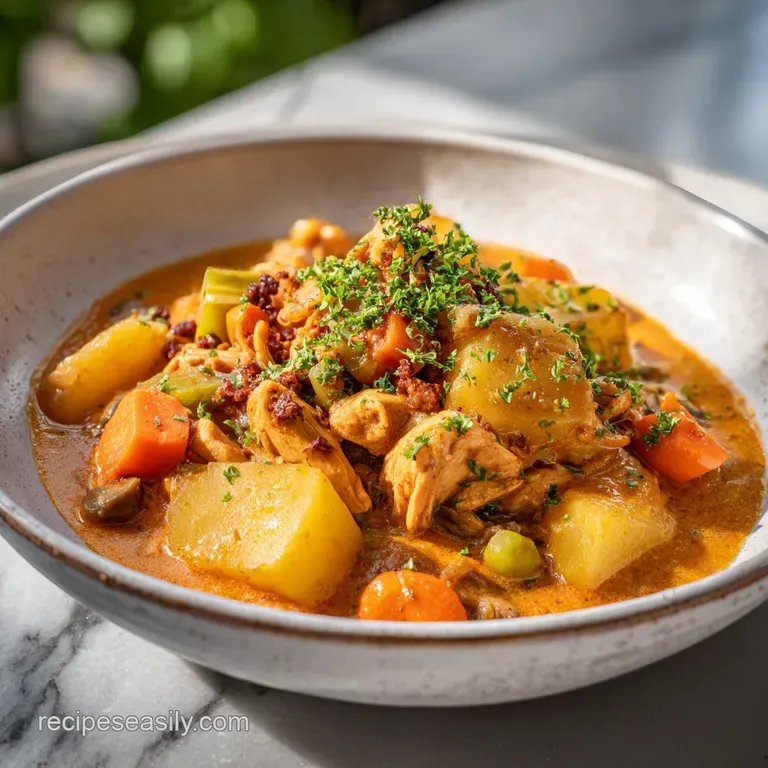
- Prep the chicken. Pat the 2 lbs chicken thighs dry with paper towels. Note: Excess moisture causes steaming instead of searing.
- Sear for color. Heat 2 tbsp olive oil in a large pot over medium high heat. Brown the chicken in batches until a golden crust forms on all sides.
- Soften the aromatics. Remove chicken. Add 1 tbsp butter, 1 large onion, 3 carrots, and 2 celery ribs. Sauté until the onions are translucent and fragrant.
- Add the garlic. Stir in 3 minced garlic cloves. Cook for 1 minute until you smell that sharp garlic aroma.
- Create the base. Sprinkle 0.25 cup flour over the vegetables. Stir constantly for 2 minutes until the flour smells slightly nutty.
- Deglaze the pan. Pour in 0.5 cup dry white wine. Scrape the bottom of the pot vigorously until all the brown bits are dissolved.
- Simmer the stew. Add 4 cups chicken broth, the quartered potatoes, 2 bay leaves, 1 tbsp thyme, and the seared chicken. Bring to a boil, then drop to low.
- Cook through. Cover and simmer for 35 minutes until the potatoes are fork tender and the chicken is soft.
- The final touch. Stir in 1 cup frozen peas and cook for 3 minutes until they turn bright, vibrant green.
- Adjust seasoning. Remove bay leaves. Stir in 1 tsp salt and 0.5 tsp pepper. Taste and add more if the flavors don't "pop" yet.
Fixing Common Cooking Errors
One of the biggest heartbreaks is opening the lid to find a pot of mush. It happens to the best of us! Usually, it's just a matter of heat control or timing. If your stew looks more like a soup, don't panic.
You can always fix it with a simple cornstarch slurry (1 tbsp cornstarch mixed with 1 tbsp cold water) stirred in at the end.
Why Your Stew Liquid Is Thin
If the liquid isn't thickening up, you might have skipped the "toasting" phase of the flour. Flour needs to cook with the fat for a couple of minutes to develop its thickening power. If you just dump it into cold liquid, it clumps and loses its ability to bind the sauce.
| Problem | Root Cause | Solution |
|---|---|---|
| Bland Broth | Not enough salt or searing | Add a splash of soy sauce or Worcestershire for instant depth and check salt levels. |
| Tough Chicken | Under cooked or wrong cut | Simmer for another 10 minutes. Thighs need time to break down their connective tissue. |
| Mushy Veggies | Cut too small or overcooked | Keep carrots in thick 1 inch rounds and potatoes in large chunks next time. |
Common Mistakes Checklist
- ✓ Pat chicken completely dry before searing (prevents steaming and gray meat)
- ✓ Preheat the pot for 3 full minutes before adding the oil
- ✓ Don't overcrowd the pan - work in two batches to ensure a proper sear
- ✓ Scrape the bottom thoroughly after adding wine to capture the "fond"
- ✓ Add the frozen peas at the very end to keep them from turning gray
Budget Swaps and Tasty Variations
Let's talk money. Chicken thighs are usually cheaper than breasts anyway, but if they're still pricey, you can use drumsticks. Just be prepared to fish out the bones later! This is a very forgiving dish, so don't feel like you have to run to the store for one missing herb.
| Original Ingredient | Substitute | Why It Works |
|---|---|---|
| Dry White Wine | 0.5 cup broth + 1 tsp lemon juice | Provides the necessary acidity without the cost of a bottle of wine. |
| Fresh Thyme | 1 tsp Dried Thyme | Concentrated flavor. Note: Add earlier in the cook to help it rehydrate. |
| Baby Potatoes | Russet Potatoes | Higher starch makes for a thicker, slightly grainier sauce peel them first! |
If you're looking for a different flavor profile entirely, you might enjoy my Tasty Vietnamese Chicken recipe, which uses similar techniques but swaps the flour for coconut milk and curry spices.
Decision Shortcut
- If you want a richer finish, stir in 2 tablespoons of heavy cream right before serving.
- If you want a brighter flavor, add a teaspoon of apple cider vinegar at the very end.
- If you want a smokier vibe, swap the butter for two slices of chopped, cooked bacon.
Budget Cooking Method Variations
If you're really watching the clock or the electric bill, you can adapt this recipe easily. For a "Faster Stovetop" version, cut the chicken and potatoes into 1/2 inch pieces. This drops the simmer time from 35 minutes to about 15 minutes, though the broth won't be quite as developed.
Leftover Storage and Food Waste
Stew is one of those rare things that actually tastes better the next day. The flavors mingle, the starches settle, and everything just gets... better. I always make a double batch specifically so I have lunch for the rest of the week.
- Fridge: Store in an airtight container for up to 4 days.
- Freezer: This stew freezes beautifully for up to 3 months. Just leave about an inch of space at the top of your container because the liquid will expand.
- Reheating: Thaw overnight in the fridge. Heat it slowly on the stovetop over medium low heat. You might need to add a splash of water or broth to loosen it up.
- Zero Waste: Don't throw away those onion skins or celery ends! Toss them into a freezer bag. When the bag is full, boil them with water to make your own "scrap broth" for the next time you make this chicken stew recipe.
Sides and Perfect Pairings
While this is technically a one pot meal, I never serve it without something to soak up that sauce. A crusty baguette is the classic choice, but a big scoop of mashed potatoes or even some buttered egg noodles works wonders if you're extra hungry.
The richness of the chicken and the wine infused broth needs something fresh to balance it out. A simple green salad with a sharp vinaigrette is usually my go to. If you're hosting a dinner and want something a bit more impressive to go alongside it, you could try this Parmesan Crusted Chicken recipe for the kids while the adults enjoy the stew. Trust me, once you master the sear and the simmer, this will become your most requested comfort meal.

Chicken Stew FAQs
What can I add to my chicken stew to give it more flavor?
Add a splash of Worcestershire sauce or soy sauce near the end. These umami rich ingredients deepen the savory base without making the stew taste distinctly like the addition. A teaspoon of Dijon mustard also brightens the overall flavor profile beautifully.
What makes chicken stew taste good?
Searing the chicken properly and deglazing the pot are essential. The dark brown bits stuck to the bottom, called the fond, contain intense savory flavor compounds created by the Maillard reaction. If you enjoyed mastering the sensory doneness cues here, apply them to our Ground Beef Stroganoff recipe for perfect results.
What is the secret to good stew?
Use chicken thighs instead of breasts for tender meat and a richer sauce. Thighs contain more fat and connective tissue, which melts down during simmering, thickening the broth naturally with gelatin. Breasts tend to dry out before the broth develops sufficient depth.
What is the best liquid for a chicken casserole?
Use a combination of dry white wine for deglazing, followed by high-quality chicken broth. The wine's acidity cuts through the richness of the fats, adding complexity, while the broth provides the primary volume and savory foundation. If you are aiming for a creamier result, consider substituting half the broth with milk or cream as detailed in the Cozy Creamy Herb recipe for an analogous texture boost.
How do I prevent my stew from tasting watery?
Toast the flour thoroughly when making the roux before adding liquids. Cook the flour in the fat for at least two full minutes until it smells slightly nutty, ensuring the starch is fully activated to absorb moisture. If you skip this, the flour won't properly thicken the sauce.
Can I use frozen vegetables in my stew?
Yes, but only add frozen peas or corn during the final five minutes of cooking. Adding them too early causes them to overcook, releasing too much water and turning them an unappetizing gray color. If you were making a lighter dish, you could use frozen vegetables in our Quick Vegetable Soup for recipe, but for a stew, keep the main root vegetables fresh.
Is it true that stew is always better the next day?
Yes, leftover stew is generally superior in flavor. As the stew cools, starches retrograde slightly, and the dissolved flavors continue to marry and deepen overnight in the refrigerator. Reheat slowly on the stovetop to maintain the best texture.
Chicken Stew Recipe With Potatoes
Ingredients:
Instructions:
Nutrition Facts:
| Calories | 512 kcal |
|---|---|
| Protein | 31.5 g |
| Fat | 28.4 g |
| Carbs | 26.8 g |
| Fiber | 4.2 g |
| Sugar | 5.1 g |
| Sodium | 785 mg |
