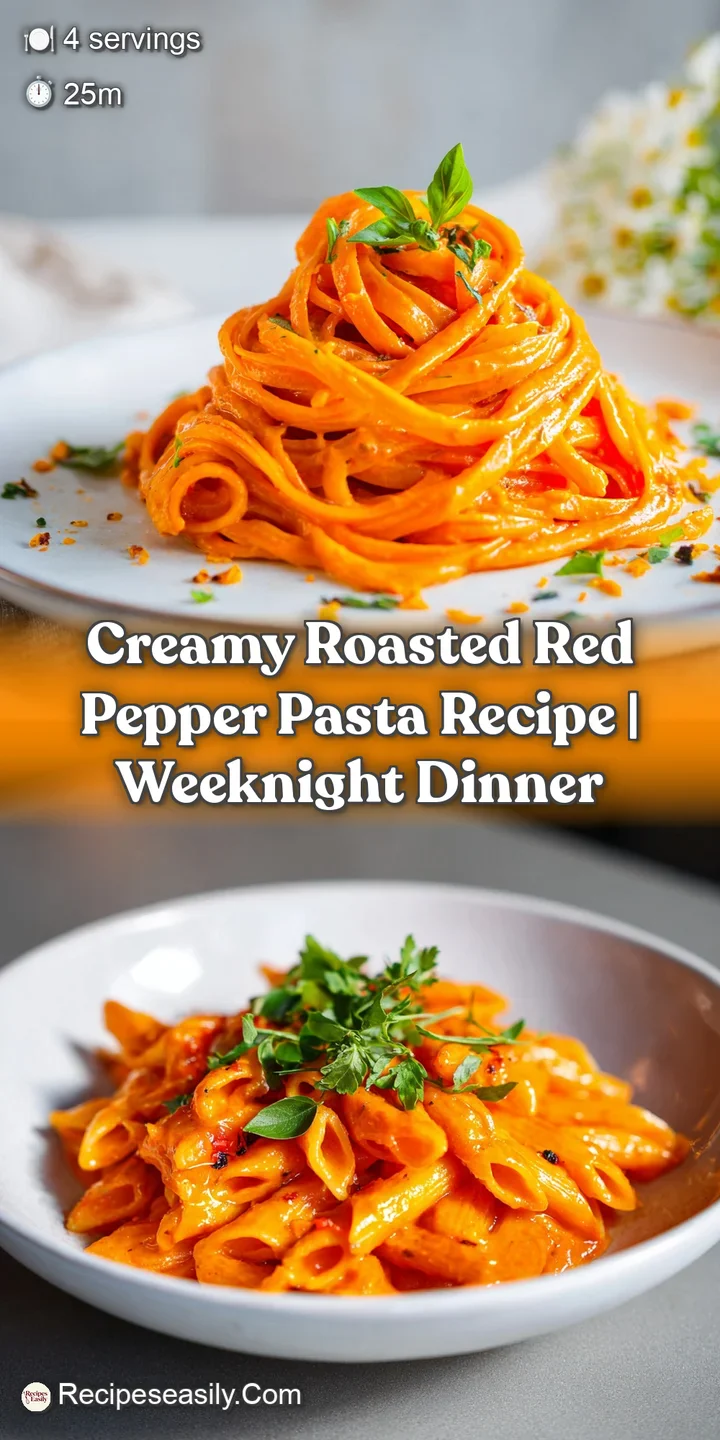
Creamy Roasted Red Pepper Pasta
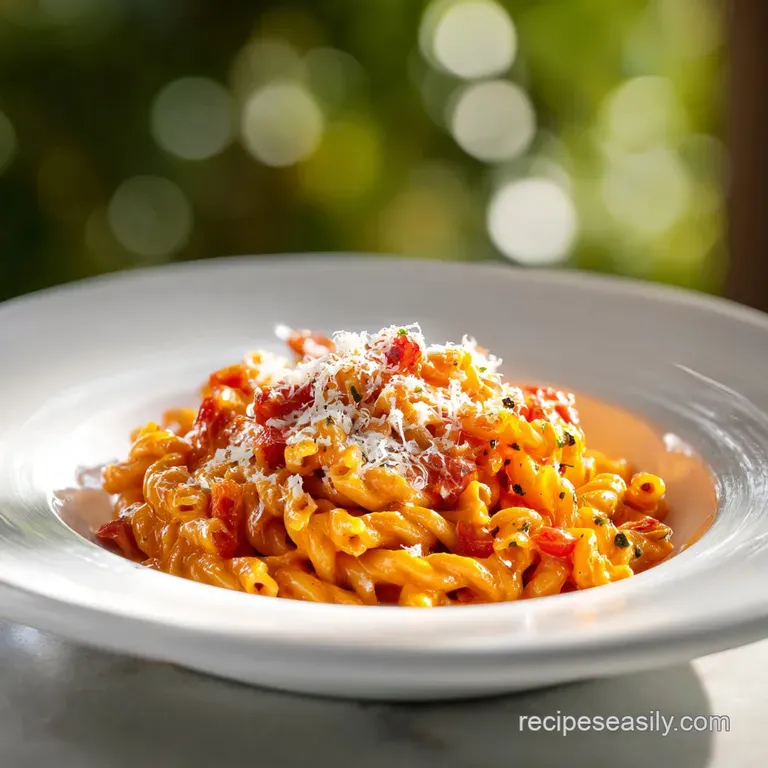
- Time: Active 10 minutes, Passive 15 minutes, Total 25 minutes
- Flavor/Texture Hook: Velvety, smoky sauce that clings to every noodle
- Perfect for: Busy weeknights when you want comfort without the heavy prep
- Unlocking the Chemistry of Roasted Pepper Sauce Emulsion
- Essential Timing and Serving Data for Your Dinner
- Selecting the Best Components for Your Red Pepper Pasta
- The Minimalist Kitchen Tools Required for Smooth Results
- The Step by Step Guide to a Velvety Finish
- Fixing Common Texture and Flavor Issues in Your Sauce
- Simple Ingredient Swaps for Every Dietary Need
- Debunking Common Roasted Pepper Myths
- Best Practices for Storing and Reheating Your Leftovers
- Choosing the Perfect Sides to Complement Your Meal
- Recipe FAQs
- 📝 Recipe Card
I still remember the first time I tried to make a "fancy" pasta for a friend who was coming over on short notice. I had half a box of penne and a jar of roasted peppers that had been sitting in the back of my pantry since the previous Christmas.
I figured I would just chop them up and toss them in, but the result was, honestly, a bit of a watery mess. It wasn't until I realized that the secret isn't in the chopping, but in the emulsion, that everything changed.
Now, whenever I hear that distinct pop of a vacuum sealed jar opening and smell that charred, vinegary aroma, I know I'm only twenty minutes away from something special. We've all been there, staring at the fridge at 6:00 PM with zero motivation, but this dish is the reason I always keep jarred peppers on hand.
It's the ultimate "pantry pull" that actually feels like a treat.
The real beauty here is how the smoked paprika plays off the natural sweetness of the peppers. When that sauce hits the hot pan and starts to sizzle, the whole kitchen smells like a Mediterranean summer. It's rich, it's bright, and it has just enough of a kick to keep things interesting.
Let's get into how we make this work every single time without breaking a sweat.
Unlocking the Chemistry of Roasted Pepper Sauce Emulsion
The secret to this velvety sauce is the high speed mechanical breakdown of the pepper's cellular structure, which releases natural pectin. When you blend the peppers with the fats in the heavy cream, you're creating a stable emulsion that coats the pasta instead of sliding off.
Chef Tip: For an even deeper flavor, toast your smoked paprika in the olive oil for exactly 30 seconds before adding the blended sauce; this blooms the fat soluble flavor compounds for a more intense aroma.
| Method | Time | Texture | Best For |
|---|---|---|---|
| Stovetop | 25 minutes | Silkier, emulsified sauce | Quick weeknight dinners |
| Oven Finish | 35 minutes | Bubbling, slightly charred edges | Meal prep or "baked" style |
Essential Timing and Serving Data for Your Dinner
This recipe is designed to be efficient, moving from the cutting board to the table in under half an hour. To keep the workflow smooth, I always start the pasta water first, as it's the only part of the process that takes its own sweet time.
While the water comes to a boil, you can have the entire sauce prepped and ready to go.
| Component | Science Role | Pro Secret |
|---|---|---|
| Roasted Peppers | Provides the base sugars and acidity | Use the brine from the jar to thin the sauce if it gets too thick |
| Heavy Cream | Acts as the emulsifier and fat source | Room temperature cream incorporates faster without curdling |
| Pasta Water | Starch rich binder for the sauce | Save a full cup; it's the "liquid gold" that fixes a dry pasta |
If you find yourself wanting to add a bit of bulk to this meal, it pairs beautifully with protein. You might find that adding shrimp to this dish works just as well as it does in my Creamy Garlic Shrimp recipe, where the sauce provides a lush backdrop for the seafood.
Selecting the Best Components for Your Red Pepper Pasta
- 12 oz jarred roasted red peppers, drained: These are the star. Why this? Jarred peppers are already peeled and charred, saving you 40 minutes of roasting time. (Substitute: 3 fresh large red bell peppers, charred and peeled).
- 1 lb penne, rigatoni, or fettuccine pasta: Any shape with ridges or a flat surface works best. Why this? Ridges trap the sauce, ensuring every bite is flavorful. (Substitute: gluten-free brown rice pasta).
- 0.5 cup heavy cream: This provides the luxurious mouthfeel. Why this? It has enough fat to prevent the sauce from breaking when mixed with acidic peppers. (Substitute: Full fat coconut milk for a dairy-free twist).
- 2 tbsp extra virgin olive oil: For sautéing the aromatics. (Substitute: Unsalted butter).
- 1 small yellow onion, diced: Provides a savory base. (Substitute: 2 large shallots).
- 4 cloves garlic, smashed: Essential for depth. Why this? Smashed garlic releases oils more slowly than minced, preventing burning. (Substitute: 1 tsp garlic powder in a pinch).
- 1 tsp smoked paprika: This adds a "roasted on a grill" flavor. (Substitute: Regular sweet paprika, but you'll lose the smokiness).
- 0.5 tsp red pepper flakes: For a gentle warmth. (Substitute: 0.25 tsp cayenne pepper).
- 1 tsp lemon juice: To brighten the heavy cream. (Substitute: White wine vinegar).
- 0.25 cup grated Parmesan cheese: Adds salt and umami. (Substitute: Pecorino Romano).
- 0.25 cup fresh basil leaves: For a floral, fresh finish. (Substitute: Fresh parsley).
- 0.5 tsp salt & 0.25 tsp black pepper: To season.
The Minimalist Kitchen Tools Required for Smooth Results
You don't need a professional kitchen for this, but a blender or food processor is non negotiable if you want that iconic silky texture. If you're using a stick blender (immersion blender), just make sure you use a tall enough container so you don't paint your kitchen red.
A large skillet or Dutch oven is also key because we're going to finish the pasta in the sauce. This is a hill I will die on: never just pour sauce over plain noodles. They need to cook together for a minute to truly get married.
You'll also want a sturdy pair of tongs or a pasta fork to ensure everything gets an even coating of that vibrant red goodness.
The step-by-step Guide to a Velvety Finish
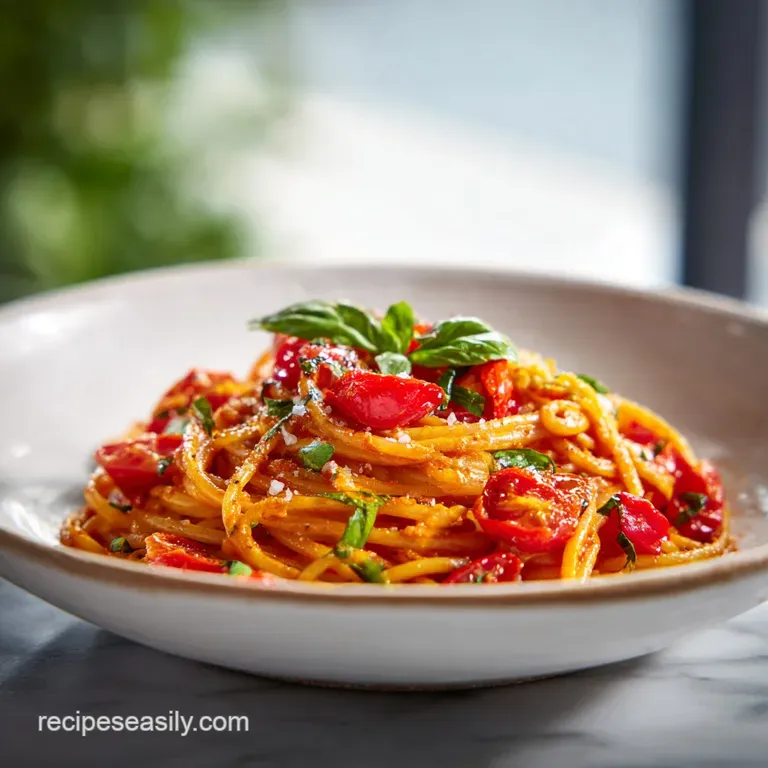
- Boil the pasta. Cook the 1 lb pasta in a large pot of salted water according to package directions until al dente. Note: It should have a slight bite as it will cook further in the sauce.
- Reserve the water. Scoop out 1 cup of the starchy pasta water before draining. Note: Don't skip this; it's the secret to a glossy sauce.
- Blend the base. Place the 12 oz drained roasted red peppers into a blender and pulse until completely smooth.
- Sauté the aromatics. Heat 2 tbsp olive oil in a large skillet over medium heat. Add the onion and 4 cloves smashed garlic, cooking until the onions are translucent and fragrant.
- Toast the spices. Stir in 1 tsp smoked paprika and 0.5 tsp red pepper flakes. Let them sizzle for 30 seconds to release their oils.
- Simmer the sauce. Pour the blended pepper puree into the skillet. Stir and cook for 3-5 minutes until the sauce begins to darken slightly.
- Add the cream. Stir in 0.5 cup heavy cream and 1 tsp lemon juice. Lower the heat and whisk until the sauce is a uniform orange red color.
- Combine. Add the cooked pasta directly into the skillet. Pour in half of the reserved pasta water.
- Emulsify. Toss the pasta vigorously over low heat until the sauce thickens and clings to the noodles. Add more pasta water if it looks too dry.
- Garnish. Stir in 0.25 cup Parmesan cheese and 0.25 cup fresh basil. Season with 0.5 tsp salt and 0.25 tsp black pepper before serving.
Fixing Common Texture and Flavor Issues in Your Sauce
Why Your Sauce Tastes Dull
Sometimes, even with all these ingredients, the sauce can feel a bit one note. This usually happens if the peppers were particularly sweet or if the heavy cream overshadowed the acidity. The fix is almost always a tiny hit of acid or salt.
| Problem | Root Cause | Solution |
|---|---|---|
| Sauce is "broken" or oily | Heat was too high when adding cream | Remove from heat and whisk in a tablespoon of cold water |
| The flavor is flat | Lack of acidity or salt | Add another squeeze of lemon or a splash of the pepper brine |
| Sauce won't stick | Too much oil or rinsed pasta | Add more pasta water and Parmesan to create a "glue" |
Common Mistakes Checklist
- ✓ Don't rinse your pasta: Rinsing removes the starch that helps the sauce adhere.
- ✓ Save the water: If you forget to save pasta water, use a splash of chicken broth or warm water with a pinch of cornstarch.
- ✓ Drain the peppers well: Excess liquid from the jar can make the sauce watery and thin.
- ✓ Watch the garlic: Smashed garlic can turn bitter if it browns too much; keep the heat at a steady medium.
- ✓ Salt the pasta water: The noodles should be seasoned from the inside out.
Simple Ingredient Swaps for Every Dietary Need
If you're looking to scale this down for a solo lunch, simply halve all ingredients and use a smaller skillet. For scaling up to a crowd, I recommend doubling everything but being careful with the red pepper flakes spiciness tends to compound, so start with 1.5x the spice and adjust at the end.
When making this for a larger group, you can even prepare the pepper base a day in advance. If you're a fan of prep heavy meals like my French Garlic Chicken recipe, you'll appreciate how much easier dinner is when the sauce is already blended and waiting in the fridge.
- For a Vegan Roasted Red Pepper Pasta
- Replace the heavy cream with full fat coconut milk or soaked, blended cashews, and swap the Parmesan for nutritional yeast.
- For Extra Protein
- Stir in grilled chicken, sautéed shrimp, or even some crispy chickpeas at the very end.
- For a Healthier Version
- Swap the heavy cream for Greek yogurt, but be sure to stir it in off the heat to prevent curdling.
Debunking Common Roasted Pepper Myths
One big misconception is that fresh peppers are always better than jarred. While fresh roasted peppers are great, the jarred variety actually offers a consistent acidity and softness that is perfect for blending into a sauce.
You aren't "cheating" by using them; you're actually using a product specifically preserved to be used in sauces.
Another myth is that you need to cook the cream for a long time to thicken it. In reality, overcooking heavy cream can cause it to break and become greasy. You only need to heat it enough to incorporate it into the pepper puree.
The thickness should come from the pepper solids and the pasta water, not from reducing the cream.
Best Practices for Storing and Reheating Your Leftovers
Storage: This pasta keeps surprisingly well in the fridge for up to 3 days. Store it in an airtight container. The sauce will thicken as it cools, so it might look a bit clumped when you first take it out.
Reheating: To bring back that velvety texture, reheat the pasta in a skillet with a splash of milk or water over medium low heat. Avoid the microwave if possible, as it can cause the fats in the cream to separate, leaving you with an oily puddle.
Zero Waste Tip: If you have leftover sauce but no pasta, use it as a base for poached eggs (shakshuka style) or as a spread for a grilled chicken sandwich. Also, don't toss the basil stems! You can throw them into your next batch of vegetable stock for a subtle peppery note.
Choosing the Perfect Sides to Complement Your Meal
Since this dish is quite rich and creamy, I usually opt for something crisp and acidic on the side. A simple arugula salad with a lemon vinaigrette works wonders to cut through the heaviness of the cream. If you're feeling indulgent, some crusty garlic bread is mandatory for mopping up every last drop of the sauce.
For those who want a full Mediterranean spread, this pasta sits beautifully next to roasted vegetables like zucchini or asparagus. The smokiness of the paprika in the pasta pairs perfectly with charred greens. If you're looking for more inspiration for balanced meals, you might enjoy exploring how a hearty main like this compares to something like a Mexican Layered Casserole recipe, which offers a completely different but equally satisfying flavor profile.
Recipe FAQs
Can I use fresh roasted peppers instead of jarred?
Yes, but it adds significant time. Jarred peppers are already charred and softened, saving you about 40 minutes of roasting and peeling time for this quick sauce.
How to ensure the sauce is velvety and doesn't separate?
Blend the peppers until completely smooth first. This releases the natural pectin necessary for emulsion; add the cream off the heat or over very low heat to prevent it from breaking.
Is it true that heavy cream must be used to achieve the right consistency?
No, but heavy cream is highly recommended. It provides the necessary fat content to create a stable emulsion that coats the pasta well, unlike lower fat alternatives.
What is the purpose of adding reserved pasta water?
The starchy water acts as a liquid binder to help the sauce cling to the noodles. It helps thicken the sauce without diluting the pepper flavor, a technique also key in our Cozy Creamy Herb recipe.
How long can I safely store leftovers?
Up to 3 days in an airtight container. Reheat gently on the stovetop with a splash of water or milk, as microwaving can sometimes cause the cream to separate.
How to make this recipe vegan?
Substitute the heavy cream with full fat canned coconut milk or soaked cashews. Ensure you replace the Parmesan with nutritional yeast for that savory umami kick.
Why does my sauce taste flat despite using smoked paprika?
You likely need an acid boost to balance the sweetness of the peppers. Add a teaspoon of fresh lemon juice or a splash of the brine from the pepper jar right before finishing the sauce.
Creamy Roasted Red Pepper Pasta
Ingredients:
Instructions:
Nutrition Facts:
| Calories | 628 kcal |
|---|---|
| Protein | 18.3 g |
| Fat | 21.6 g |
| Carbs | 92.4 g |
| Fiber | 5.1 g |
| Sugar | 6.8 g |
| Sodium | 485 mg |
