Crockpot Pot Roast Recipe: Fork Tender Beef
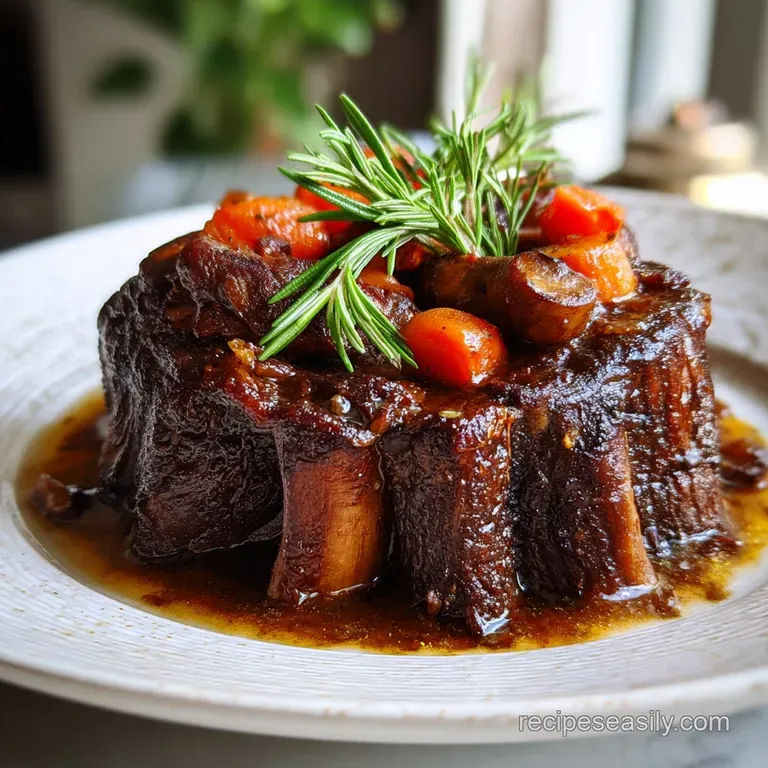
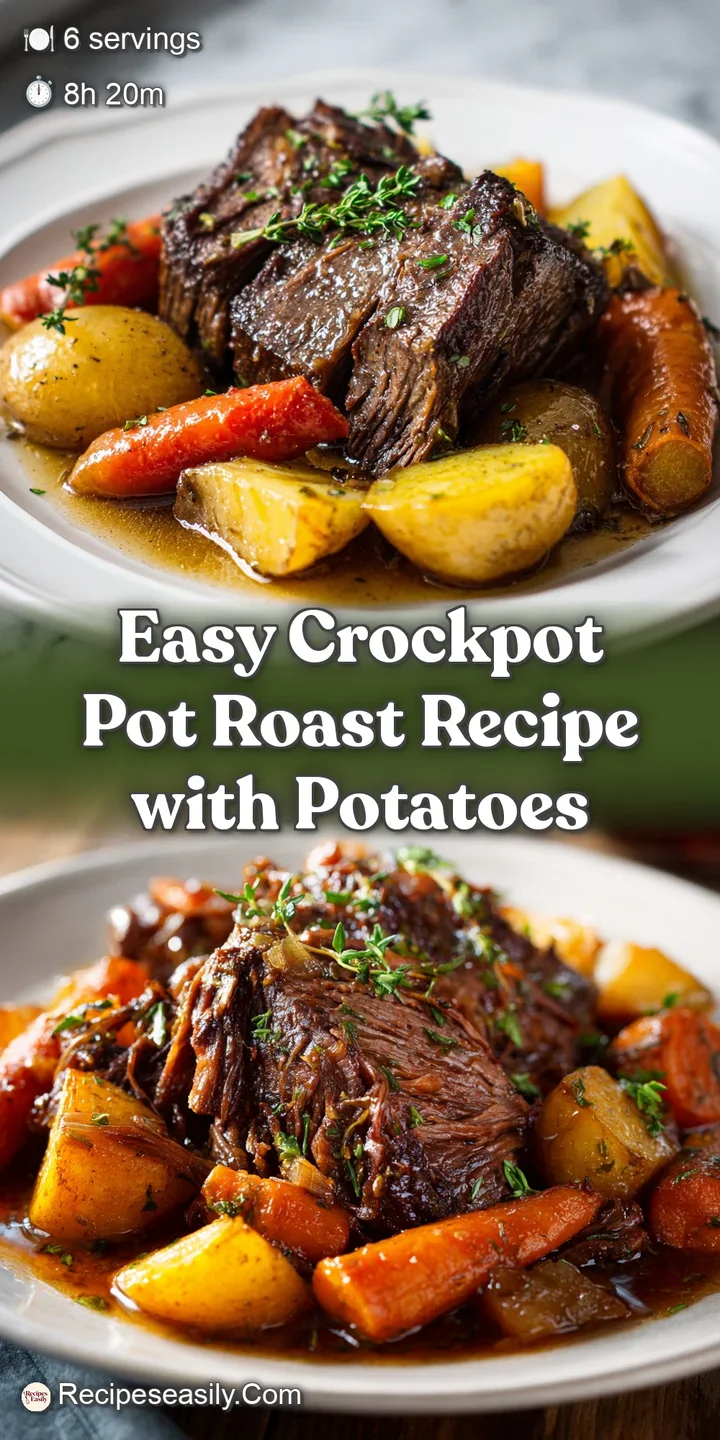
- Time: Active 20 minutes, Passive 8 hours, Total 8 hours 20 minutes
- Flavor/Texture Hook: Velvety gravy with shatter apart beef
- Perfect for: Cozy Sunday dinners and effortless weekly meal prep
- Mastering My Favorite Crockpot Pot Roast Recipe
- Why This Slow Cooking Method Works
- Key Numbers for a Perfect Roast
- Budget Friendly Ingredients You Need Now
- Kitchen Gear for Best Results
- Easy Cooking Steps for Busy Cooks
- Solving Your Common Cooking Problems
- Ways to Flavor Your Next Roast
- How to Store Your Leftovers Safely
- Side Dishes for a Complete Meal
- Science of the Fall Apart Factor
- Three Precision Checkpoints
- The Myth of Sealing Juices
- High in Sodium
- Recipe FAQs
- 📝 Recipe Card
Mastering My Favorite Crockpot Pot Roast Recipe
The first time I tried making a roast, it was a literal brick. I threw a cold piece of meat into a pot, covered it with water, and hoped for the best. What I got back was grey, rubbery, and honestly depressing. But then I heard that first sizzle of beef hitting a hot oiled pan, and everything changed.
That mahogany crust isn't just for looks; it's the foundation of every drop of flavor in that pot.
I've spent years tweaking this because I wanted something that tasted like a fancy bistro meal but cost less than a takeout pizza. You'll walk into your house after a long day and that aroma onions, garlic, and red wine will hit you like a warm hug.
It's the kind of meal that makes you want to cancel all your plans and just stay on the couch with a big bowl of comfort.
Trust me, we aren't doing anything fussy here. We’re using basic ingredients like carrots and potatoes, but we're treating them with respect. I’m going to show you exactly how to avoid the "mushy vegetable" trap and how to get a sauce so silky you’ll want to drink it with a spoon.
Let's get into what actually makes this work so well.
Why This Slow Cooking Method Works
- Connective Tissue Breakdown: The long, 8 hours cook time at a low temperature allows the tough collagen in the chuck roast to melt into gelatin. This process is what creates that signature melt in-your mouth texture rather than a dry, stringy mess.
- Maillard Reaction Depth: Searing the meat in avocado oil before it hits the slow cooker creates complex flavor compounds. These browned bits, or fond, dissolve into the braising liquid to create a deeply savory profile.
- Starch Thickening Power: Using Yukon Gold potatoes is a strategic choice because they release just enough starch during the simmer. This naturally helps body the broth without needing a massive amount of flour at the end.
- Osmotic Seasoning: Slow cooking allows the salt and Worcestershire sauce to penetrate deep into the center of the 3 lbs beef chuck roast. This ensures every bite is seasoned, not just the outside surface.
| Method | Time | Texture | Best For |
|---|---|---|---|
| Crockpot (Low) | 8 hours | Fall apart tender | Maximum flavor, hands off |
| Crockpot (High) | 4 hours | Sliced texture | When you're short on time |
| Dutch Oven | 3 hours | Rich and caramelized | Weekend cooking, crispy edges |
Choosing the right method depends on your schedule, but for this specific chuck roast crock pot recipe, the low setting is king. It gives the meat the time it needs to truly relax. If you're looking for something a bit faster but still comforting, you might enjoy this simple slow cooker recipe for beef stew.
Key Numbers for a Perfect Roast
To get those professional results at home, we have to look at the chemistry of the ingredients. It isn't just about throwing things in a bowl; it's about how those components interact over 8 hours of heat.
| Component | Science Role | Pro Secret |
|---|---|---|
| Beef Chuck Roast | Primary fat and protein | Use 3 lbs for the best fat to meat ratio in the pot. |
| Dry Red Wine | Acid for tenderizing | Use a Cabernet; the tannins help cut through the heavy beef fat. |
| Tomato Paste | Umami and thickness | Sauté it for 1 minute to remove the raw metallic tin taste. |
| Beef Bone Broth | Liquid conductivity | Bone broth has more natural gelatin than standard stock for a silkier sauce. |
When you're picking out your meat, look for heavy marbling those white flecks of fat are your best friend. They will lubricate the meat fibers as they cook, preventing that dreaded sawdust texture.
Budget Friendly Ingredients You Need Now
- 3 lbs Beef Chuck Roast: This is the gold standard for a savory pot roast crock pot recipe because it's affordable and full of flavor.
- Substitute: Bottom round or brisket. Why this? These cuts also have high connective tissue that benefits from slow heat.
- 1.5 lbs Yukon Gold potatoes: Halved.
- Substitute: Red potatoes. Why this? Waxy potatoes hold their shape better than starchy Russets during long cooks.
- 1 lb Large carrots: Peeled and cut into 2 inch chunks.
- Substitute: Parsnips. Why this? Adds a similar sweetness but with a slightly peppery bite.
- 1 Large yellow onion: Cut into thick wedges.
- Substitute: White onion or 3 shallots. Why this? Yellow onions have the highest sugar content for better caramelization.
- 2 cups Low sodium beef bone broth: The base of our sauce.
- Substitute: Beef stock with 1 tsp bouillon. Why this? Bone broth adds a velvety mouthfeel that standard stock lacks.
- 1/2 cup Dry red wine: For depth.
- Substitute: 1/4 cup balsamic vinegar + 1/4 cup water. Why this? You need the acidity to brighten the heavy fats.
- 2 tbsp Worcestershire sauce: The ultimate umami booster.
- Substitute: Soy sauce. Why this? Both provide the fermented saltiness that deepens the "beefy" flavor.
- 4 cloves Garlic, 2 stalks Celery, 1 tbsp Tomato paste: The aromatic base.
- Fresh Thyme and Rosemary: 3 sprigs thyme, 2 sprigs rosemary.
- 2 tsp Kosher Salt and 1 tsp Coarse Black Pepper: For the initial seasoning.
Chef Tip: Freeze your tomato paste in 1 tablespoon dollops on a piece of parchment paper. Once frozen, pop them in a bag. You'll never waste half a can again!
Kitchen Gear for Best Results
You don't need a million gadgets for this, but a few specific items make the job much easier. A 6 quart or larger slow cooker is essential for a 3 lbs roast to ensure everything fits without being packed too tightly.
If the pot is too small, the heat won't circulate evenly, and you'll end up with some spots that are tough while others are mushy.
I also highly recommend using a heavy bottomed skillet for the initial sear. Cast iron is my favorite because it holds heat so well, but a good stainless steel pan works too. You want a pan that can get hot enough to create that mahogany crust without the oil smoking you out of the kitchen.
A pair of sturdy tongs is also a must for flipping that heavy roast without splashing hot oil everywhere.
Easy Cooking Steps for Busy Cooks
- Season the beef. Pat the 3 lbs Beef Chuck Roast completely dry with paper towels and coat all sides with 2 tsp Kosher Salt and 1 tsp Coarse Black Pepper. Note: Dry meat sears; wet meat steams.
- Sear the roast. Heat 2 tbsp Avocado oil in a large skillet over medium high heat. Brown the beef for 4 minutes per side until a dark, crusty mahogany surface forms.
- Sauté the aromatics. Remove the meat and add the onion wedges and celery. Cook for 3 minutes until the onions are slightly softened and charred at the edges.
- Bloom the paste. Stir in the 4 cloves smashed garlic and 1 tbsp tomato paste. Cook for 1 minute until the paste turns a deep brick red.
- Deglaze the pan. Pour in the 1/2 cup Dry red wine. Scrap the bottom of the pan with a wooden spoon until all the browned bits are dissolved into the liquid.
- Load the crockpot. Place the 1.5 lbs halved potatoes and 1 lb carrot chunks in the bottom of the slow cooker. Note: Harder vegetables need to be closest to the heat source.
- Combine everything. Nestled the seared beef on top of the vegetables. Pour the wine mixture from the skillet over the meat, then add the 2 cups beef bone broth and 2 tbsp Worcestershire sauce.
- Add the herbs. Lay the thyme and rosemary sprigs on top. Cover and cook on Low for 8 hours until the meat yields easily to a fork with no resistance.
- Rest and shred. Remove the meat to a plate and tent with foil for 10 minutes. Note: Resting allows the juices to redistribute so the meat stays moist.
- Finish the sauce. Skim any excess fat from the surface of the liquid. Serve the meat and vegetables with a generous ladle of the savory broth.
For a completely different vibe on a weeknight, you might like this Parmesan Crusted Chicken recipe which uses similar one pan logic for a faster result.
Solving Your Common Cooking Problems
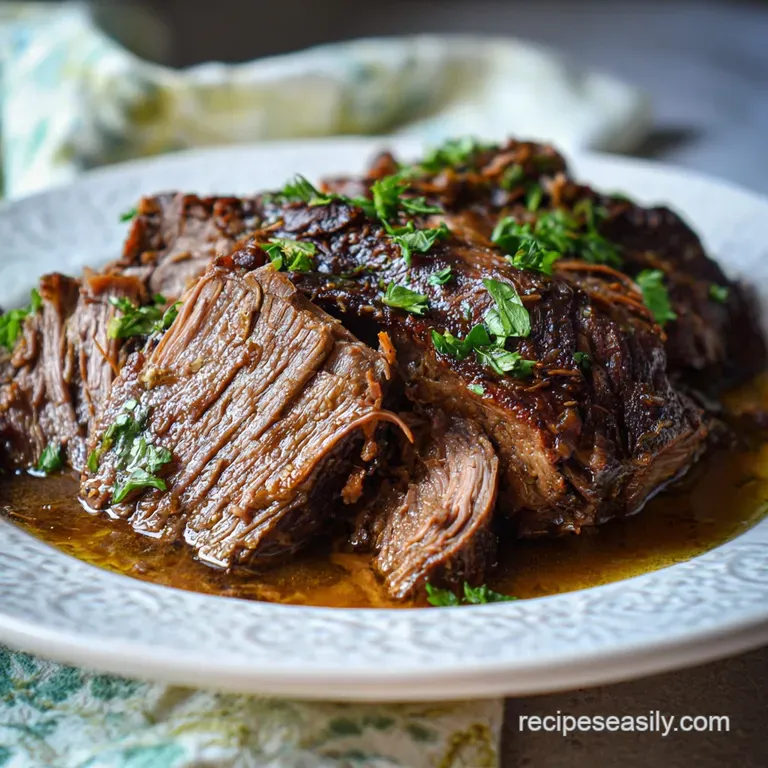
Why Your Roast Stays Tough
If your meat is still chewy after 8 hours, it's almost always a matter of time. People often panic and think they overcooked it, but with chuck roast, "tough" usually means the collagen hasn't finished melting. Give it another 45 minutes on low.
Also, make sure you aren't lifting the lid! Every time you peek, you lose about 15-20 minutes of heat.
Fixing a Greasy Sauce
Sometimes a chuck roast is particularly fatty, leaving a thick layer of oil on top of your gravy. If you don't have a fat separator, try the ice cube trick. Drop a few large ice cubes into the liquid; the fat will cling to the cold cubes, allowing you to scoop it out quickly before they melt.
| Problem | Root Cause | Solution |
|---|---|---|
| Vegetables are mush | Cut too small | Keep carrots in 2 inch chunks and only halve potatoes. |
| Bland broth | Not enough salt/acid | Add a splash of red wine vinegar or a pinch of salt at the very end. |
| Meat is dry | Cooked on High too long | Always prefer the Low setting for 8 hours to preserve moisture. |
Common Mistakes Checklist:
- ✓ Did you pat the meat dry? Moisture prevents a good sear.
- ✓ Did you deglaze the pan? Those brown bits are where the flavor lives.
- ✓ Are the vegetables on the bottom? They need more direct heat than the meat.
- ✓ Did you let the meat rest? Slicing too soon lets all the moisture run out.
- ✓ Check your liquid level - it should only come halfway up the meat, don't submerge it!
Ways to Flavor Your Next Roast
If you want a healthy crockpot pot roast, you can swap the potatoes for cauliflower florets, but add them in the last 90 minutes so they don't vanish into the sauce. This reduces the carbs significantly while keeping the meal filling.
You can also double up on the celery and add some sliced radishes, which lose their pepperiness and taste remarkably like potatoes when slow cooked.
For an "Umami Bomb" version, add 1 tablespoon of fish sauce and a handful of dried porcini mushrooms to the braising liquid. You won't taste "fish," but the savory depth will be off the charts. It makes the beef taste even beefier. If you love these kinds of deep, slow cooked flavors, you should definitely check out this Chicken Stew Recipe for another comforting classic.
- If you want a thicker gravy
- Whisk 2 tbsp cornstarch with 2 tbsp cold water and stir it into the pot 30 minutes before serving.
- If you want a brighter flavor
- Add 1 tsp of lemon zest and a handful of fresh parsley right before you plate it.
- If you want a spicy kick
- Add two chipotle peppers in adobo sauce to the liquid for a smoky heat.
How to Store Your Leftovers Safely
This is one of those rare dishes that actually tastes better the next day because the flavors have time to mingle in the fridge. Store the beef and vegetables in an airtight container with plenty of the cooking liquid to keep the meat from drying out. It will stay fresh in the fridge for up to 4 days.
When reheating, do it gently on the stove over medium low heat to avoid toughening the beef.
You can also freeze this roast for up to 3 months. I recommend freezing it in individual portions with the sauce. To use your "zero waste" scraps, don't throw away the onion skins or celery ends during prep! Keep a bag in your freezer for veggie scraps and use them to make your own beef stock later.
The leftover shredded beef also makes incredible tacos or a killer topping for a baked potato.
Side Dishes for a Complete Meal
While this is technically a full meal with the potatoes and carrots, a little greenery goes a long way. A crisp green salad with a sharp vinaigrette helps cut through the richness of the beef fat. I also love serving this with a side of crusty sourdough bread.
You’ll want something to soak up every last drop of that velvety mahogany sauce.
If you’re feeling extra, a side of honey glazed Brussels sprouts provides a nice textural contrast. Since the roast is very soft and tender, having something with a bit of a "crunch" or a "snap" on the side makes the whole eating experience more interesting.
Science of the Fall Apart Factor
The magic happens when the internal temperature hits roughly 190°F to 200°F. At this specific point, the tough collagen fibers physically transform into liquid gelatin, which coats the muscle fibers and creates that velvety mouthfeel.
Three Precision Checkpoints
- The Sear: 4 minutes per side is the sweet spot for color without burning.
- The Cut: Vegetables must be 2 inches wide to survive the 8 hour heat.
- The Rest: 10 minutes under foil is mandatory to prevent "dry meat syndrome" after cooking.
The Myth of Sealing Juices
Many people think searing "seals in the juices" of the meat. This is actually a myth! Searing causes moisture loss on the surface. We do it strictly for the Maillard reaction a chemical reaction between amino acids and reducing sugars that creates that deep, savory "browned" flavor we crave.
The moisture stays in the roast because we cook it at a low temperature in a humid environment, not because of the crust.
| Feature | Fresh Herbs | Dried Herbs |
|---|---|---|
| Potency | Bright, floral notes | Concentrated, earthy |
| Timing | Add at the end or top | Add at the very start |
| Ratio | Use 3x more than dried | 1 tsp dried = 1 tbsp fresh |
This recipe relies on fresh sprigs for that aromatic "pop," but if you're on a budget, dried herbs work just fine as long as you add them early so they have time to rehydrate in the broth.
High in Sodium
895 mg mg of sodium per serving (39% % of daily value)
The American Heart Association recommends limiting sodium intake to about 2,300mg per day for most adults.
Sodium Reduction Tips for Beef Chuck Roast
-
Broth Swap-30%
Replace the 2 cups of low-sodium beef bone broth with a homemade or no-sodium added beef broth. This can significantly cut down on the sodium content.
-
Salt Smartly-25%
Reduce the amount of Kosher salt used from 2 tsp to 1 tsp. Taste the dish before adding any additional salt at the end of cooking. Salt enhances flavor, but you can often use much less than a recipe calls for. Try to add the salt towards the end of the cooking process, so you can better gauge how much is needed.
-
Worcestershire Watch-20%
Worcestershire sauce is surprisingly high in sodium. Reduce the amount from 2 tbsp to 1 tbsp, or substitute with a low-sodium tamari, using only 1 teaspoon.
-
Tomato Paste Tweak-10%
Use no-salt added tomato paste. While a small amount, every little bit helps to lower the overall sodium content. You can also consider using fresh tomatoes in place of tomato paste.
-
Herb Boost
Maximize the flavor of the dish by using more fresh herbs and spices. They add depth and complexity without adding any sodium. Consider adding a bay leaf, or dried oregano.
Recipe FAQs
What is the best liquid to cook pot roast in?
Beef bone broth combined with red wine is optimal. The broth provides deep, gelatinous flavor, while the acidity from the wine helps break down connective tissues in the beef chuck.
Do you have to brown a roast before putting it in the crock pot?
No, but it is highly recommended for flavor development. Searing the exterior creates the Maillard reaction, which builds complex, savory compounds that infuse the entire sauce.
How long does a pot roast have to cook in a crockpot?
Cook on Low for 8 hours for maximum tenderness. This long, slow cooking time is crucial for melting collagen into rich gelatin, resulting in fork tender meat.
What are common mistakes with slow cooker roast?
Not searing the meat or taking the lid off too frequently are the top errors. Searing builds flavor, and lifting the lid drops the internal temperature by nearly 20 minutes of cooking time.
Can I use frozen meat instead of fresh for my slow cooker roast?
No, always start with thawed, dry meat. Frozen meat will steam rather than sear, preventing the crucial flavor development on the exterior of the roast.
What vegetable placement ensures they don't turn to mush?
Place the heartiest vegetables, like carrots and potatoes, directly on the bottom of the pot. This ensures they get the most direct heat exposure needed to cook through without dissolving completely.
How can I make the gravy thicker without adding flour at the end?
Use Yukon Gold potatoes as they naturally release starch during the slow cook. If you want an even richer sauce, the gelatin released from the beef fat also naturally thickens the liquid, similar to the base in our Mashed Potatoes Recipe.
Crockpot Pot Roast Recipe
Ingredients:
Instructions:
Nutrition Facts:
| Calories | 768 kcal |
|---|---|
| Protein | 44 g |
| Fat | 48 g |
| Carbs | 32 g |
| Fiber | 5 g |
| Sugar | 6 g |
| Sodium | 895 mg |
