Easy Antipasto Skewers: Zesty and Silky
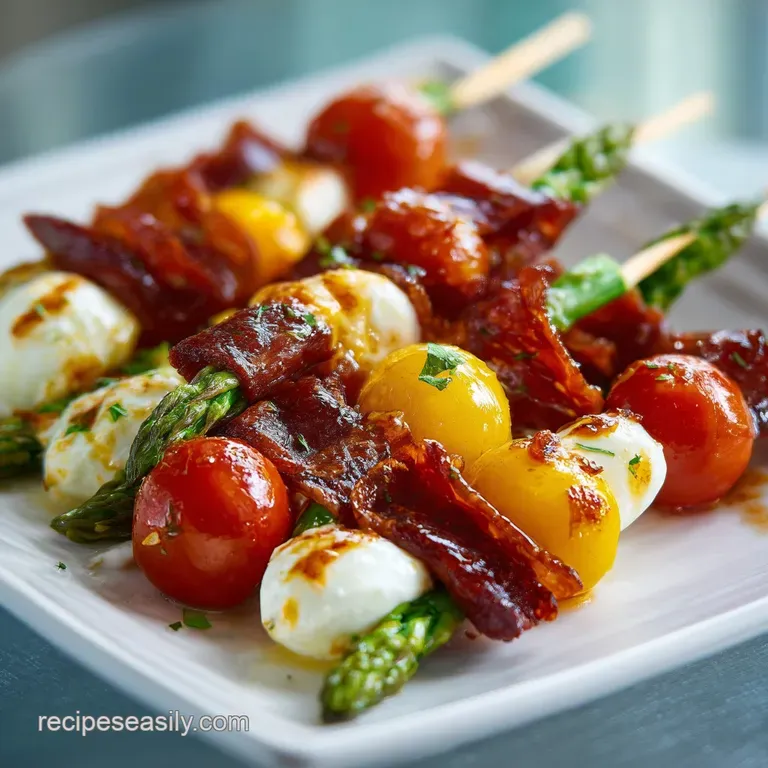
- Time: Active 15 minutes, Passive 0 mins, Total 15 minutes
- Flavor/Texture Hook: Zesty, salty, and silky textures
- Perfect for: Last minute cocktail parties or holiday potlucks
- Science Of The Flavor Balance
- Quantity Guide For Party Planning
- Analysis Of The Key Components
- Essential Elements For Your Tray
- Basic Tools For Fast Prep
- Steps To Assemble Your Skewers
- Avoid These Messy Skewer Mistakes
- Clever Swaps For Dietary Needs
- Keeping Your Skewers Vibrant Longer
- Ideas For Stunning Platter Layouts
- Debunking Skewer Misconceptions
- Recipe FAQs
- 📝 Recipe Card
The scent of freshly torn basil leaves always transports me back to my first summer in a tiny apartment with no air conditioning, where "cooking" meant anything that didn't involve turning on the oven.
I remember standing over the counter, assembling a mountain of these for a housewarming party, and being shocked at how the glossy balsamic glaze transformed simple deli finds into something that looked curated.
There is something satisfying about the way a firm grape tomato resists the skewer before finally yielding with a soft pop.
We've all been to those parties where the charcuterie board looks like a disaster zone ten minutes in, with stray olives rolling away and cheese cubes looking lonely. That is why I transitioned to these Easy Antipasto Skewers; they provide that same Mediterranean profile but in a controlled, portable bite that guests can actually hold while balancing a drink.
Trust me, your floor and your guests will thank you for the lack of crumbly mess.
You are going to love how the acidity of the marinated artichokes cuts right through the richness of the Prosciutto di Parma. It is a calculated dance of flavors where every ingredient has a job to do.
We are going to walk through the logic of the "skewer stack" so you never have to worry about a slippery piece of salami sliding off onto someone's shoes. Let's get into the mechanics of why this works so well.
Science Of The Flavor Balance
The Emulsion Bridge: The extra virgin olive oil on the artichokes acts as a lipid bridge, carrying the volatile aromatics of the basil directly to your taste receptors more efficiently.
Tannic Interaction: Pitted olives provide a necessary hit of tannins and salt that triggers salivation, which chemically prepares the palate to better experience the subtle sweetness of the mozzarella.
Structural Tension: Using cooked and cooled tortellini provides a starchy, dense "anchor" that prevents the more delicate ribbons of prosciutto from compressing or falling apart during transit.
Similar to the structural balance found in a well made Latkes Recipe in, the key here is moisture management to ensure the base doesn't become soggy before it reaches the mouth.
Quantity Guide For Party Planning
| Servings | Mozzarella/Tortellini Count | Meat Quantity | Prep Strategy |
|---|---|---|---|
| 12 People | 12 each | 2 oz Salami / 2 oz Prosciutto | Single row assembly |
| 24 People | 24 each | 4 oz Salami / 4 oz Prosciutto | Batch prep "stations" |
| 48 People | 48 each | 8 oz Salami / 8 oz Prosciutto | Use 2 large trays |
When you are planning for a crowd, it is much easier to think in terms of "units" rather than total weight. For a standard gathering, I usually find that two skewers per person is the sweet spot if there are other snacks, but if these are the star of the show, you might want to bump that up to three.
If you find yourself running low on time but still want a vibrant spread, you can always pair these with a quick Asian Zucchini Side recipe to round out the vegetable offerings. The contrast between the Italian herbs and the sesame soy notes is actually a fun way to keep guests interested.
Analysis Of The Key Components
| Ingredient | Science Role | Pro Secret |
|---|---|---|
| Fresh Mozzarella | Neutral Fat Base | Pat dry twice to ensure the balsamic glaze sticks instead of sliding off. |
| Cheese Tortellini | Structural Starch | Rinse in cold water after boiling to stop the cooking and prevent a mushy texture. |
| Balsamic Glaze | Acidic High Note | Apply only 10 minutes before serving to keep the basil from turning black. |
| Salami slices | Savory Umami | Fold into quarters (an "S" shape) to create height and better "skewer grip." |
Essential Elements For Your Tray
To make these Easy Antipasto Skewers, you will need the following high-quality ingredients. I've included a few budget smart swaps that won't compromise the vibrant outcome.
- 24 fresh mini mozzarella balls (approx. 8 oz): Drained and patted dry. Why this? Provides a silky, creamy mouthfeel that balances the salt.
- Substitute: Cubed Monterey Jack. It's milder but has a similar firm yet-creamy bite.
- 24 large fresh basil leaves: Washed and dried. Why this? The aromatic oils provide a punch of freshness.
- Substitute: Fresh mint leaves. This adds a surprising, refreshing twist to the savory meats.
- 24 cheese filled tortellini: Cooked and cooled. Why this? Acts as a hearty anchor for the skewer.
- Substitute: Extra large penne pasta. It holds the skewer well and absorbs the dressing.
- 12 slices Genovese salami (approx. 4 oz): Halved and folded. Why this? Adds a concentrated salty, fermented flavor.
- Substitute: Pepperoni slices. They offer a similar spice profile at a lower price point.
- 12 slices Prosciutto di Parma (approx. 4 oz): Torn into ribbons. Why this? Provides a buttery, melt in-the mouth texture.
- Substitute: Thinly sliced ham. Fold it tightly to mimic the texture of the prosciutto.
- 24 pitted Kalamata or Castelvetrano olives: Drained. Why this? Delivers a briny, sharp kick.
- Substitute: Canned black olives. They are more neutral but still provide that necessary salt.
- 24 marinated artichoke hearts: Quartered and patted dry. Why this? Adds a tangy, fibrous texture.
- Substitute: Marinated mushrooms. They offer a similar vinegary tang.
- 24 grape tomatoes: Firm and bright. Why this? The skin should shatter to release sweet juice.
- Substitute: Sun dried tomatoes. These provide a much deeper, more concentrated umami flavor.
- 2 tbsp balsamic glaze: For drizzling.
- 1 tsp extra virgin olive oil: To keep things glossy.
- 1 pinch cracked black pepper: For a final bite.
Basic Tools For Fast Prep
You don't need a professional kitchen for this, but having a few specific items will make the assembly line move much faster. I prefer using 4 inch bamboo skewers because they have a little more "grip" than the plastic ones.
- 6 inch wooden skewers: Better for holding heavy ingredients without bending.
- Large colander: Essential for draining the tortellini and mozzarella.
- Paper towels: You will use more of these than you think to keep ingredients dry.
- Small squeeze bottle: If your balsamic glaze didn't come in one, this helps with precision.
Steps To Assemble Your Skewers
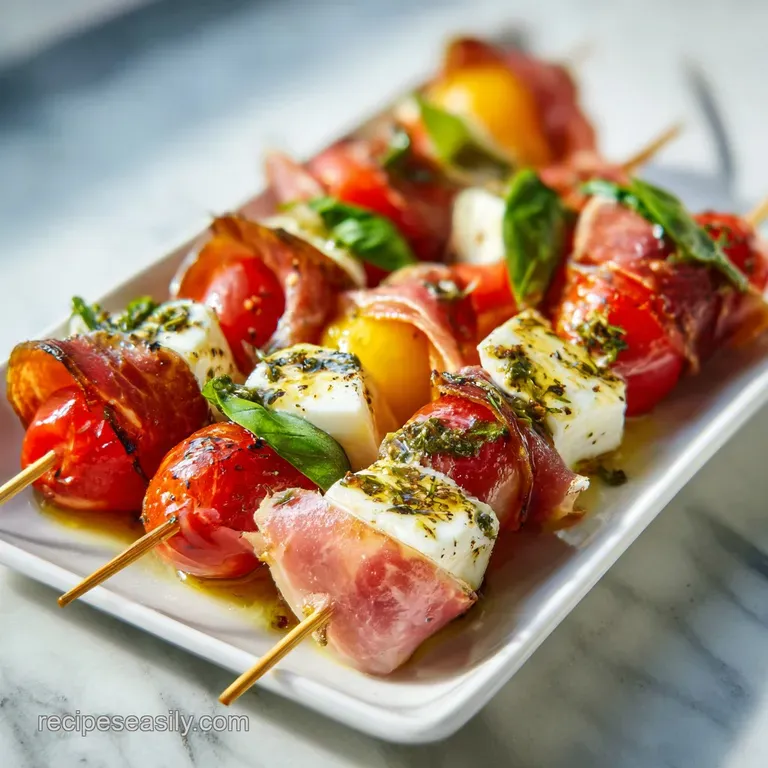
- Prep the tortellini. Boil the 24 cheese filled tortellini in salted water until just al dente and firm. Note: Overcooking will make them split when skewered.
- Drain and cool. Run the pasta under cold water immediately to stop the carryover heat.
- Dry the wet items. Pat the 24 mozzarella balls and 24 artichoke hearts with paper towels until no visible moisture remains. Note: This prevents the skewer from becoming a "soup" on the plate.
- Prepare the meats. Halve the 12 salami slices and tear the 12 prosciutto slices into long, thin ribbons.
- Thread the base. Start with a grape tomato at the bottom until it is firmly seated. This acts as the "plug" for the skewer.
- Add the layers. Thread one folded salami half, followed by a basil leaf, then a mozzarella ball.
- Integrate the pasta. Slide on one tortellini, making sure to go through the center of the pasta "ring" for stability.
- Finish the stack. Add a ribbon of prosciutto (woven back and forth), an olive, and finally an artichoke heart.
- Arrange and coat. Place the skewers on a tray and lightly brush with 1 tsp extra virgin olive oil until they look glossy and vibrant.
- Final season. Drizzle the 2 tbsp balsamic glaze in a zig zag pattern and finish with a pinch of cracked black pepper.
Avoid These Messy Skewer Mistakes
Solving Soggy Skewer Issues
If you find that your tray is pooling with liquid after thirty minutes, the culprit is almost always the mozzarella or the artichokes. Fresh mozzarella is packed in brine, and if you don't aggressively pat it dry, that brine will seep out and dilute your balsamic glaze.
Fixing Bland Flavor Profiles
Sometimes a skewer can taste "flat" even with all those ingredients. This usually happens if the tortellini wasn't salted enough during boiling. Since we aren't cooking the other components, the pasta provides the only chance to season from the inside out.
A quick fix is to spray the finished skewers with a tiny bit of sea salt flakes.
| Problem | Root Cause | Solution |
|---|---|---|
| Salami falls off | Slices too thin/flat | Fold into an "S" or "W" shape before threading. |
| Basil looks wilted | Bruising during assembly | Handle by the stem and add at the very last second. |
| Tortellini splits | Pasta is overcooked | Cook 1 minute less than package directions. |
Common Mistakes Checklist
- ✓ Never use "wet" mozzarella straight from the tub.
- ✓ Don't skip the cold water rinse for the tortellini; starch buildup makes them sticky.
- ✓ Avoid crowding the skewer; leave half an inch at the top for a "handle."
- ✓ Use firm grape tomatoes, not cherry tomatoes, as they hold their shape better.
- ✓ Apply the balsamic glaze right before guests arrive, not hours in advance.
Clever Swaps For Dietary Needs
When scaling these Easy Antipasto Skewers, remember that spices and salt don't always double linearly. If you are making 48 instead of 24, only use 1.5 times the cracked pepper, as it can become overwhelming in large batches.
Managing Prep For Crowds
For large parties, I recommend a "deconstructed" prep. Have all your tomatoes in one bowl, folded meats in another, and dried mozzarella in a third. This assembly line approach is significantly faster than making one skewer start to finish.
It also allows you to delegate tasks if you have a friend helping in the kitchen.
If you are serving these as part of a larger Italian feast, they are a great precursor to a Chicken Cacciatore Dinner recipe. The acidity in the skewers wakes up the taste buds for the heavier tomato sauce to follow.
| Feature | Fresh Ingredients | Shortcut Ingredients |
|---|---|---|
| Prep Time | 25 minutes | 10 minutes |
| Flavor Depth | High (Bright & Tangy) | Medium (Vinegary) |
| Cost Point | Slightly Higher | Budget Friendly |
Keeping Your Skewers Vibrant Longer
Storage Guidelines: You can store these in an airtight container in the fridge for up to 24 hours. However, the basil will likely darken. If you need to prep ahead, thread everything except the basil and the glaze, then add those right before the party starts.
I do not recommend freezing these, as the texture of the mozzarella and tomatoes will become grainy and mealy once thawed.
Zero Waste Tip: Don't throw away the oil from the marinated artichoke jar! It is packed with garlic and herb flavor. Use it to sauté vegetables later in the week or as a base for a salad dressing.
If you have leftover basil stems, toss them into a bottle of olive oil to infuse it for your next batch of skewers.
Ideas For Stunning Platter Layouts
The Vertical Forest Display
Instead of laying the skewers flat, find a thick piece of crusty bread or a decorative foam block covered in foil and poke the skewers into it vertically. This creates height on your table and makes it incredibly easy for guests to grab one without touching the others.
It also prevents the balsamic glaze from smearing across the bottom of the tray.
The Circular Wreath Pattern
For holiday gatherings, arrange the skewers in a large circle on a round white platter. Place a small bowl of extra balsamic glaze or some roasted red peppers in the center. The pop of red from the tomatoes and green from the basil naturally mimics a festive wreath.
Pairing With Hearty Mains
While these are great on their own, they truly shine when served alongside a rustic dish like a Baked Ratatouille Dinner recipe. The cold, crisp nature of the skewer provides a beautiful counterpoint to the soft, roasted vegetables of the ratatouille.
Debunking Skewer Misconceptions
One of the biggest myths I hear is that you need to marinate the entire skewer in Italian dressing before serving. Please, don't do this! The vinegar in the dressing will "cook" the delicate basil and turn the mozzarella a dull, unappetizing gray.
The ingredients are already flavorful; the glaze is just the finishing accent.
Another misconception is that you need expensive skewers. While fancy bamboo ones look nice, even the most basic wooden toothpicks work perfectly well for "mini" versions of this recipe. The quality of your Prosciutto di Parma and fresh basil matters infinitely more than the stick holding them together.
Trust your ingredients and keep the assembly simple.
Recipe FAQs
Can I make antipasto skewers the day before?
No, for best quality. Assemble all ingredients except the basil and balsamic glaze up to 4 hours ahead, storing them tightly covered. The basil browns quickly, and the glaze makes everything soggy if applied too soon.
What is the difference between antipasto and antipasti?
Antipasto is singular; antipasti is plural. Antipasto translates to "before the meal," referring to the traditional first course in Italy. Since skewers are usually served as part of a collection of starters, you are likely serving multiple antipasti.
What is in antipasto skewers?
These skewers typically combine cured meats like salami and prosciutto, soft cheese (mozzarella), briny items like olives and marinated artichokes, and fresh herbs like basil. They are finished with a drizzle of balsamic glaze for acidity.
What are the top 10 Italian appetizers for a party?
The top 10 often include bruschetta, Caprese salad, arancini, cured meats/cheeses, marinated olives, stuffed mushrooms, prosciutto wrapped melon, these antipasto skewers, and sometimes mini meatballs. If you are interested in a hearty, flavor forward main course that follows a similar Italian theme, check out the preparation logic in our French Garlic Chicken recipe, where balancing bold fats and acids is also key.
How should I stop the mozzarella from sliding off the skewer?
Pat the mozzarella dry aggressively with paper towels first. Fresh mozzarella releases brine, which acts as a lubricant, causing it to slip against the meat or pasta. If you enjoyed mastering texture control here, see how the same principle of moisture management applies to our Orange Sherbet Recipe to prevent iciness.
Why do my skewers taste bland even though I used cured meat?
The pasta may not have been seasoned enough. Since the tortellini is one of the largest components and is cooked separately, ensure you salt the boiling water generously. The pasta acts as a flavor sponge, and if it is bland, the entire skewer will taste muted.
Should I boil the tortellini until it is completely soft?
No, cook the pasta until it is slightly underdone (al dente). Boiling them until fully soft will result in mushy pasta that splits when you thread it onto the skewer. They will continue to soften slightly just sitting at room temperature, so undercooking is critical for structural integrity.
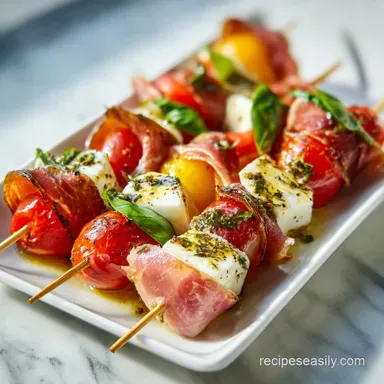
Easy Antipasto Skewers
Ingredients:
Instructions:
Nutrition Facts:
| Calories | 98 kcal |
|---|---|
| Protein | 5.4 g |
| Fat | 6.1 g |
| Carbs | 5.2 g |
| Fiber | 0.6 g |
| Sugar | 1.8 g |
| Sodium | 264 mg |
