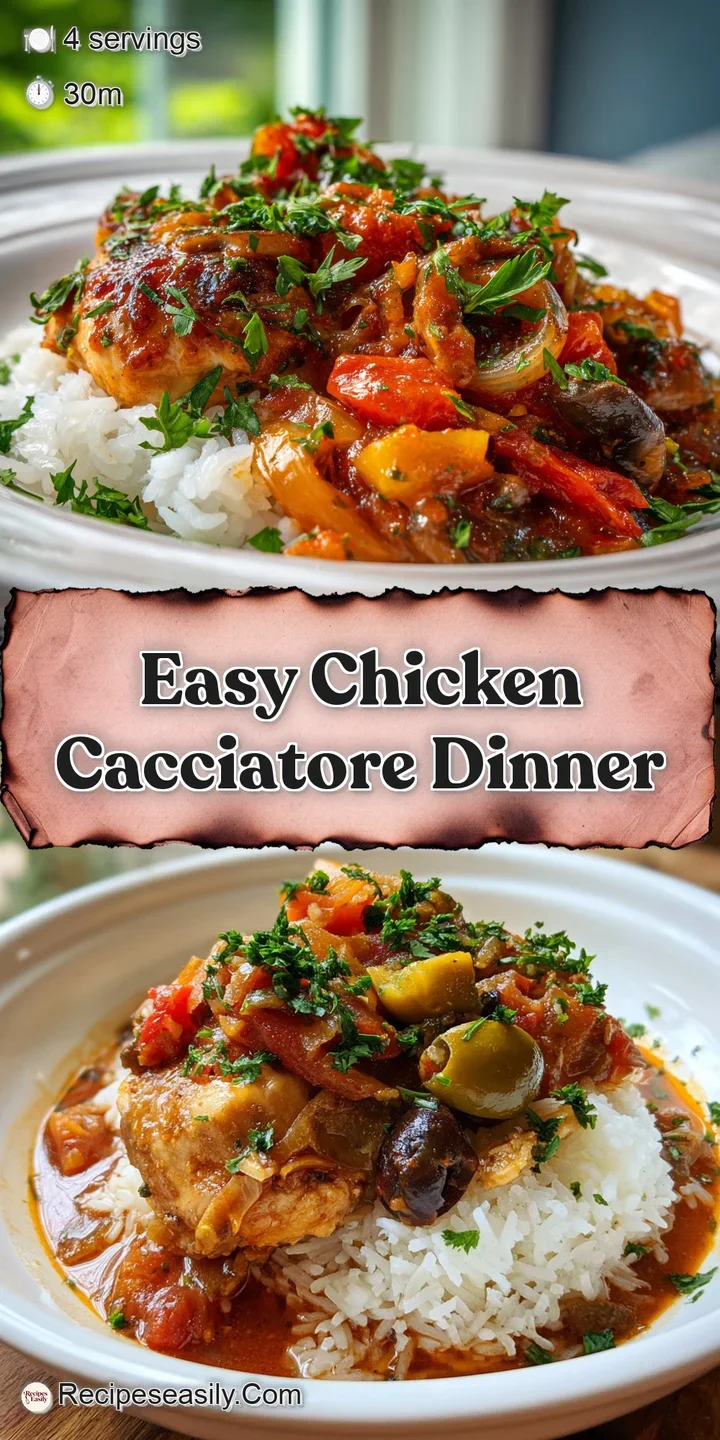
Easy Chicken Cacciatore Dinner: Ready in 30 Minutes
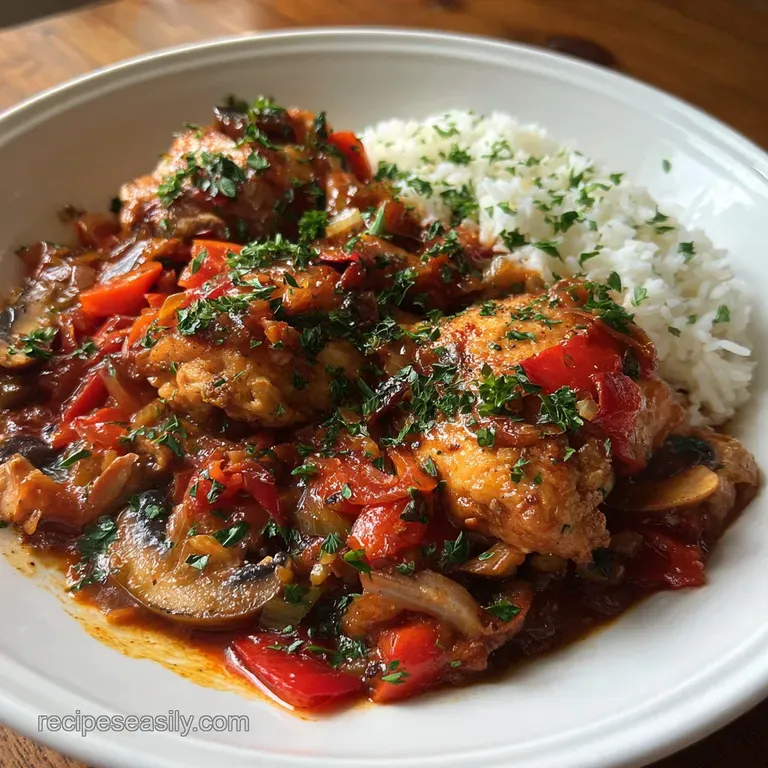
- Time: Active 10 minutes, Passive 20 minutes, Total 30 minutes
- Flavor/Texture Hook: Zesty, velvety tomato sauce with briny olives
- Perfect for: Busy weeknight exhaustion or a last minute dinner date
- Make an Easy Chicken Cacciatore Dinner
- Flavor Logic for the Best Dinner
- Essential Numbers and Cooking Windows
- Pantry Staples for Hearty Meals
- Basic Tools for Maximum Flavor
- Step-by-Step Cacciatore Cooking Guide
- Problem Solving for Perfect Results
- Creative Twists for Your Plate
- Storage and Waste Reduction Tips
- Finishing Touches for the Table
- High in Sodium
- Recipe FAQs
- 📝 Recipe Card
Make an Easy Chicken Cacciatore Dinner
The sound of that first strip of chicken hitting the hot olive oil is my favorite part of the day. It’s a sharp, energetic sizzle that promises something far better than another boring takeout order.
I remember one rainy Tuesday when my fridge looked tragic just a few peppers, half a bag of mushrooms, and a splash of wine but that was the night this recipe clicked for me.
We aren't doing the four hour braise today because, let's be honest, who has time for that on a school night? This version is all about efficiency without sacrificing that "hunter style" depth.
You get the sweetness of the bell peppers, the earthy hum of cremini mushrooms, and that salty punch from the olives all in one pan.
It’s the kind of meal that makes the whole house smell like a rustic Italian bistro. We’re using chicken breast here because it cooks fast and stays juicy if you follow my heat tricks.
This isn't just a meal; it’s a reliable win for your weekly rotation that feels way more special than the effort it requires.
Flavor Logic for the Best Dinner
- Maillard Browning: Searing the chicken strips at high heat creates new flavor molecules on the surface that later dissolve into the sauce.
- Alcohol Solubility: White wine dissolves flavor compounds in the tomatoes and herbs that water or broth simply cannot reach.
- Acidic Balance: The wine and tomatoes provide a sharp contrast to the earthy mushrooms, preventing the dish from tasting flat or heavy.
- Umami Synergy: Combining cremini mushrooms with olives creates a deep, savory profile that mimics the taste of slow cooked meat.
| Cooking Method | Total Time | Resulting Texture | Best Utility |
|---|---|---|---|
| Stovetop (Standard) | 30 minutes | Velvety sauce, juicy chicken | Quick weeknight speed |
| Oven Finish | 40 minutes | Drier, concentrated sauce | Hands off multitasking |
| Slow Cooker | 4 hours | Shredded, very soft meat | Meal prep for later |
Using the stovetop method ensures the chicken doesn't overcook while the vegetables soften. If you are looking for more quick poultry ideas, my Chicken Thigh StirFry recipe uses a similar over high heat approach for massive flavor.
Essential Numbers and Cooking Windows
| Ingredient | Science Role | Pro Secret |
|---|---|---|
| Extra Virgin Olive Oil | Fat soluble flavor carrier | Use a high-quality oil for better "mouthfeel" |
| Dry White Wine | Solvent for aromatics | Pinot Grigio adds the best bright acidity |
| Crushed Tomatoes | Thickening base | Crushed provides more surface area for spices |
| Kalamata Olives | Briny seasoning | Add them at the very end to keep them firm |
Pantry Staples for Hearty Meals
- 1.5 lbs chicken breasts: Sliced into 1 inch strips. Why this? Strips cook in minutes while maximizing the surface area for the sauce.
- Substitute: Chicken thighs (increase cook time by 5 minutes).
- 1 tsp kosher salt: Essential for drawing out moisture.
- Substitute: Sea salt (use slightly less as it's finer).
- 1/2 tsp cracked black pepper: Provides a subtle floral heat.
- Substitute: White pepper for a more earthy, less pungent bite.
- 2 tbsp extra virgin olive oil: For searing and fat content.
- Substitute: Avocado oil for a higher smoke point.
- 8 oz cremini mushrooms: Sliced thin. Why this? They hold less water than white buttons and have more flavor.
- Substitute: Shiitake for a more intense woodsy taste.
- 1 large bell pepper: Red or yellow for sweetness.
- Substitute: Roasted red peppers from a jar for a smoky twist.
- 1 small yellow onion: The aromatic foundation.
- Substitute: Shallots for a more delicate, garlicky profile.
- 3 cloves garlic: Minced fresh. Why this? Jarred garlic loses the sulfur compounds that provide the "bite."
- Substitute: 1 tsp garlic powder (add to the sauce, not the oil).
- 1/2 cup dry white wine: Deglazing liquid.
- Substitute: Chicken broth with a teaspoon of lemon juice.
- 14.5 oz crushed tomatoes: The sauce body.
- Substitute: Diced tomatoes blended for 5 seconds.
- 1 tsp dried oregano: Earthy herb notes.
- Substitute: Dried marjoram for a sweeter, floral scent.
- 1/4 cup fresh parsley: For a bright, grassy finish.
- Substitute: Fresh basil for a more traditional Italian aroma.
- 1/2 cup pitted kalamata olives: The salty "pop."
- Substitute: Green olives or capers for a sharper tang.
Basic Tools for Maximum Flavor
You don't need a professional kitchen, but a large 12 inch skillet is non negotiable here. A heavy bottomed pan, like a cast iron or a high-quality stainless steel skillet from a brand like All Clad, helps maintain heat when the cold chicken hits the surface.
If the pan is too thin, the temperature drops, and your chicken will steam rather than sear.
You'll also want a sturdy wooden spoon. This is the best tool for scraping up the "fond" those little brown bits stuck to the bottom of the pan after searing. That fond is where the soul of the Easy Chicken Cacciatore Dinner lives.
A sharp chef's knife is also vital for getting those bell pepper slices uniform so they cook at the same rate.
step-by-step Cacciatore Cooking Guide
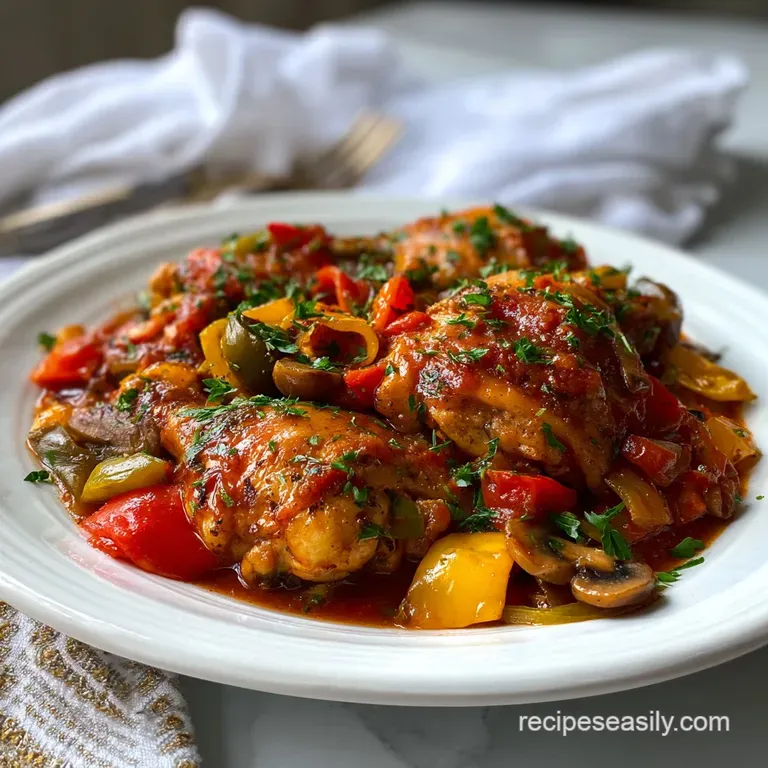
- Season the chicken. Toss the 1.5 lbs of chicken strips with the kosher salt and black pepper. Note: Seasoning early helps the salt penetrate the meat fibers.
- Sear the protein. Heat olive oil in the skillet over medium high heat. Brown the chicken for 3 minutes per side until a golden crust forms. Do not crowd the pan; work in batches if needed.
- Remove and rest. Transfer the chicken to a plate. Note: This prevents the breast meat from becoming rubbery while we cook the veggies.
- Sauté the aromatics. Add the onion, bell pepper, and mushrooms to the same pan. Cook for 5 minutes until the onions turn translucent and soft.
- Add the garlic. Stir in the minced garlic and cook for 1 minute until you smell a fragrant aroma. Don't let it brown, or it will turn bitter.
- Deglaze the pan. Pour in the white wine. Use your spoon to scrape the bottom of the pan until all the brown bits are dissolved.
- Simmer the base. Stir in the crushed tomatoes and dried oregano. Let the sauce bubble for 5 minutes until it thickens slightly.
- Reincorporate the chicken. Slide the chicken strips (and any juices from the plate) back into the pan.
- Add the finish. Fold in the kalamata olives. Simmer for another 3 minutes until the chicken is cooked through.
- Garnish and serve. Remove from heat and sprinkle with fresh parsley.
Problem Solving for Perfect Results
Rubbery Chicken Texture
This usually happens because the chicken was boiled in the sauce for too long. Chicken breast is lean and toughens up once it passes 165°F. Always remove the chicken after searing and only add it back for the final few minutes of simmering to keep it tender and velvety.
Thin and Watery Sauce
If your sauce looks more like soup, it’s likely because the vegetables released too much moisture or the tomatoes were particularly watery. You can fix this by letting the sauce simmer uncovered on high heat for an extra 4 minutes before adding the chicken back in.
Dull or Flat Flavor
If the dish tastes "quiet," it needs more acid or salt. A tiny splash of red wine vinegar or an extra spoonful of olive brine can wake up the entire pan.
| Problem | Root Cause | Solution |
|---|---|---|
| Searing is gray, not brown | Pan wasn't hot enough | Wait for oil to shimmer before adding meat |
| Bitter aftertaste | Burned garlic | Add garlic only after veggies are soft |
| Vegetables are mushy | Overcooked in the sauce | Sauté on high heat to soften, then simmer briefly |
Chef's Tip: Freeze your block of Parmesan for 10 minutes before grating it over the top; it creates a "snow like" texture that melts instantly into the sauce.
Common Mistakes Checklist
- ✓ Pat the chicken completely dry with paper towels before seasoning (moisture prevents browning).
- ✓ Don't stir the chicken for the first 2 minutes of searing to let the crust develop.
- ✓ Use a dry wine; sweet wines like Moscato will make the sauce taste cloying.
- ✓ Taste the sauce before adding the olives; you might need less salt since the olives are briny.
Creative Twists for Your Plate
If you want a Traditional Chicken Cacciatore vibe, you can swap the breast for bone in, skin on thighs. You'll need to increase the initial sear time to 8 minutes and the final simmer to about 15 minutes.
The bone adds a richer, gelatinous quality to the sauce that is absolutely classic.
For an Easy Oven Baked Chicken Cacciatore, you can sear the meat and veggies on the stove, then transfer everything to a baking dish. Pour the sauce over, cover with foil, and bake at 375°F for 20 minutes. This is great if you're already using the oven for a side of garlic bread or a One Pan Roasted recipe earlier in the week.
- If you want a creamy version: Stir in 2 tablespoons of heavy cream at the very end.
- If you want a spicy kick: Add 1/2 teaspoon of red pepper flakes with the garlic.
- If you want a pantry shortcut: Use a Rotisserie Chicken Cacciatore Recipe by skipping the raw chicken sear and just tossing shredded precooked chicken into the finished sauce for 2 minutes.
Storage and Waste Reduction Tips
Store leftovers in an airtight container in the fridge for up to 4 days. This dish actually tastes better the next day because the flavors have time to marry. To reheat, use the stovetop on low heat with a splash of water to loosen the sauce; avoid the microwave if possible to keep the chicken from getting tough.
- Mushroom Stems
- Don't toss them! Chop them finely and sauté them with the onions for extra texture.
- Wine Scraps
- If you have an inch of wine left in a bottle, freeze it in an ice cube tray for the next time you make this Simple Chicken Cacciatore Dinner.
- Olive Brine
- Use a tablespoon of the liquid from the olive jar to add extra punch to the sauce if it feels flat.
Finishing Touches for the Table
Presentation makes a huge difference with a rustic dish like this. I love serving this over a bed of buttery polenta or a wide pasta like pappardelle. The wide noodles act like a canvas for the velvety tomato sauce.
If you’re keeping it low carb, zucchini noodles or a simple side of roasted green beans works beautifully.
Don't skimp on the fresh parsley at the end. The bright green pop against the deep red sauce makes the dish look restaurant quality. If you have any crusty bread lying around, toast it with a bit of garlic butter to soak up every last drop of that sauce. It’s a budget smart way to make a simple dinner feel like a feast. For another comforting bird, check out my Cozy Chicken Paprikash recipe which uses similar one pan techniques.
High in Sodium
845 mg mg of sodium per serving (37% % of daily value)
The American Heart Association recommends limiting sodium intake to about 2,300mg per day for optimal health.
Tips to Reduce Sodium in This Recipe
-
Olive Swap-20%
Kalamata olives are high in sodium. Substitute with low-sodium or salt free olives, or reduce the quantity used to decrease overall sodium content.
-
Salt Reduction-25%
Reduce the amount of kosher salt added to the chicken from 1 tsp to 1/2 tsp, or eliminate it entirely, tasting as you cook and adding only if absolutely necessary.
-
Tomato Choice-20%
Use no-salt added crushed tomatoes instead of regular crushed tomatoes. This can significantly lower the sodium content without sacrificing flavor.
-
Wine Alternative-10%
Consider using low-sodium chicken broth or a splash of lemon juice diluted with water instead of white wine. This eliminates a small amount of sodium that may be present in the wine.
-
Spice It Up!
Enhance the flavor of your dish with a variety of sodium free herbs and spices like garlic powder, onion powder, smoked paprika, or red pepper flakes to compensate for less salt.
Recipe FAQs
What is traditionally served with chicken cacciatore?
Pasta, polenta, or crusty bread. Traditionally, you want something starchy to soak up the flavorful tomato sauce, like wide egg noodles or creamy polenta. Bread is essential for mopping up the remnants, much like you would with the sauce in a rich Chicken Thigh StirFry recipe.
What's the secret to a great cacciatore?
High heat searing and deglazing with wine. Searing the chicken creates flavorful fond on the bottom of the pan, and the wine dissolves those bits, providing immediate depth before the sauce even simmers. If you nail the searing temperature, you capture complex flavors fast.
What do you put in a chicken cacciatore?
Chicken, tomatoes, peppers, onions, garlic, herbs, and olives. These components create the "hunter style" rustic flavor profile that defines the dish. For quick cooking, use boneless chicken strips so they finish cooking simultaneously with the vegetables.
What vegetables go well in cacciatore?
Bell peppers and onions are mandatory, mushrooms are highly recommended. The peppers add necessary sweetness to balance the acidity of the tomatoes, while mushrooms contribute earthy umami. You can also incorporate carrots or celery if you want a deeper mirepoix base.
How do I keep the chicken breast juicy since it cooks so fast?
Sear the chicken first, remove it immediately, and return it only for the last few minutes. Cook the chicken until it has a good crust, but is still slightly underdone inside, then let the sauce finish the job gently. This technique respects the lean protein's need for shorter cook times.
Is it true I must use canned crushed tomatoes for the best texture?
No, this is a common misconception. While crushed tomatoes provide excellent body, you can use diced tomatoes if you blend them slightly before adding them to the sauce. This achieves similar textural results without needing an extra step later.
How do I make the sauce thick without adding flour or starch?
Simmer the sauce uncovered after deglazing to allow natural reduction. Keep the heat at a consistent medium simmer once the tomatoes are added until the liquid reduces by about one-third. This concentrates the tomato solids and deepens the flavor profile.
Easy Chicken Cacciatore Dinner
Ingredients:
Instructions:
Nutrition Facts:
| Calories | 402 kcal |
|---|---|
| Protein | 42g |
| Fat | 16g |
| Carbs | 14g |
| Fiber | 3g |
| Sugar | 6g |
| Sodium | 845mg |
