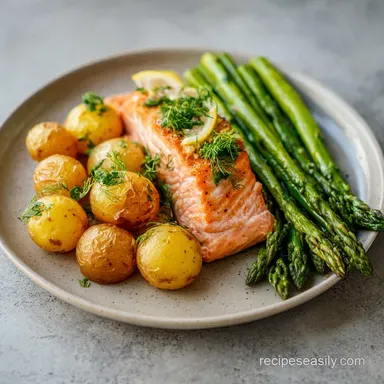
Healthy Baked Salmon with Roasted Potatoes
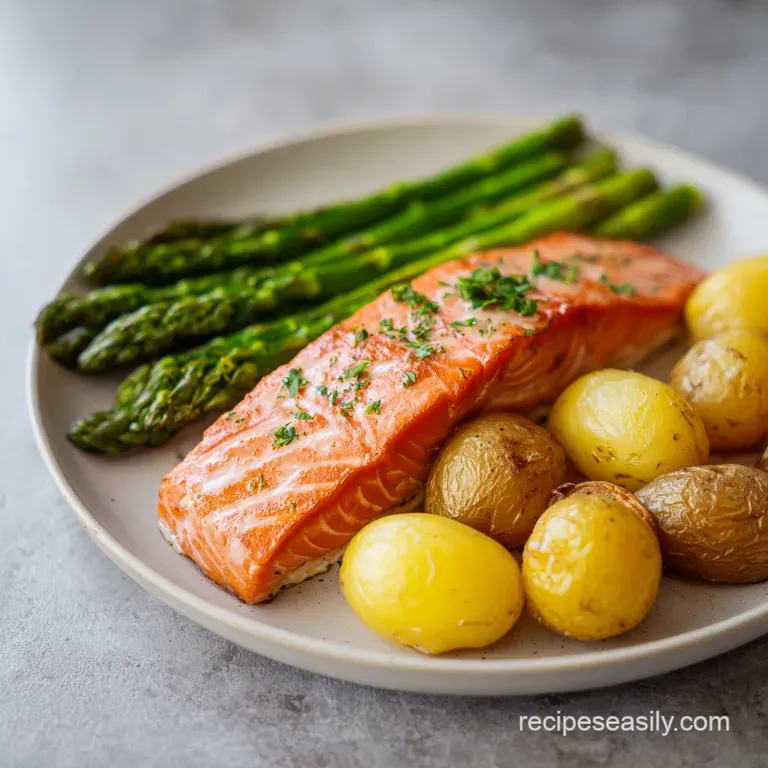
- Time: 10 min active + 20 min cook = Total 30 minutes
- Flavor/Texture Hook: Garlic butter glaze with crisp, golden potato edges
- Perfect for: Busy weeknights or a high protein meal prep
- Healthy Dinner Recipe with Baked Salmon
- Why This Sheet Pan Method Works
- Ingredient Deep Dive
- Essential Gear for Easy Cleanup
- Step-by-Step Cooking Guide
- Fixing Salmon and Potato Blunders
- Troubleshooting Common Issues
- Swapping Flavors and Veggies
- Adjusting Your Batch Size
- Debunking Common Kitchen Myths
- Storage and Zero Waste Tips
- The Best Sides and Pairings
- Recipe FAQs
- 📝 Recipe Card
That first hiss of baby potatoes hitting a hot, oiled pan is where the magic starts. I remember one Tuesday night about three years ago when I tried to be "fancy" by roasting my salmon and potatoes on two different trays.
I got distracted by a phone call, and by the time I checked the oven, the salmon was basically a piece of cardboard, but the potatoes were still raw in the middle. It was a disaster.
I realized then that timing is everything. You can't just throw everything in at once and hope for the best. I spent a few weeks playing with the clock, moving things around, and testing temperatures. I found that the secret isn't just the heat, it's the sequence.
This approach turns a potentially stressful meal into a quick healthy dinner that actually feels like a treat. You'll get a meal where the vegetables are tender, the potatoes are gold, and the salmon is just barely opaque in the center.
Let's get into how to nail this Healthy Dinner Recipe with Baked Salmon every single time.
Healthy Dinner Recipe with Baked Salmon
Right then, let's talk about the flow. Most people fail at sheet pan meals because they treat the oven like a microwave - just put it in and wait. But a potato needs way more time to soften and brown than a piece of fish does to cook. If you put them in together, you either get mushy salmon or hard potatoes.
By roasting the potatoes first, we create a base of flavor and texture. Then, we nestle the salmon and greens into the gaps. It's all about managing the heat. The high temperature of 400°F (200°C) is the sweet spot. It's hot enough to brown the potatoes but fast enough that the salmon doesn't dry out.
Trust me on this: don't skip the parchment paper. Not only does it make cleanup a breeze, but it also prevents the salmon from sticking and tearing when you try to serve it. When you pull this out of the oven, the aroma of toasted garlic and lemon will hit you immediately.
It's a game of patience for those first 15 minutes, but the payoff is a restaurant quality plate with almost zero effort.
Why This Sheet Pan Method Works
I've spent a lot of time wondering why some sheet pan meals feel soggy. It usually comes down to crowding. When you pile things on top of each other, they steam instead of roast. This recipe avoids that by using a single layer.
Staggered Heat: Potatoes start first because their starch needs more time to break down and crisp up compared to the delicate proteins in fish.
Fat Barrier: The melted butter glaze acts as a shield, trapping moisture inside the salmon while the heat browns the garlic on the outside.
Acidic Tenderizing: The lemon juice breaks down some of the surface fibers of the fish, allowing the oregano and garlic to penetrate deeper.
Air Flow: Leaving space between the fillets and the vegetables allows hot air to circulate, which is what gives the broccoli or asparagus that slightly charred, nutty taste.
| Method | Prep Time | Texture | Best For |
|---|---|---|---|
| Oven Roast | 10 mins | Velvety & Crisp | Large families / Low stress |
| Pan Sear | 5 mins | Crusty & Juicy | Single servings / Fast heat |
| Air Fryer | 5 mins | Very Crunchy | Maximum crisp / Small portions |
The difference between a fresh fillet and a frozen one is mainly about moisture. If you use frozen, just make sure it's completely thawed and patted dry with a paper towel. If the salmon is wet when it hits the pan, it will steam rather than roast, and you'll lose that golden color.
Ingredient Deep Dive
Not all ingredients play the same role here. I've found that using a mix of oil and butter is the key. Olive oil handles the high heat for the potatoes without burning, while the butter adds that rich, silky finish to the salmon.
| Ingredient | Science Role | Pro Secret |
|---|---|---|
| Salmon | Main Protein | Use center cut fillets for even cooking across the board |
| Baby Potatoes | Carb Base | Cut them into equal sizes so they all finish at the same time |
| Melted Butter | Moisture Seal | Brush it on thick to prevent the fish from drying out |
| Lemon Juice | Flavor Balancer | Add it at the end of the glaze to keep the brightness |
Essential Gear for Easy Cleanup
You don't need a professional kitchen for this, but a few specific tools make it way easier. I use a large, rimmed baking sheet - the rim is important so the butter doesn't drip all over the bottom of your oven.
Parchment paper is my absolute non negotiable. Honestly, don't even bother with foil unless you're using a lot of oil, because fish loves to cling to foil. A small whisk or even a fork works for the glaze, and a meat thermometer is your best friend if you're nervous about overcooking the fish.
If you have a kitchen scale, use it for the potatoes. 450g of baby potatoes is usually about a pint or a small bag. Keeping the sizes consistent means you won't have some potatoes that are burnt and others that are raw.
Step-by-step Cooking Guide
Let's crack on with the actual process. Remember, the goal is a steady flow of movements to keep the oven working.
- Preheat your oven to 400°F (200°C) and line a large rimmed baking sheet with parchment paper. Note: Preheat for at least 15 mins so the pan is actually hot.
- Toss the halved baby potatoes with 1 tbsp of olive oil, salt, and pepper directly on the baking sheet. Spread them in a single layer.
- Roast the potatoes for 12-15 minutes until the edges are golden brown and slightly crisp.
- Slide the pan out of the oven and push the roasted potatoes to the edges of the sheet.
- Place the salmon fillets in the center of the pan.
- In a small bowl, whisk together melted butter, minced garlic, lemon juice, and dried oregano. Brush the mixture generously over each salmon fillet.
- Place one lemon slice on top of each salmon fillet. Note: This protects the top of the fish from drying out.
- Add the asparagus or broccoli florets to the remaining open spaces on the pan.
- Return the pan to the oven and bake for 10-12 minutes until the salmon flakes easily with a fork and reaches an internal temperature of 135°F-140°F (57°C-60°C).
Chef's Tip: If you want the potatoes even crispier, don't crowd them. If they're touching, they'll steam. Give them about half an inch of breathing room.
Fixing Salmon and Potato Blunders
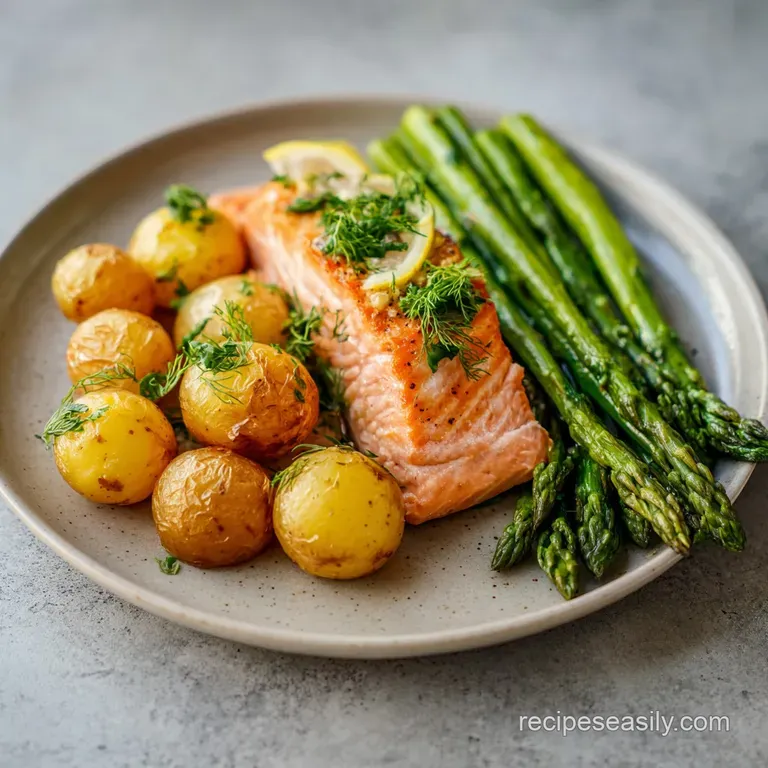
The biggest struggle with this Healthy Dinner Recipe with Baked Salmon is usually the timing. If you've ever pulled out a tray where the broccoli is burnt to a crisp but the salmon is still raw in the middle, you're not alone. It's usually a temperature or spacing issue.
Troubleshooting Common Issues
| Issue | Solution | |||
|---|---|---|---|---|
| Why Your Salmon Is Rubbery | This happens when the internal temperature climbs too high too fast. Salmon continues to cook for a few minutes after you take it out of the oven (carryover cooking). If you wait until it looks "done" | |||
| Why Your Potatoes Are Still Hard | This is almost always because the potatoes were too large or the oven wasn't fully preheated. Ensure you're using baby potatoes and cutting them in half. If you're using larger potatoes, you'll need t | |||
| Why Your Veggies Are Mushy | Asparagus and broccoli cook incredibly fast. If you put them in at the same time as the potatoes, they'll turn into paste. Always add them in the final 10-12 minutes. | Problem | Root Cause | Sol |
Swapping Flavors and Veggies
Once you've nailed the basic method, you can really play around with the profiles. If you're looking for more Salmon Marinade recipe ideas, you can swap the butter glaze for a soy ginger mixture.
For a Zesty Mediterranean Twist
Swap the oregano for fresh dill and add a handful of halved cherry tomatoes to the pan during the final bake. The tomatoes will burst and create a natural sauce for the potatoes.
For Low Carb or Keto Needs
Replace the baby potatoes with cauliflower florets or sliced radishes. Since cauliflower cooks faster than potatoes, you can add them at the same time as the salmon and greens.
For High Protein Salmon Recipes for Weight Loss
Stick to the steamed broccoli and asparagus, but swap the butter for a bit more olive oil or a dollop of Greek yogurt mixed with lemon. This keeps the protein high while trimming some of the saturated fats.
| Original Ingredient | Substitute | Why It Works |
|---|---|---|
| Baby Potatoes (1 lb) | Sweet Potatoes (1 lb) | Similar roast time. Note: Sweeter flavor, softer texture |
| Butter (2 tbsp) | Olive Oil (2 tbsp) | Maintains moisture. Note: Less rich, more "clean" taste |
| Asparagus (2 cups) | Brussels Sprouts (2 cups) | Hearty greens. Note: Need 5 extra mins of roasting |
When scaling this up for a party, don't just use a bigger pan - use two pans. If you crowd 8 fillets and 2 lbs of potatoes on one tray, the temperature in the oven will drop, and nothing will crisp.
Adjusting Your Batch Size
Scaling a sheet pan meal is a bit different from scaling a soup. You're limited by the surface area of your oven racks.
Scaling Down (2 Servings): Use a smaller quarter sheet pan. Reduce the roasting time for potatoes by about 2-3 minutes since there's less mass in the oven. Beat one egg if you're adding a binder, but for this recipe, just halve the ingredients.
Scaling Up (8 Servings): Use two separate baking sheets. Increase the salt and oregano to 1.5x instead of 2x - spices can become overpowering when doubled. I recommend rotating the pans halfway through the final bake so the one on the bottom rack doesn't get burnt while the top one stays raw.
Baking Note: If you're using two trays, lower the oven temp to 375°F (190°C) and extend the final bake by 3-5 minutes. This ensures the air can still circulate between the two levels.
Debunking Common Kitchen Myths
I've heard a lot of "rules" about salmon that are actually just wrong. Let's clear a few things up so you can cook with confidence.
Myth 1: Searing salmon "seals in the juices." This is the biggest lie in the kitchen. Searing creates a crust for flavor, but it doesn't stop moisture from leaving the fish. The best way to keep salmon juicy is to not overcook it, regardless of whether you sear it or bake it.
Myth 2: You must cook salmon until it's opaque all the way through. Actually, the most tender salmon has a slightly translucent center. According to USDA data, cooking to 145°F is the safety standard, but most chefs and home cooks pull it at 135°F and let it carryover cook to a safe temp.
This prevents that "chalky" texture.
Storage and Zero Waste Tips
If you have leftovers, don't just toss them in a container. Salmon can get a "fishy" smell in the fridge if not stored correctly.
Fridge Storage: Keep the salmon and vegetables in an airtight glass container for up to 3 days. I find that glass keeps the flavors cleaner than plastic.
Freezing: I don't recommend freezing the cooked potatoes and veggies - they get mealy. However, you can freeze the cooked salmon for up to 2 months. Just wrap it tightly in foil and then put it in a freezer bag.
Zero Waste: Don't throw away those lemon ends! You can freeze the leftover lemon slices in a bag to use in water or tea. If you have extra garlic skins, toss them into a freezer bag with your other veggie scraps to make a homemade broth later.
The Best Sides and Pairings
While the potatoes and greens are built in, sometimes you want to go all out. If you're serving this for a special occasion, a light, acidic side helps cut through the richness of the butter glaze.
A simple arugula salad with a lemon tahini dressing is a winner here. If you want something more filling, a scoop of quinoa or wild rice works beautifully. For those who love citrusy flavors, you might also enjoy a Lemon Herb Chicken for your next meal prep day.
When thinking about healthy salmon recipes with sides, remember to balance the textures. Since the salmon is velvety and the potatoes are crisp, adding something raw and crunchy, like sliced cucumbers or a crisp slaw, rounds out the meal perfectly.
This Healthy Dinner Recipe with Baked Salmon is a complete meal on its own, but these additions make it feel like a feast.
Recipe FAQs
What to eat with baked salmon healthy?
A light side dish. This one-pan meal pairs well with a healthy avocado salad to add fresh nutrients and healthy fats to the plate.
What to cook with salmon for dinner healthy?
A sheet pan meal with roasted vegetables. Combine salmon fillets with baby potatoes and broccoli at 400°F for a balanced, nutrient-dense dinner with minimal cleanup.
Is baked salmon good for a diet?
Yes, it is an excellent choice. Salmon provides high-quality protein and omega-3 fatty acids, which keep you full and support heart health.
How to bake salmon for gastritis?
Reduce the lemon juice and garlic. Use the same 400°F oven temperature but limit these acidic and pungent ingredients to avoid irritating the stomach lining.
Why is my salmon rubbery?
Overcooking the fillets. Salmon continues to cook after leaving the oven, so remove it exactly when it reaches an internal temperature of 135°F, 140°F.
Why are my potatoes still hard?
Incorrect potato size or low oven temperature. Ensure you use baby potatoes cut in half and roast them for 12–15 minutes before adding the salmon to the pan.
How to store leftover salmon and vegetables?
Place them in an airtight glass container. Keep the meal in the fridge for up to 3 days to maintain the cleanest flavor and prevent fishy smells.
Healthy Baked Salmon with Potatoes