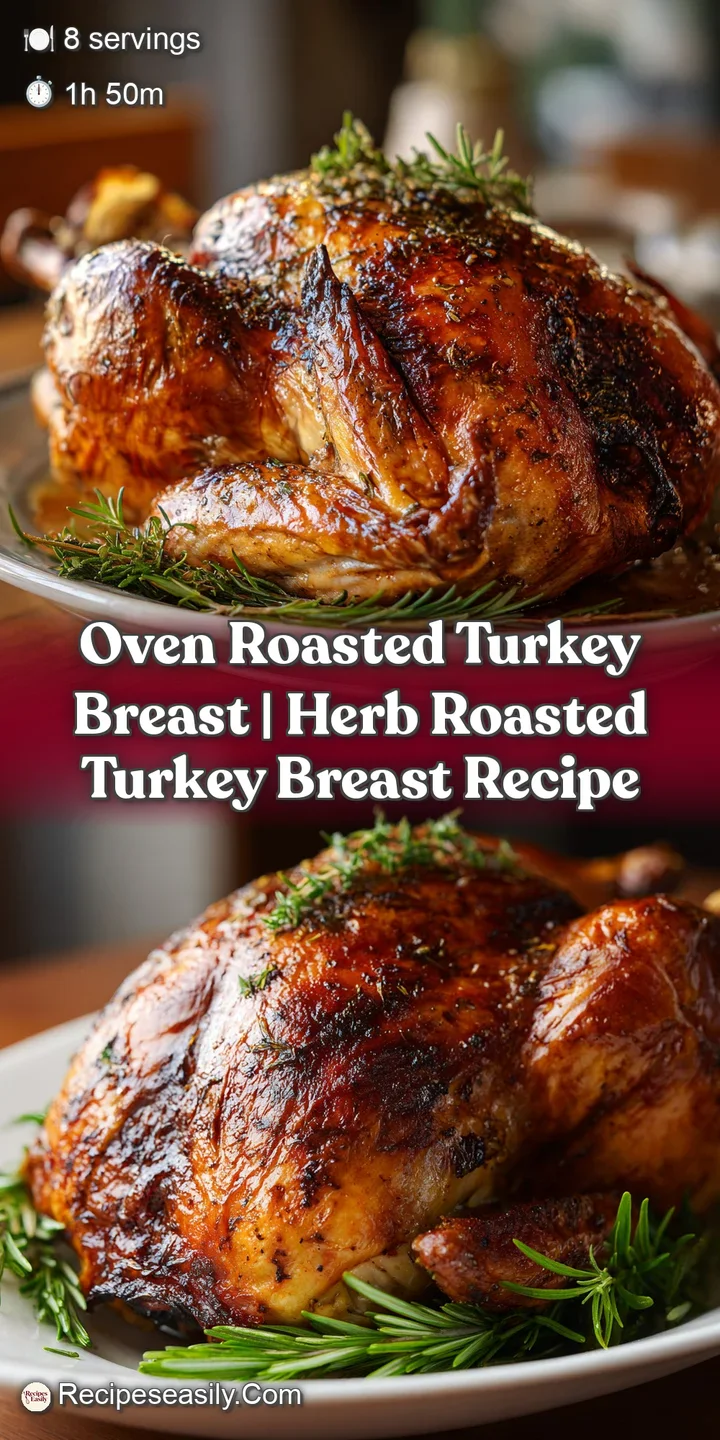
Oven Roasted Turkey Breast: Herb Infused and Juicy
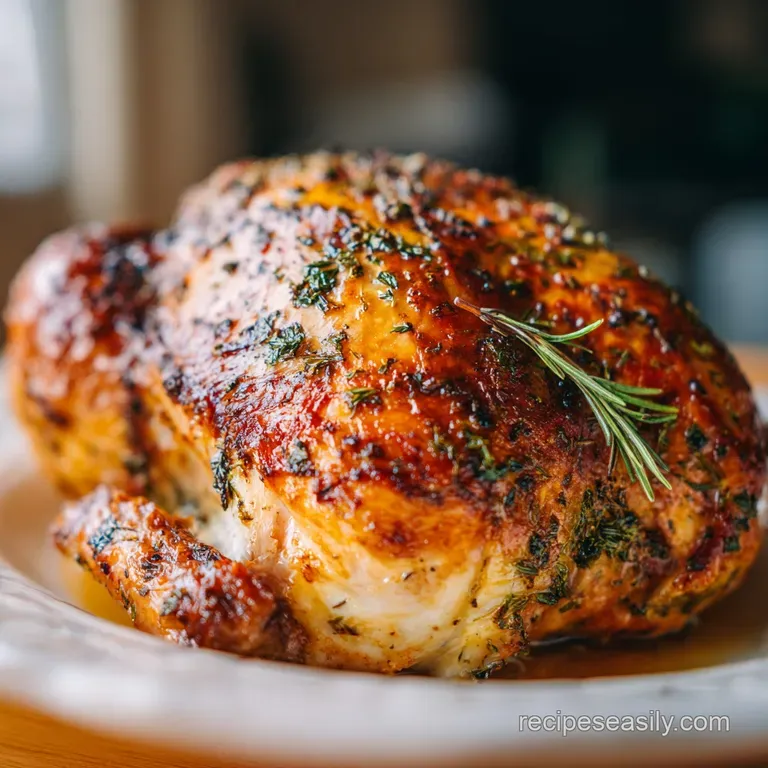
- Time: Active 20 minutes, Passive 90 minutes, Total 110 minutes
- Flavor/Texture Hook: Shatter crisp skin with a buttery, herb infused finish
- Perfect for: Stress free holiday dinners or high protein meal prep
- Master the Ultimate Oven Roasted Turkey Breast
- Understanding the Roasting Success
- Essential Recipe Specifications
- Selecting Your Quality Ingredients
- Tools for Perfect Roasting
- Step-by-Step Cooking Guide
- Avoiding Common Cooking Pitfalls
- Flavorful Recipe Variations
- Storage and Reheating Tips
- Serving and Presentation Ideas
- Very High in Sodium
- Recipe FAQs
- 📝 Recipe Card
Master the Ultimate oven-roasted Turkey Breast
Imagine the sound of a sharp knife hitting a golden, crackling surface. That first "crunch" as the blade breaks through skin that has been rendered into a thin, salty wafer of pure flavor. Then, the steam rises, carrying the scent of rosemary and sage that has been toasted in bubbling butter.
Inside, the meat is velvety and dripping with juice, not that sawdust texture we all dread at holiday dinners. This isn't just a meal; it's the moment you realize you never actually needed to cook a 20 pound bird to get that "wow" factor at the table.
I used to be so intimidated by turkey. I remember one year I tried a wet brine in a giant bucket that leaked all over my fridge, and the turkey still ended up tasting like wet paper. It was a mess. But then I switched to this bone in method.
The bone acts like an insulator, keeping the meat moist while the oven heat circulates all around it. Now, I make this oven-roasted turkey breast even on random Tuesdays because it’s easier than roasting a whole chicken and the leftovers make the best sandwiches you’ve ever had in your life.
This guide is for the cook who wants that "from scratch" taste without spending fourteen hours in the kitchen. We are focusing on smart techniques like dry brining and compound butter to do the heavy lifting for us.
You won't find any complicated gadgets here just honest ingredients and a few tricks I've picked up after many trials in my own kitchen. Let's get that oven preheated and talk about why this method is the absolute gold standard for poultry.
Understanding the Roasting Success
The beauty of this perfect roasted turkey breast lies in how we manage moisture and heat. It’s not about just throwing it in the oven; it’s about preparing the surface to react to the heat in a specific way.
We want the skin to dry out so it can crisp, while the interior stays shielded by fat and bone.
- Surface Dehydration: By letting the salted turkey sit uncovered in the fridge, we pull moisture out of the skin, which allows it to brown and crisp much faster than wet skin.
- Fat Barrier: The herb butter tucked under the skin creates a physical shield that bastes the meat from the inside out as it melts.
- Aromatic Steaming: Placing the bird over broth and vegetables creates a humid environment in the pan, preventing the drippings from burning and keeping the meat from drying out.
- Insulated Cooking: Leaving the bone in means the heat has to work harder to reach the center, which naturally slows down the cooking process and prevents overshooting that delicate 165°F mark.
| Method | Total Time | Texture | Best For |
|---|---|---|---|
| Stovetop (Braised) | 75 minutes | Soft, tender skin | Stews or shredded meat |
| oven-roasted | 110 minutes | Shatter crisp skin | Classic holiday presentation |
| Slow Cooker | 6 hours | Fall off-bone | Hands off meal prep |
Cooking a large cut of meat like this requires a bit of patience, but the oven method is truly superior for texture. While a stovetop version might be faster, you lose that incredible golden crust that only dry, circulating heat can provide.
The oven allows the rendered fat to "fry" the skin as it roasts, which is a flavor profile you just can't mimic in a pot of liquid.
Essential Recipe Specifications
Before we touch the meat, we need to understand our components. We are using a 6.5 lb bone in turkey breast. This size is the "sweet spot" because it fits perfectly in a standard roasting pan but still provides enough meat for about 8 people. If you’re looking to branch out with your Sunday roasts, you might find this Beef Tenderloin Roast Recipe follows similar principles of over high heat searing followed by gentle roasting.
| Ingredient | Science Role | Pro Secret |
|---|---|---|
| Kosher Salt | Protein Denaturation | Use coarse salt; it dissolves slowly to season deep into the muscle. |
| Unsalted Butter | Heat Conductor | Soften it to room temp so it emulsifies with the herbs without separating. |
| Chicken Broth | Humidity Control | Prevents the vegetable sugars from scorching in the bottom of the pan. |
The chicken broth in the bottom of the pan is a budget smart move. Instead of buying expensive turkey stock, a good low sodium chicken broth works perfectly to keep the environment moist.
As the turkey drippings fall into that broth, it creates a "turbo charged" liquid that you can later turn into a gravy that tastes like it took all day to simmer.
Selecting Your Quality Ingredients
For this easy oven-roasted turkey breast, every ingredient has a job to do. Since we are keeping it simple, the quality of your herbs and the type of salt you use will make a noticeable difference in the final result.
- 1 (6.5 lb) bone in turkey breast: Ensure it is completely thawed. If it's even slightly icy in the middle, it won't cook evenly.
- 2 tbsp Kosher salt: I prefer Kosher salt because the larger grains are easier to distribute than fine table salt.
- 1 tbsp cracked black pepper: Freshly cracked has a woody, spicy aroma that pre ground pepper loses after sitting on a shelf.
- 0.5 cup unsalted butter: Softened so it’s easy to mash. Using unsalted lets us control the seasoning perfectly.
- 3 cloves garlic: Mince these tiny so they distribute through the butter and don't leave large, bitter burnt chunks on the skin.
- Fresh Herbs (Rosemary, Sage, Thyme): Use 1 tbsp of each. These are the "holy trinity" of poultry seasoning.
- 1 tsp smoked paprika: This adds a beautiful mahogany color and a hint of woodsmoke flavor without a smoker.
- Vegetable Bed (Carrots, Celery, Onion): Roughly chopped. These act as a natural rack and flavor the pan juices.
- 1 cup low sodium chicken broth: This provides the steam needed to keep the breast meat from turning into jerky.
| Original Ingredient | Substitute | Why It Works |
|---|---|---|
| Fresh Rosemary | Dried Rosemary (1 tsp) | Dried is more concentrated; use less to avoid a "piney" over seasoned taste. |
| Unsalted Butter | Ghee or Avocado Oil | High smoke point and dairy-free. Note: Won't have that classic buttery crust flavor. |
| Chicken Broth | Water + 1 tbsp Soy Sauce | The soy sauce adds the savory depth (umami) that water lacks. |
When choosing your turkey, look for one that hasn't been "pre brined" or "enhanced with a salt solution" if possible. Many grocery store birds are injected with salt water to make them seem juicier, but this can make your final dish overly salty once you add your own dry brine.
If you do have a pre brined bird, cut the Kosher salt in the recipe in half to stay on the safe side.
Tools for Perfect Roasting
You don't need a professional kitchen, but a few specific items make this herb roasted turkey breast much easier to handle. The most important tool in your arsenal is actually the thermometer.
- Roasting Pan with V Rack: The V rack is crucial. It lifts the bird up so the hot air can circulate underneath the skin. If you don't have one, you can use the chopped vegetables as a "shelf," but the skin on the bottom won't be as crispy.
- Instant Read Digital Thermometer: This is non negotiable. Cooking by time alone is a recipe for disaster because every oven and every bird is slightly different.
- Small Mixing Bowl: For mashing that herb butter into a smooth paste.
- Paper Towels: You’ll need plenty of these to get the skin bone dry before the salt goes on.
Chef's Tip: If you don't have a roasting pan, a large cast iron skillet or even a heavy duty sheet pan will work. Just make sure the sides are high enough to catch the cup of broth and the turkey drippings without splashing over the edge.
step-by-step Cooking Guide
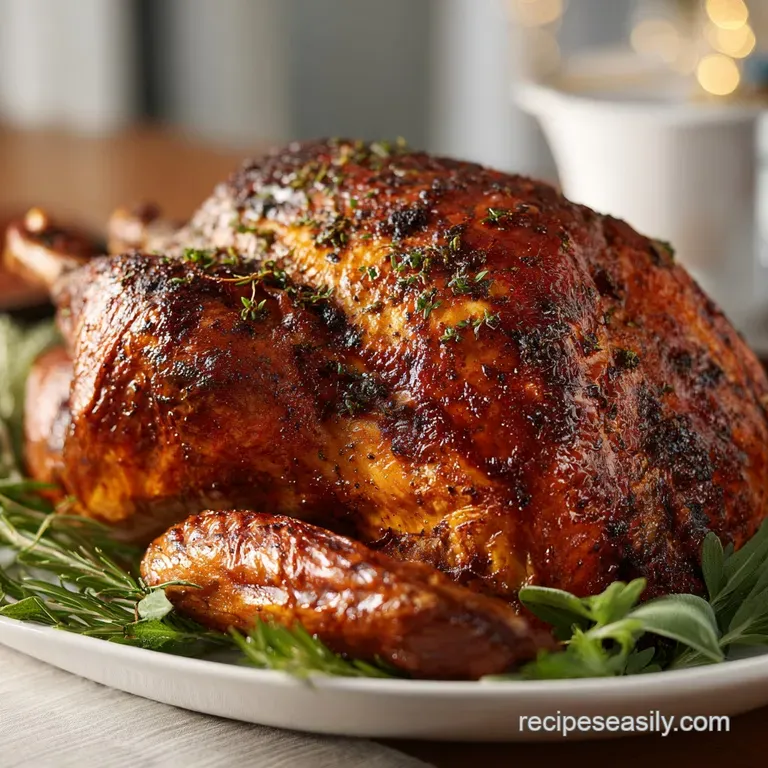
Now, let's get into the actual process. This is where the magic happens. Follow these steps closely, especially the resting part at the end it's the difference between a dry bird and a succulent one.
- Dry the bird. Pat the turkey breast completely dry with paper towels. Get into every nook and cranny. Note: Moisture is the enemy of crispiness.
- Start the brine. Apply the 2 tbsp Kosher salt all over the skin. Refrigerate it uncovered for 12 hours. This "dry brine" is the secret to that glassy, crackling skin.
- Tempering. Remove the turkey from the fridge 30 minutes before roasting. This lets the internal temperature rise slightly so it cooks more evenly in the oven.
- Heat it up. Preheat your oven to 325°F (165°C). While that warms, mix your 0.5 cup softened butter with the minced garlic, rosemary, sage, thyme, and smoked paprika.
- Prep the base. Place the chopped carrots, celery, and onion in the roasting pan. Pour in that 1 cup of chicken broth. This is your "flavor insurance."
- Under the skin. Gently loosen the turkey skin from the meat with your fingers. Be careful not to tear it! Spread half of that herb butter directly onto the meat under the skin.
- Outer coat. Rub the remaining half of the butter all over the exterior skin. Season everything with the cracked black pepper.
- The roast. Place the turkey on the V rack. Roast for about 1 hour 30 minutes. Cook until the thickest part reaches 160°F (71°C).
- The rest. Remove from the oven. Let it rest for 20 minutes. Note: The temp will rise to 165°F (74°C) on its own.
- Carve. Slice against the grain for the most tender bites.
If you find yourself loving this oven baked method, you should definitely check out these Oven Baked Chicken Thighs for a faster weeknight version using similar over high heat techniques.
Avoiding Common Cooking Pitfalls
Even the best cooks run into trouble sometimes. The biggest issue people face with an oven-roasted turkey breast is usually related to texture. Either the meat is dry, or the skin is limp and rubbery.
Why Your Turkey Skin Is Rubbery
If the skin isn't crisping up, it usually means there was too much moisture present. This can happen if you skip the 12 hour dry brine or if your oven temperature is running low. Also, if you cover the turkey with foil for the entire cook time, you’re essentially steaming it rather than roasting it.
Only use foil if the skin is getting too dark before the meat is cooked through.
How To Prevent Bottom Sogginess
When the bird sits directly in the juices at the bottom of the pan, the skin underneath will never get crispy. This is why the V rack is so important. If you don't have one, try to build a very tall "raft" of carrots and celery to keep the bird at least an inch above the liquid.
| Problem | Root Cause | Solution |
|---|---|---|
| Meat is dry/stringy | Overcooked (past 165°F) | Pull at 160°F and rely on carryover cooking. |
| Skin is pale | Not enough fat or heat | Increase temp to 350°F for the last 10 mins or rub with more butter. |
| Burnt pan juices | Not enough liquid | Add another 0.5 cup of broth if the pan looks dry halfway through. |
Common Mistakes Checklist:
- ✓ Forgot to pat the skin dry (leads to steaming).
- ✓ Using cold butter (makes it impossible to spread under the skin).
- ✓ Slicing the turkey immediately after taking it out (all the juice will run out).
- ✓ Not using a thermometer (guessing is the enemy of juicy turkey).
- ✓ Crowding the pan with too many vegetables (blocks air circulation).
Flavorful Recipe Variations
Once you’ve mastered the classic herb version, you can start playing with the flavors. Turkey is a fantastic canvas for all sorts of spices.
- Citrus Infused: Add the zest of one lemon and one orange to the butter mixture. Stuff the empty cavity of the breast with the citrus halves. This adds a bright, acidic note that cuts through the rich butter.
- Spicy Kick: Swap the rosemary and sage for 1 tbsp of chili powder and a pinch of cayenne. Use lime juice instead of broth in the pan for a southwestern flair.
- Garlic Lover's: Double the garlic and roast a whole head of garlic (top cut off) in the pan juices. You can squeeze the roasted garlic out and spread it on the sliced turkey like "garlic jam."
If you want X, do Y:If you want extra crispy skin, add 1/2 tsp of baking powder to your salt brine. It raises the pH level and helps the skin brown faster.
If you want a deeper color, brush the turkey with a little bit of maple syrup or honey in the last 15 minutes of roasting. If you want a thicker gravy, whisk 2 tbsp of flour into the pan drippings once the turkey is removed and simmer it on the stove for 5 minutes.
Storage and Reheating Tips
Leftover turkey is a gift that keeps on giving. To keep it from drying out, store it properly and avoid the microwave if you can.
Storage:Fridge: Place sliced turkey in an airtight container with a spoonful of the pan juices. It will stay fresh for up to 4 days. Freezer: Wrap the turkey tightly in plastic wrap, then foil, and place in a freezer bag. It will last for up to 3 months.
I recommend freezing it in portions so you can grab just what you need for a sandwich.
Zero Waste Tip: Don't throw away that turkey bone! After you’ve carved off all the meat, throw the bone into a pot with some water, an extra onion, and some peppercorns. Simmer it for 3 hours to make a rich turkey stock.
You can freeze this stock in ice cube trays to add a burst of flavor to your next batch of rice or soup.
Reheating: The best way to reheat turkey without it turning into leather is in the oven. Place the slices in a baking dish, add a splash of broth, cover with foil, and heat at 300°F (150°C) until just warmed through.
This "mini steam" keeps the fibers of the meat tender.
Serving and Presentation Ideas
Presentation is half the battle. When you bring a perfectly browned roasted turkey breast to the table, people are going to be impressed before they even take a bite.
For the best look, don't slice the turkey in the kitchen and bring out a pile of meat. Bring the whole breast to the table on a large platter surrounded by the roasted carrots and some fresh sprigs of rosemary. It looks much more festive. When it’s time to eat, slice the meat against the grain.
If you look closely at the meat, you’ll see lines running in one direction; you want to cut perpendicular to those lines. This shortens the muscle fibers, making every bite melt in your mouth.
As for pairings, you can't go wrong with the classics. I love serving this alongside some mashed potatoes and a bright, acidic cranberry sauce to balance the richness of the herb butter. If you're looking for more inspiration for your side dish game, check out these Air Fryer Chicken Thighs which use a similar seasoning profile and might give you ideas for a quicker weeknight vegetable roast.
There's a common myth that turkey is naturally dry. That’s just not true! It only becomes dry when the proteins are heated so much that they squeeze out all their moisture. By pulling the bird at 160°F, you are catching it right at the peak of juiciness.
Another myth is that you need to baste the turkey every 15 minutes. Every time you open that oven door, you lose heat and lower the temperature, which actually makes the turkey take longer to cook and dries out the skin.
Trust your herb butter it’s doing all the bastes for you from the inside!
Very High in Sodium
910 mg 910 mg of sodium (40% 40% of daily value)
The American Heart Association recommends a limit of no more than 2,300 mg of sodium per day, ideally moving toward a 1,500 mg limit for most adults.
Tips to Reduce Sodium in Your Turkey Breast Recipe
-
Eliminate Kosher Salt-25%
The 2 tbsp of Kosher salt is a major sodium contributor. Omit it entirely; the herbs and spices will still provide great flavor.
-
Switch to Low-Sodium Broth-30%
Replace the 1 cup of regular chicken broth with a low-sodium or no-salt added version to significantly cut down on sodium.
-
Boost Fresh Herbs and Spices
Use a generous amount of fresh rosemary, sage, thyme, garlic, and smoked paprika. These ingredients add robust flavor without adding sodium.
-
Adjust Black Pepper
While black pepper is typically low in sodium, ensure you are using cracked black pepper and not a seasoned pepper blend that might contain added salt.
Recipe FAQs
How long would you cook a turkey breast in the oven?
Roast for 1 hour and 30 minutes at 325°F (165°C). Always use an instant read thermometer to confirm the thickest part of the breast reaches 160°F (71°C) before removing it from the oven.
Do you cover a turkey breast when cooking it in the oven?
No, keep it uncovered throughout the roasting process. An exposed turkey skin allows the heat to circulate properly, ensuring you achieve a golden, crispy exterior rather than steaming the bird.
What is the best way to cook a turkey breast and keep it moist?
Use a dry brine and prioritize carryover cooking. Salting the bird 12 hours in advance draws moisture into the meat, while letting it rest for 20 minutes after roasting allows the juices to redistribute effectively.
Is it true that basting the turkey with butter every 30 minutes is necessary for flavor?
No, this is a common misconception. Opening the oven door repeatedly drops the temperature and dries out the bird; instead, apply the herb butter mixture under the skin before roasting to keep the meat flavorful and succulent.
How to store leftover turkey without losing its texture?
Place sliced turkey in an airtight container with a spoonful of the pan juices. This added moisture prevents the meat from drying out during its four day shelf life in the refrigerator. If you enjoyed Recipe for 7 Servings here, you can see how the same principles of residual moisture keep meat tender in other slow cooked dishes.
How to achieve the perfect crispy skin on a turkey breast?
Pat the turkey completely dry with paper towels before seasoning. Eliminating surface moisture is the most critical step to ensuring the skin crisps up perfectly in the oven.
How to handle the turkey before it goes into the oven?
Remove the turkey from the refrigerator 30 minutes before roasting. Taking the chill off ensures the meat cooks more evenly from the center to the exterior, preventing the outer layers from overcooking while the middle remains cold.
oven-roasted Turkey Breast
Ingredients:
Instructions:
Nutrition Facts:
| Calories | 438 kcal |
|---|---|
| Protein | 51g |
| Fat | 24g |
| Carbs | 2.4g |
| Fiber | 0.6g |
| Sugar | 0.8g |
| Sodium | 910mg |
