Pastel Crinkle Cookies with Tangy Lemon Center
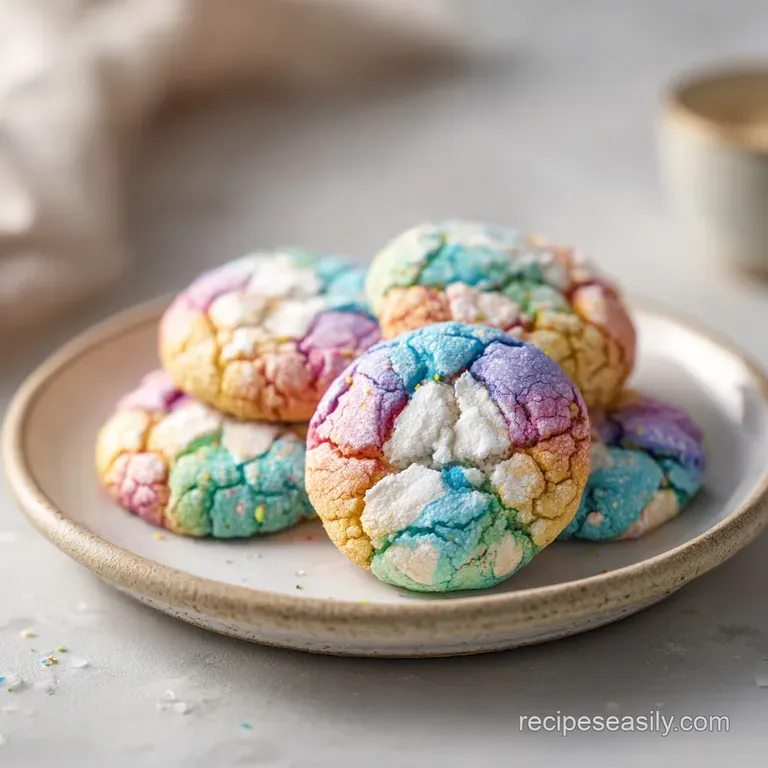
- Time: Active 20 minutes, Passive 2 hours 10 mins, Total 2 hours 30 mins
- Flavor/Texture Hook: Tangy lemon center with a snowy, shatter crisp exterior
- Perfect for: Spring garden parties, Easter brunch, or beginner bakers wanting a "wow" factor
- Springtime Crinkle Cookie with a Burst of Pastel Charm Dessert
- The Physics of the Shatter
- Component Analysis and Selection
- The Essentials and Smart Swaps
- Necessary Kitchen Tools
- From Prep to Plate
- Troubleshooting Your Spring Bake
- Scaling Your Springtime Batch
- Debunking Baking Misconceptions
- Storage and Zero Waste
- Recipe FAQs
- 📝 Recipe Card
Springtime Crinkle Cookie with a Burst of Pastel Charm Dessert
I still remember the first time I tried making these. It was a rainy Tuesday, and I wanted something that looked like spring even if the weather didn't agree. I pulled the tray out of the oven, and instead of those beautiful snowy cracks, I had flat, gummy puddles.
I realized then that patience isn't just a virtue in baking; it's a structural requirement. You can't rush the chill, and you definitely can't skip the zest.
Bake this Springtime Crinkle Cookie with a Burst of Pastel Charm Dessert for a delightful, colorful treat. Since that first "puddle" incident, I've made hundreds of these. There is something so satisfying about watching the powdered sugar pull apart in the heat of the oven, exposing those soft lavender, mint, or baby blue centers.
It feels like a little bit of magic happening behind the glass door of your oven.
We are going to use a few smart, budget friendly tricks today to make sure your cookies look like they came from a high end boutique. You don't need fancy extracts or expensive equipment. Just some fresh lemons, basic pantry staples, and a little bit of time in the fridge.
This Pastel Charm Dessert is all about the contrast between the sharp citrus and the sweet, velvety sugar coating.
The Physics of the Shatter
Surface Tension Release: The granulated sugar layer absorbs moisture from the dough's surface, creating a dry "skin" that cracks as the cookie expands.
Thermal Expansion: As the leavening agents react to the heat, the internal gases force the dough outward, tearing the sugar crust into distinct islands.
Starch Gelatinization: The flour proteins set quickly on the edges while the center stays soft, ensuring the "crinkle" stays defined rather than melting back together.
| Method | Time | Texture | Best For |
|---|---|---|---|
| Room Temp Dough | 10 minutes | Thin and flat | Crispy cookie lovers |
| Chilled Dough | 10 minutes | Thick and puffy | The classic crinkle look |
| Frozen Dough | 12 minutes | Dense and fudgy | Deep, wide cracks |
If you're in a rush, you might be tempted to skip the fridge. But trust me, the chill time is what keeps the fats from melting too fast. If the fat melts before the structure sets, you lose that height. Similar to how we handle dough in my Chocolate Chip Cookies recipe, temperature control is everything for the final shape.
Component Analysis and Selection
| Ingredient | Science Role | Pro Secret |
|---|---|---|
| 115g Unsalted butter | Fat and aeration | Use room temp butter to trap air bubbles during creaming |
| 315g All purpose flour | Structural backbone | Weigh your flour to avoid a dry, crumbly dough |
| 1 tsp Baking powder | Primary leavening | Ensures the dough pushes upward to break the sugar crust |
| 2 Large eggs | Binding and moisture | Room temp eggs emulsify better for a silky crumb |
It is worth noting that using fresh lemons over bottled juice is a non negotiable here. The oils in the zest provide a depth of flavor that bottled juice just can't mimic. If you find yourself short on butter, you can use margarine, but the flavor won't be as rich and the cookies might spread slightly more due to the higher water content.
The Essentials and Smart Swaps
For this Springtime Crinkle Cookie, we are sticking to ingredients that are likely already in your cupboard. Keeping things budget friendly means using what we have without sacrificing that signature pastel look.
- 115g Unsalted butter, softened Why this? Provides the rich, velvety base for the citrus notes.
- 200g Granulated white sugar
- 2 Large eggs, room temperature
- 15ml Freshly squeezed lemon juice
- 1 tbsp Lemon zest
- 315g All purpose flour
- 1 tsp Baking powder
- 1/4 tsp Baking soda
- 1/2 tsp Fine sea salt
- 2 drops Pastel Gel Food Coloring Why this? Gel gives vibrant color without thinning the dough.
- 50g Granulated sugar for coating
- 120g Powdered sugar, sifted for coating
- 120g Powdered sugar for glaze
- 2 tbsp Fresh lemon juice for glaze
- 0.5 tsp Lemon zest for glaze
| Original Ingredient | Substitute | Why It Works |
|---|---|---|
| Unsalted butter | Salted butter | Works well; just omit the 1/2 tsp sea salt from the recipe. |
| Fresh lemon juice | Bottled lemon juice | Same acidity level. Note: Lacks the floral aroma of fresh zest. |
| Gel food coloring | Beet juice (1 tsp) | Natural pink hue. Note: May slightly soften the dough structure. |
| All purpose flour | Pastry flour | Creates a tender crumb but cookies will be more delicate. |
When swapping ingredients, remember that the sugar coating is the most sensitive part. If you change the sugar ratios inside the dough, it can affect how the outside crinkles. This is a lot like the balance we look for in my 3 Ingredient Peanut recipe, where the fat to sugar ratio dictates the entire bake.
Necessary Kitchen Tools
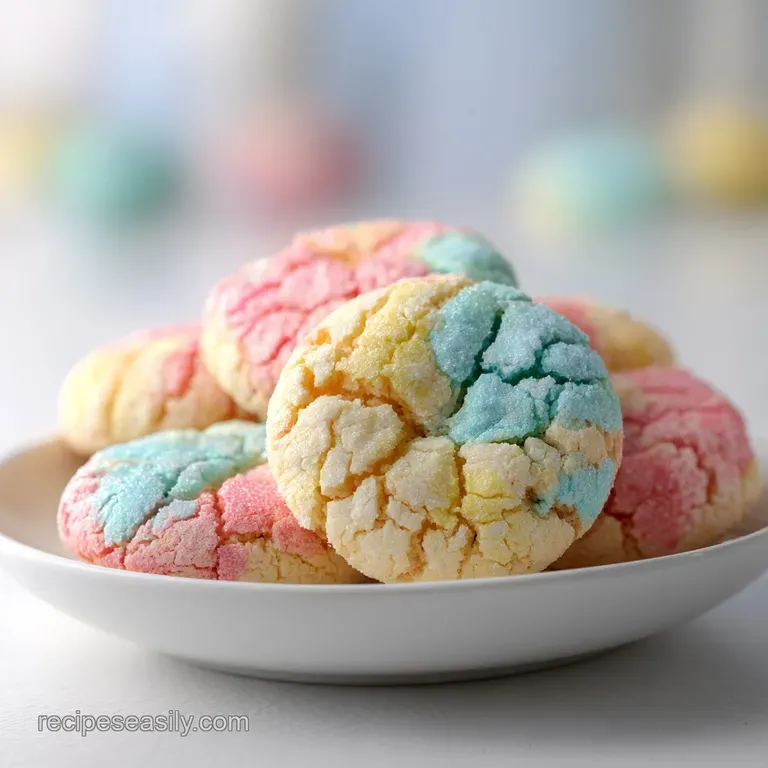
You don't need a professional kitchen for this Charm Dessert. A simple hand mixer will do the job just as well as a heavy stand mixer. I actually prefer a hand mixer because I can feel when the butter and sugar have reached that light, fluffy stage.
- Large mixing bowl
- Electric hand mixer or stand mixer
- Fine mesh sieve (for the powdered sugar)
- Microplane or zester
- Baking sheets (two or three)
- Parchment paper or silicone baking mats
- Wire cooling rack
Chef's Note: If you don't have a sifter, use a whisk to fluff up your powdered sugar. Large clumps of sugar will melt unevenly and ruin the "snowy" aesthetic of your spring crinkle cookie recipe.
From Prep to Plate
Step 1: Creaming the Base
Cream 115g softened butter and 200g granulated sugar. Beat for 3 minutes until pale and fluffy. Note: This creates the air pockets needed for a light texture.
Step 2: Liquid Emulsion
Add 2 large eggs, 15ml lemon juice, and 1 tbsp lemon zest. Mix until the batter looks silky and uniform.
Step 3: Tinting the Dough
Incorporate 2 drops of pastel gel food coloring. Fold gently until the color is streak free. Note: The color will fade slightly during baking, so make it a touch darker than your goal.
Step 4: Sifting Dry Pillars
Whisk together 315g flour, 1 tsp baking powder, 1/4 tsp baking soda, and 1/2 tsp salt. Sift these directly into the wet ingredients.
Step 5: The Cold Cure
Cover the bowl with plastic wrap and refrigerate. Chill for at least 2 hours. Note: Chilling makes the dough easier to roll and prevents excessive spreading.
Step 6: The Double Roll Technique
Roll dough into 2.5cm balls. Roll first in 50g granulated sugar, then heavily in 120g powdered sugar. Ensure no dough is visible through the white coating.
Step 7: The Heat Contact
Place balls 5cm apart on parchment lined sheets. Bake at 175°C for 10 minutes until the edges are set. Note: The centers should still look slightly soft to the touch.
Step 8: Finishing Glaze
Whisk 120g powdered sugar, 2 tbsp lemon juice, and 0.5 tsp zest. Drizzle over cooled cookies once they are firm.
Troubleshooting Your Spring Bake
Why Your Cookies Stayed Flat
If your cookies didn't puff up, the dough was likely too warm. When the butter is too soft going into the oven, it spreads before the baking powder can lift the dough. Another culprit could be old baking powder.
Always check the expiration date on your leavening agents before starting any spring desserts with powdered sugar.
Why the Powdered Sugar Disappeared
This is the most common heartbreak with this recipe. If the sugar melts into the dough, it's usually because the dough was too moist or you didn't use the "double sugar" method. The granulated sugar layer acts as a barrier that prevents the powdered sugar from absorbing moisture from the dough.
| Problem | Root Cause | Solution |
|---|---|---|
| No crinkles formed | Dough too dry | Add 1 tsp of lemon juice to the remaining dough. |
| Yellowish sugar coating | Overbaked | Reduce oven temp by 5 degrees or bake 1 minute less. |
| Colors looks muddy | Liquid food coloring | Switch to gel colors to keep the dough consistency thick. |
Common Mistakes Checklist
- ✓ Pat the lemon zest dry if it feels overly oily or wet before adding.
- ✓ Ensure eggs are at room temperature to prevent the butter from curdling.
- ✓ Do not over mix once the flour is added; this keeps the cookie tender.
- ✓ Use a heavy coating of powdered sugar - more than you think you need.
- ✓ Let the cookies rest on the hot pan for 5 minutes before moving to a rack.
Scaling Your Springtime Batch
When you need to feed a crowd, this Springtime Crinkle Cookie recipe scales beautifully. If you are doubling the recipe (48 servings), stick to using 3 large eggs instead of 4 if they are very large, as too much liquid can make the dough impossible to roll.
For a smaller batch (12 servings), use 1 large egg and half of all other ingredients. If the recipe calls for half an egg, beat one egg in a small bowl and use half the weight (about 25g). Keep the bake time the same, as the size of the individual cookies should remain consistent even if the total volume changes.
| Servings | Dough Weight | Pan Count | Total Chill Time |
|---|---|---|---|
| 12 Cookies | ~400g | 1 sheet | 1 hour 30 mins |
| 24 Cookies | ~800g | 2 sheets | 2 hours 10 mins |
| 48 Cookies | ~1.6kg | 4 sheets | 3 hours 30 mins |
Debunking Baking Misconceptions
One common myth is that you need "special" cookie flour for a soft texture. In reality, standard all purpose flour works perfectly for a Pastel colored cookie recipe as long as you don't overwork the gluten. Another misconception is that the lemon juice provides all the flavor.
It’s actually the zest that carries the aromatic oils; the juice mostly provides the acidity needed to react with the baking soda.
Many people think you have to sifter the flour three times. While sifting is great for removing lumps, doing it once with the baking powder and salt is more than enough. The real secret to the "crinkle" isn't the sifting; it's the moisture migration during the first few minutes of baking.
Storage and Zero Waste
These cookies stay fresh in an airtight container at room temperature for up to 4 days. If you want to keep them longer, they freeze exceptionally well. I recommend freezing the dough balls before rolling them in sugar.
When you are ready for a treat, just thaw the balls for 15 minutes, roll in the sugars, and bake as directed.
To reduce waste, don't throw away your lemon peels. If you have leftover zest or rinds, toss them into a jar with some white sugar. In a few days, you'll have lemon infused sugar that is incredible in tea or on top of muffins.
Any leftover powdered sugar from the coating bowls can be sifted and used for the final lemon glaze, so nothing goes to waste in your kitchen.

Recipe FAQs
Is chilling the dough really necessary for the pastel crinkle effect?
Yes, chilling is non-negotiable. Cold dough maintains its shape longer in the oven, allowing the internal structure to set before the fats melt, which creates those high, defined fissures.
How to ensure the powdered sugar coating creates deep, visible crinkles?
Roll the chilled dough balls twice in sugar. First roll in granulated sugar, then heavily coat in powdered sugar; this double layer traps surface moisture for maximum crack separation.
Is it true that using bottled lemon juice instead of fresh will ruin the final texture?
No, it will not ruin the texture, but the flavor will suffer. Bottled juice provides the necessary acid for leavening, but fresh zest contains essential oils that provide the signature bright, aromatic punch.
How to achieve vibrant pastel coloring without thinning the cookie batter?
Use concentrated gel food coloring, not liquid drops. Gel colorants provide intense pigment with minimal liquid volume, preserving the dough's ideal structure for baking.
Why are my cookies spreading flat instead of staying thick and puffy?
Your butter was too warm or the dough was under chilled. The fat melts too quickly when the dough enters the oven, causing the cookies to spread before the structure can set around the edges.
How to tell when the cookies are perfectly baked if the center should look soft?
Bake until the edges are visibly set and the centers just barely yield to gentle pressure. They should not look wet, but they should not feel completely firm, as carryover heat will finish the center.
Can I use margarine instead of unsalted butter without affecting the crinkle?
Yes, but the richness and spread will change slightly. Margarine often contains more water, which can lead to a slightly flatter cookie profile compared to the rich structure provided by unsalted butter.
Pastel Crinkle Cookies
Ingredients:
Instructions:
Nutrition Facts:
| Calories | 168 kcal |
|---|---|
| Protein | 1.9 g |
| Fat | 4.4 g |
| Carbs | 30.6 g |
| Fiber | 0.3 g |
| Sugar | 20.4 g |
| Sodium | 77 mg |
