Potatoes Dauphinoise: Velvety and Garlic Infused
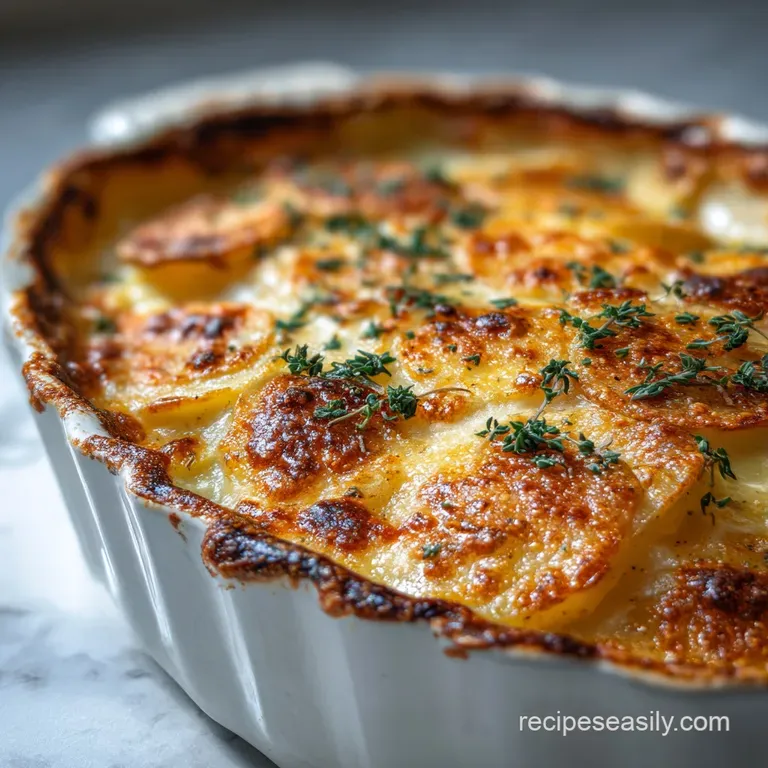
- Time: Active 25 minutes, Passive 1 hours 15 mins, Total 1 hours 40 mins
- Flavor/Texture Hook: Shatter crisp golden top with a velvety, garlic infused interior.
- Perfect for: Holiday dinner parties or a high end weekend comfort meal.
- Secret to Achieving Velvety Potatoes Dauphinoise
- Physics of the Potato Plunge
- Chemistry of Starch and Creamy Infusion
- Selecting Quality Roots and Creamy Bases
- Necessary Tools for Thin Slices
- Precision Steps for Silk Texture
- Fixing Common Sauce and Texture Issues
- Guidelines for Reheating Leftover Spuds
- Flavor Twists and Modern Adaptations
- Myth: Potatoes Must Be Peeled Early
- Guidelines for Chilling and Reheating Leftovers
- Ideal Mains for Creamy Potatoes
- Recipe FAQs
- 📝 Recipe Card
Secret to Achieving Velvety Potatoes Dauphinoise
Picture the kitchen on a rainy Tuesday. The air is heavy with the scent of garlic cloves hitting a warm pan of cream, and the rhythmic thud thud thud of a mandoline slicing through earthy Russets.
There's a specific sizzle that happens when those paper thin slices finally meet the bubbling, nutmeg spiced liquid in the oven. It's not just cooking; it's a slow transformation of humble roots into something that feels like a warm hug from a French grandmother.
I’ll never forget the first time I tried making this for a big family gathering. I thought I could save time by cutting the potatoes into thick chunks and just pouring the cream over the top. Big mistake.
Half the dish was crunchy, the other half was a soupy mess, and the cream had split into a greasy layer that looked anything but appetizing. I learned the hard way that the magic of this dish lies in the thinness of the potato and the gentle infusion of the fats.
We've all been there, staring at a curdled mess in a baking dish. But honestly, once you understand how the starch from the potatoes interacts with the heavy cream, you'll never go back to basic scalloped potatoes again. This isn't about complexity; it's about the patient layering of flavors.
We’re going to get those edges so crispy they shatter, while the middle remains so soft you could eat it with a spoon. Let's get into the nitty gritty of what actually makes this work.
Physics of the Potato Plunge
Starch Gelatinization: High starch Russet potatoes release amylose when heated, which bonds with the fats in the heavy cream to create a naturally thickened, stable emulsion. This ensures the sauce remains silky and cohesive rather than separating into oil and water during the long bake.
| Method | Time | Texture | Best For |
|---|---|---|---|
| Traditional Bake | 1 hours 15 mins | Ultra creamy, melt in-mouth | Dinner parties, slow Sundays |
| Stovetop Start | 45 minutes | Firmer potatoes, thicker sauce | Weeknight cravings |
| Mandoline Thin | 1 hours | Crisp edges, uniform layers | Visual presentation |
Choosing the right approach depends on how much time you have to let the oven work its magic. While a stovetop start saves time, the slow, traditional bake allows the flavors to penetrate deep into every single cell of the potato. If you’re looking for a different side dish vibe for a quicker night, you might enjoy the speed of my Mashed Sweet Potatoes recipe, but for pure decadence, the Dauphinoise remains king.
Chemistry of Starch and Creamy Infusion
| Component | Science Role | Pro Secret |
|---|---|---|
| Russet Potatoes | Provides amylose starch | Never soak them; you need the surface starch to thicken the cream. |
| Heavy Cream | Fat based emulsion base | Use room temperature cream to prevent the thermal shock that causes curdling. |
| Gruyère Cheese | Protein fat binder | Grate your own from a block to avoid cellulose coatings that prevent melting. |
The interaction between the dairy and the potato starch is a delicate dance. When we talk about the "sauce" in this dish, we aren't talking about a separate gravy. We are talking about the potatoes literally becoming part of the liquid.
As the Russets cook, they absorb the milk and cream, while simultaneously giving back their starch. This exchange is what creates that signature velvety mouthfeel that sets this recipe apart from cheaper imitations.
Selecting Quality Roots and Creamy Bases
- 3 lbs Russet potatoes: These are the workhorses of the potato world. Why this? Their high starch content is essential for thickening the cream into a rich sauce.
- Substitute: Yukon Gold potatoes. They are waxier and hold their shape better but produce a slightly thinner sauce.
- 1.5 cups heavy cream: This provides the luxurious fat content. Why this? Lower fat milks will split under the intense heat of a long bake.
- Substitute: Full fat coconut milk for a dairy-free twist, though it adds a distinct nutty flavor.
- 1 cup whole milk: This thins the sauce just enough to penetrate the layers. Why this? Using only cream can result in a dish that is too heavy and greasy.
- Substitute: 2% milk works, but the final texture will be noticeably less silky.
- 1 cup Gruyère cheese, finely grated: The ultimate melting cheese. Why this? It has a nutty profile and melts smoothly without becoming stringy.
- Substitute: Comté or a very sharp white cheddar for a more aggressive flavor profile.
- 1 clove garlic, peeled and halved: Used to "season" the baking dish itself.
- 2 cloves garlic, smashed: For the cream infusion.
- 3 sprigs fresh thyme: Adds an earthy, floral top note.
- 0.5 tsp ground nutmeg: The secret ingredient in French dairy dishes.
- 1.5 tsp sea salt: Essential for drawing moisture out of the potatoes.
- 0.5 tsp cracked black pepper: Provides a subtle heat.
- 2 tbsp unsalted butter, cubed: To dot the top for extra browning.
When choosing your potatoes, look for ones that feel heavy for their size and have no green tinges. The green indicates solanine, which can taste bitter and ruin the subtle sweetness of the cream. Also, don't even think about using pre shredded cheese.
The stuff in the bag is coated in potato starch or cellulose to keep it from clumping, which means it won't melt into that beautiful, cohesive blanket of gold we're looking for.
Necessary Tools for Thin Slices
Having the right gear makes the difference between a 20 minute prep and an hour long struggle. A sharp mandoline is your best friend here. It ensures that every single potato slice is exactly the same thickness, which is the only way to guarantee they all cook at the same rate.
If one slice is a quarter inch and the next is paper thin, you'll end up with a mix of mush and crunch that just isn't pleasant.
You'll also need a heavy bottomed saucepan for the infusion. A thin pan can hot spot, causing the milk and cream to scald at the bottom, which will give your entire dish a burnt aftertaste.
A 9x13 inch ceramic or glass baking dish is the standard for a reason it distributes heat evenly and allows for enough surface area to get those crispy, browned edges everyone fights over at the dinner table.
Precision Steps for Silk Texture
- Infuse the dairy. Place 1.5 cups heavy cream, 1 cup whole milk, 2 smashed garlic cloves, 3 sprigs of thyme, and 0.5 tsp nutmeg in a saucepan. Note: This allows the fats to absorb the aromatics without burning the garlic.
- Heat gently. Bring the mixture to a bare simmer over medium low heat. Cook 5 minutes until small bubbles form around the edges.
- Prep the dish. Rub the inside of your baking dish with the halved garlic clove, then grease it lightly with a bit of butter.
- Slice the potatoes. Use a mandoline to slice the 3 lbs Russet potatoes into 1/8 inch rounds. Work quickly so they don't brown.
- Layer the base. Arrange a third of the potatoes in the dish, overlapping them slightly like shingles. Season with a pinch of the 1.5 tsp sea salt and 0.5 tsp pepper.
- Add the liquid. Strain the warm cream mixture to remove the solids and pour a third of it over the first layer.
- Repeat the layering. Build two more layers of potatoes and cream, finishing with the remaining liquid.
- Add the cheese. Sprinkle the 1 cup Gruyère evenly over the top and dot with the 2 tbsp cubed butter.
- First stage bake. Cover with foil and bake at 375°F for 45 minutes. Bake until the potatoes are tender when pierced.
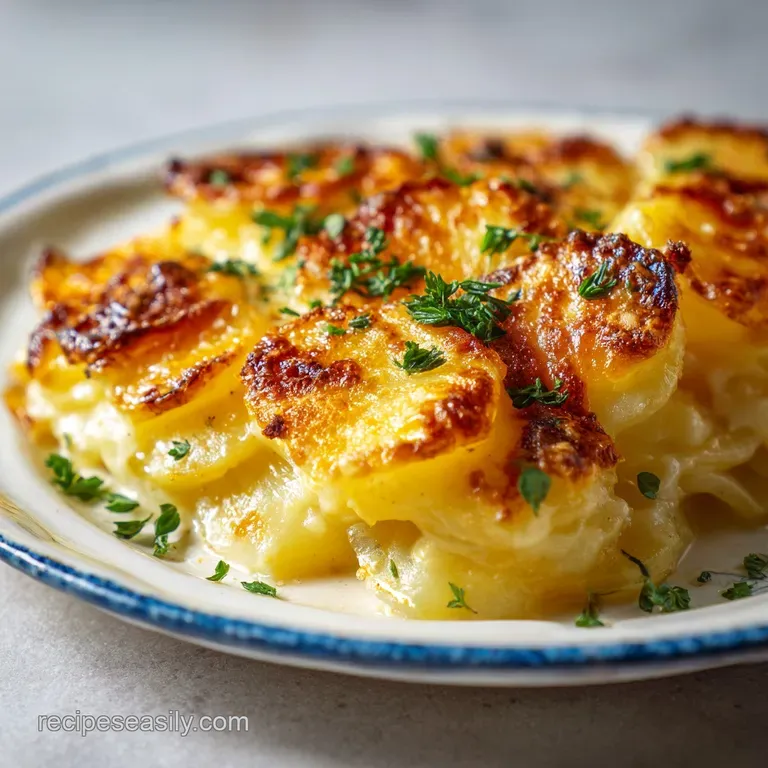
- The golden finish. Remove the foil and bake for another 30 minutes until the top is bubbling and deep golden brown.
Chef's Tip: If you find the top is browning too quickly during the final stage, move the rack down one level. The goal is a steady bubble, not a scorched surface. You want that cheese to form a crust that yields with a satisfying crack when the spoon hits it.
Timing is everything here. Don't rush the "foil on" stage. This is essentially steaming the potatoes in the cream, which breaks down the cellular structure and allows the starch to thicken the liquid. If you skip this, the cream will evaporate before the potatoes are soft. It’s a bit like the patience required for a good French Garlic Chicken recipe, where the slow cook is what creates the depth of flavor.
Fixing Common Sauce and Texture Issues
One of the most frequent complaints I hear from friends is that their sauce looks "broken" or curdled. This usually happens because the oven was too hot, or the potatoes were rinsed after slicing. Remember, that surface starch is your insurance policy against curdling. It acts as a stabilizer.
If you wash it away, you’re just boiling potatoes in milk, and milk doesn't like to be boiled for an hour without help.
Why Your Sauce Separated
If you pull your dish out and see a layer of yellow oil sitting on top of watery milk, the emulsion has broken. This is often caused by using "half and half" instead of heavy cream, or by the oven temperature spiking too high.
The high heat causes the protein in the dairy to tighten and squeeze out the water, leading to that curdled look.
| Problem | Root Cause | Solution |
|---|---|---|
| Greasy surface | Too much butter or low quality cheese | Blot gently with a paper towel and add a sprinkle of fresh parmesan to absorb oil. |
| Crunchy center | Slices too thick or not enough liquid | Add 1/4 cup warm milk and bake covered for an extra 15 minutes. |
| Soupy sauce | Potatoes were too waxy or rinsed | Let the dish rest for 20 minutes; it will thicken as it cools. |
Resting is the unsung hero of this recipe. When the dish comes out of the oven, the sauce will still look a bit loose. Resist the urge to dig in immediately. As the temperature drops slightly, the starches finish setting, and the sauce transforms from a liquid into a velvety custard.
Common Mistakes Checklist:
- ✓ Never rinse your potatoes after slicing; that starch is the glue for your sauce.
- ✓ Ensure your mandoline is set to a consistent thickness (1/8 inch is the sweet spot).
- ✓ Use room temperature dairy to prevent the sauce from "shocking" and curdling.
- ✓ Don't skip the nutmeg it’s the bridge between the potato and the cream.
- ✓ Let the dish rest for at least 15 minutes before serving to allow the sauce to set.
Guidelines for Reheating Leftover Spuds
If you’re cooking for a smaller crowd or want to prep ahead, scaling is straightforward. For a half batch (4 servings), use a smaller 8x8 square baking dish. Reduce the bake time by about 20%, but keep a close eye on the doneness.
For a double batch, I recommend using two separate 9x13 dishes rather than one giant deep one. If the layers are too deep, the potatoes in the very center may never get soft before the outside burns.
When doubling, you don't need to double the spices linearly. I usually do 1.5x the salt and nutmeg to keep the flavors balanced. For liquids, keep the ratio the same to ensure the potatoes have enough bathwater to cook in. This is similar to how I handle my Cream Cheese Potatoes recipe when catering for larger groups it's all about maintaining that moisture balance.
| Servings | Pan Size | Cook Time | Liquid Adjustment |
|---|---|---|---|
| 4 People | 8x8 square | 1 hours 5 mins | Halve all ingredients |
| 8 People | 9x13 rectangle | 1 hours 40 mins | Follow recipe exactly |
| 16 People | Two 9x13 pans | 1 hours 50 mins | Rotate pans halfway through |
Flavor Twists and Modern Adaptations
- The Jamie Oliver Dauphinoise Potatoes Shortcut: If you're in a massive rush, you can par boil the sliced potatoes in the cream mixture on the stovetop for 10 minutes before transferring them to the baking dish. This cuts the oven time in half, though the texture is slightly less refined.
- The Mediterranean Twist: Replace the thyme with rosemary and add a layer of caramelized onions between the potatoes. This adds a sweetness that pairs beautifully with the salty Gruyère.
- Vegan Substitution: You can use full fat cashew cream and a high-quality vegan butter. Use nutritional yeast in the liquid to mimic the nutty flavor of the cheese. Just be aware that without the dairy proteins, the browning on top won't be quite as dramatic.
Myth: Potatoes Must Be Peeled Early
One of the biggest myths in the kitchen is that you have to peel and soak your potatoes hours in advance to keep them from turning brown. In reality, soaking them actually hurts this specific dish because it washes away the very starch we need to thicken the sauce.
The best practice is to peel and slice them right before you're ready to assemble. If they turn a little pink or grey from oxidation, don't worry once they hit the hot cream, that color disappears completely.
Another common misconception is that you need a lot of flour or a roux to make the sauce thick. If you use Russets and heavy cream, the chemistry does the work for you. Adding flour can actually make the dish feel "pasty" and heavy on the palate. Let the natural ingredients shine; they know what they're doing!
Guidelines for Chilling and Reheating Leftovers
Store any leftovers in an airtight container in the fridge for up to 4 days. When reheating, avoid the microwave if possible it tends to make the potatoes rubbery and can cause the cream to separate.
Instead, put a portion in a small oven safe dish, add a splash of milk to loosen the sauce, cover with foil, and warm at 325°F until bubbly.
As for zero waste, don't toss those potato peels! Toss them with a little olive oil, salt, and smoked paprika, then roast them at 400°F until they are crispy chips. They make a great snack while you're waiting for the main dish to bake.
If you have leftover cream infusion that didn't fit in the dish, it makes a fantastic base for a quick potato leek soup the next day.
Ideal Mains for Creamy Potatoes
Because this dish is so rich and decadent, it calls for a main protein that can stand up to it without being overwhelming. A simple roasted chicken or a pan seared steak is classic. The acidity in a red wine reduction or a bright herb chimichurri provides a necessary contrast to the heavy cream and cheese.
If you’re looking for a lighter pairing, a crisp green salad with a sharp lemon vinaigrette is the way to go. The citrus cuts right through the fat of the Gruyère, refreshing your palate between bites of velvety potato.
It’s also a frequent star on holiday tables next to a honey glazed ham, where the saltiness of the meat plays perfectly against the nutmeg scented cream. Whatever you serve it with, just make sure there's enough for seconds people always come back for more of these.
Recipe FAQs
What's the secret to creamy dauphinoise?
Use high starch potatoes like Russets. The starch released during baking binds with the cream to form a natural, velvety emulsion, thickening the sauce without external thickeners.
What's the difference between potato dauphinoise and gratin?
Dauphinoise traditionally uses only cream or milk, with no cheese layered within the potatoes. Gratin implies a browned, cheesy crust, often using Gruyère, which is standard in modern Dauphinoise recipes.
What potatoes work best for dauphinoise?
Russet potatoes are best due to their high starch content. They break down enough to thicken the liquid while maintaining structural integrity for the layers.
What are common dauphinoise mistakes?
Rinsing the sliced potatoes after cutting is the biggest mistake. You wash away the essential surface starch needed to stabilize and thicken the heavy cream during baking.
How do I ensure the top gets beautifully golden brown without burning?
Bake covered with foil for the first 45 minutes, then uncover for the last 30. This steams the potatoes to tenderness first; the high heat exposure only comes near the end to brown the cheese crust.
Should I pre-cook the potatoes before layering them?
No, do not pre-boil them. The initial cooking must happen slowly in the cream to allow the starch to leach out and thicken the liquid base.
Can I substitute heavy cream with a lighter dairy product?
No, this is strongly discouraged for authentic texture. Lighter dairy, like 2% milk, lacks the necessary fat to emulsify properly, resulting in a watery, separated sauce that won't set like a true Dauphinoise.
Potatoes Dauphinoise Recipe
Ingredients:
Instructions:
Nutrition Facts:
| Calories | 381 kcal |
|---|---|
| Protein | 9.6 g |
| Fat | 24.2 g |
| Carbs | 31.4 g |
| Fiber | 3.6 g |
| Sugar | 2.8 g |
| Sodium | 538 mg |
