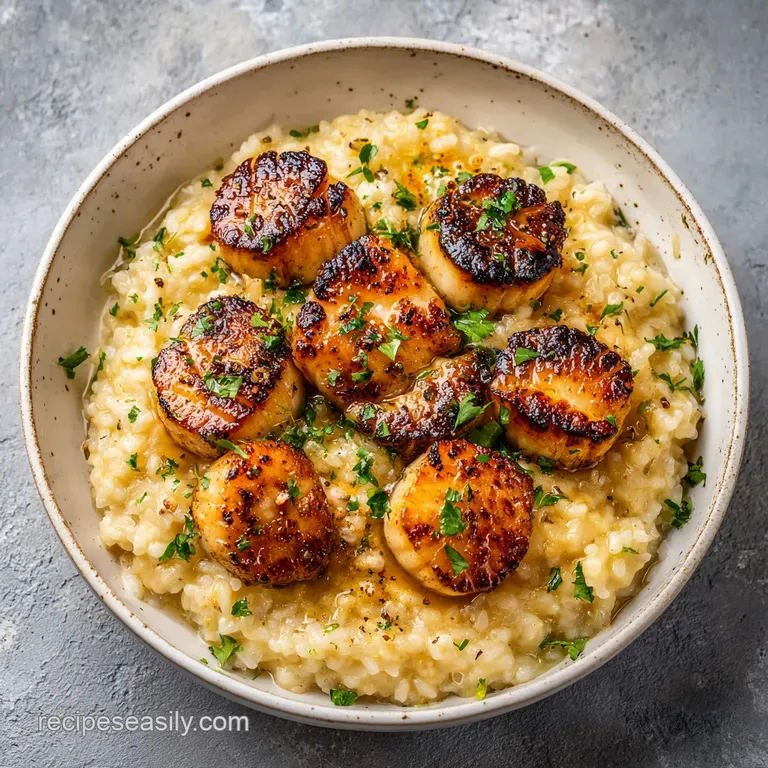
Lemon Butter Scallops over Parmesan Risotto

- Time: Active 35 minutes, Passive 15 minutes, Total 50 minutes
- Flavor/Texture Hook: Silky, buttery rice topped with scallops that shatter at the edges.
- Perfect for: Anniversary dinners, impressive weekend cooking, or a self care weeknight treat.
- Creating the Perfect Lemon Butter Scallops over Parmesan Risotto
- Science of the Golden Scallop Crust
- Fast Versus Classic Method Comparison
- Component Deep Dive Ingredient Analysis
- Essential Tools for Flawless Results
- The Simple Pantry Staples You Will Need
- Master the Technique Step by Step
- Troubleshooting Common Cooking Mistakes
- Adjusting Your Recipe Yield Easily
- Creative Ideas for Flavor Changes
- Debunking Common Kitchen Myths
- Storage Tips and Waste Prevention
- Best Sides for This Dish
- Very High in Sodium
- Recipe FAQs
- 📝 Recipe Card
Creating the Perfect Lemon Butter Scallops over Parmesan Risotto
Picture this: the kitchen is filled with the sharp, sweet aroma of minced shallots hitting melting butter, followed by that rhythmic "tink tink" of a wooden spoon against the side of a heavy pot. This Pan Seared Lemon Butter Scallops over Parmesan Risotto recipe is the perfect, elegant weeknight dinner.
I still remember the first time I tried to make this for my partner. I was so nervous about overcooking the seafood that I ended up with scallops that looked like sad, boiled marshmallows.
Since then, I have learned the secrets to that dark, golden crust and the creamy rice base that makes people think you went to culinary school.
The beauty of this dish lies in the contrast. You have the soft, velvety texture of the rice and then the firm, buttery bite of a perfectly seared scallop. It's the kind of meal that makes you want to lick the plate clean, but you're probably in polite company, so you'll just use a piece of crusty bread instead.
We aren't just making dinner here, we're building a sensory experience that starts with a sizzle and ends with a sigh of satisfaction.
Don't let the word "risotto" intimidate you. It is not nearly as fussy as the cooking shows make it out to be. It just requires a little bit of patience and a glass of that white wine you opened for the recipe. Trust me, once you master the technique of slowly adding the stock, you will feel like a total pro.
We're going to walk through every single detail together so your kitchen stays stress free and your dinner turns out spectacular.
Science of the Golden Scallop Crust
Starch Gelatinization: As you stir the Arborio rice, the grains rub together and slough off amylopectin starch, which thickens the stock into a creamy sauce without needing heavy cream.
The Maillard Reaction: High heat causes the proteins and sugars in the scallop to reorganize, creating a complex, savory brown crust that provides a deep flavor contrast to the sweet interior.
Thermal Carryover: Scallops continue to cook for about 2 minutes after leaving the pan, so pulling them just before they feel fully firm ensures they stay tender rather than turning into rubber.
| Thickness | Internal Temp | Rest Time | Visual Cue |
|---|---|---|---|
| 1 inch | 125°F | 3 minutes | Opaque sides with a translucent center |
| 1.5 inches | 130°F | 3 minutes | Firm to the touch but still springy |
| 0.75 inch | 120°F | 2 minutes | Deep golden brown crust on both faces |
Understanding when your seafood is done is the difference between a gourmet meal and a chewy disappointment. While the rice is forgiving, the scallops are not. I always suggest using a heavy bottomed pan, like a cast iron skillet, to maintain the high heat necessary for that quick sear. If you are looking for more ways to master citrus heavy sauces, you might enjoy my Lemon Butter Garlic recipe which uses a similar basting technique.
Fast Versus Classic Method Comparison
| Method | Cook Time | Texture Outcome | Skill Level |
|---|---|---|---|
| Traditional Stovetop | 35 minutes | Ultra creamy and controlled | Intermediate |
| Pressure Cooker | 15 minutes | Consistent but less "saucy" | Beginner |
| Oven Baked | 25 minutes | Set grains with less creaminess | Easy |
While the traditional stovetop method is what we are focusing on today, it's good to know your options. The stovetop allows you to monitor the liquid absorption perfectly, ensuring the rice is "al dente" meaning it has a slight bite in the center.
If you rush the process by adding all the stock at once, you'll end up with boiled rice rather than the silky emulsion that defines a true risotto.
Component Deep Dive Ingredient Analysis
| Ingredient | Science Role | Pro Secret |
|---|---|---|
| Arborio Rice | High amylopectin starch source | Never wash the rice; you need that surface starch for creaminess. |
| Sea Scallops | Lean protein for searing | Pat them dry with paper towels until they are bone dry for the best crust. |
| Parmesan Cheese | Emulsifier and umami booster | Use a microplane for a fluffy grate that melts instantly into the rice. |
| Dry White Wine | Acid for structural balance | Use a Sauvignon Blanc or Pinot Grigio to cut through the richness of the butter. |
The quality of your ingredients dictates the final result here. For example, using pre grated cheese in the green shaker can will result in a grainy, clumpy mess because of the anti caking agents they add to the container. Always go for a wedge of the real stuff.
Essential Tools for Flawless Results
You don't need a kitchen full of gadgets, but a few specific items will make your life much easier. First, a wide, heavy bottomed saucepan or a Dutch oven is vital for the rice. The wide surface area allows the liquid to evaporate at a steady rate while giving the grains room to move.
Second, a stainless steel or cast iron skillet is non negotiable for the scallops. Non stick pans often can't handle the high heat required for a proper sear without damaging the coating.
You'll also want a sturdy whisk or a wooden spoon for constant stirring and a ladle that holds about half a cup. Having your chicken stock simmering in a separate small pot next to your rice pan is a pro move adding cold stock to hot rice shocks the grain and slows down the cooking process.
Finally, a pair of fish tweezers or small tongs will help you flip the scallops gently without tearing that beautiful crust you worked so hard to create.
The Simple Pantry Staples You Will Need
- 1.5 cups Arborio rice: Why this? The high starch content is essential for the creamy texture. (Sub: Carnaroli rice)
- 5 cups chicken stock, low sodium: Why this? Provides the savory liquid base for the rice. (Sub: Vegetable stock)
- 0.5 cup dry white wine: Why this? Adds acidity to balance the heavy fats. (Sub: Extra stock with 1 tsp lemon juice)
- 5 tbsp unsalted butter, divided: Why this? Used for sautéing and finishing the sauce. (Sub: Ghee)
- 1 large shallot, finely minced: Why this? Offers a delicate onion garlic hybrid flavor. (Sub: Yellow onion)
- 5 cloves garlic, divided: Why this? Infuses the butter and the rice with aromatics. (Sub: 1 tsp garlic powder)
- 1 cup freshly grated Parmesan cheese: Why this? Provides salt and a velvety mouthfeel. (Sub: Pecorino Romano)
- 1 tsp Kosher salt: Why this? Enhances every individual flavor in the dish. (Sub: Sea salt)
- 0.5 tsp freshly cracked black pepper: Why this? Adds a subtle floral heat. (Sub: White pepper)
- 1 lb large sea scallops, U-10 or U-12 count: Why this? These large scallops sear better than small bay scallops. (Sub: Jumbo shrimp)
- 2 tbsp grapeseed oil: Why this? High smoke point for a perfect sear. (Sub: Avocado oil)
- 1 tbsp fresh lemon juice: Why this? Brightens the scallops right at the end. (Sub: Lime juice)
- 1 tsp lemon zest: Why this? Concentrated citrus oils for aroma. (Sub: Dried lemon peel)
- 2 sprigs fresh thyme: Why this? Earthy notes that pair perfectly with lemon. (Sub: Fresh parsley)
- 1 pinch flaky sea salt: Why this? Adds texture and a final pop of flavor. (Sub: Fine sea salt)
Master the Technique step-by-step
1. Prepare the Rice Foundation
In a medium saucepan, bring 5 cups chicken stock to a low simmer. In a separate large, heavy bottomed pan, melt 2 tbsp unsalted butter over medium heat. Add 1 minced shallot and 3 cloves of minced garlic, cooking until translucent and fragrant, about 3 minutes.
Note: Don't let the garlic brown or it will turn bitter.
2. The Slow Infusion
Add 1.5 cups Arborio rice to the pan with the shallots. Stir constantly for 2 minutes until the edges of the grains look translucent but the centers are still white. Pour in 0.5 cup dry white wine and stir until the liquid is fully absorbed.
3. The Rhythmic Stirring
Add the simmering stock one ladle at a time (about 0.5 cup). Stir frequently and wait to add the next ladle until the rice has absorbed almost all the liquid. Repeat this process for 20 to 25 minutes.
4. Finishing the Risotto
Once the rice is tender but still has a slight bite, stir in the final ladle of stock along with 1 cup freshly grated Parmesan cheese, 1 tsp Kosher salt, and 0.5 tsp black pepper. Remove from heat and cover. Note: The risotto should look slightly loose; it will thicken as it sits.
5. Achieving the Perfect Sear
Pat 1 lb sea scallops with paper towels until they feel bone dry to the touch. Season with a tiny pinch of salt. Heat 2 tbsp grapeseed oil in a skillet over high heat until it begins to shimmer and smoke slightly.
6. The Golden Crust
Carefully place scallops in the pan, ensuring they don't touch. Press down lightly with a spatula. Cook for 2 minutes without moving them until a deep golden crust forms. Note: If they stick, they aren't ready to be flipped yet.
7. The Lemon Butter Baste
Flip the scallops and add the remaining 3 tbsp butter, 2 cloves of smashed garlic, and 2 sprigs of fresh thyme to the pan. Tilt the pan and spoon the foaming butter over the scallops for 1 minute until they are just opaque.
8. Final Citrus Touch
Remove the pan from heat and stir in 1 tbsp fresh lemon juice and 1 tsp lemon zest. Spoon the lemon butter over the scallops one last time.
9. Plating the Dish
Divide the warm risotto among four shallow bowls. Top each with the seared scallops, drizzling any remaining lemon butter from the pan over the top.
10. The Garnish
Sprinkle with 1 pinch flaky sea salt and serve immediately while the scallops are hot and the rice is creamy.
Troubleshooting Common Cooking Mistakes
Scallop Rubbery Texture Causes
If your scallops feel like bouncy balls, they are overcooked. This usually happens when the pan isn't hot enough, causing them to steam in their own juices rather than searing quickly.
Pull them off the heat when the center still looks a tiny bit translucent; the carryover heat will finish the job perfectly while they sit on top of the rice.
Crunchy Risotto Grain Issues
If your rice is still crunchy after 25 minutes, you might be evaporating the stock too fast or using stock that isn't hot enough. Make sure your stock is at a steady simmer before adding it to the rice.
If you run out of stock and the rice is still tough, you can use warm water to finish the cooking process.
Preventing Scallops from Sticking
Sticking is almost always a result of impatience or a wet surface. If you don't pat the scallops dry, the moisture creates steam which glues the protein to the metal. Also, if you try to flip them before that crust has fully developed, they will tear. Wait for the pan to naturally release them.
| Problem | Root Cause | Solution |
|---|---|---|
| Risotto is gummy | Over stirring or too much starch | Add a splash of stock at the end to loosen the texture. |
| No golden crust | Pan was not hot enough | Wait for the oil to smoke slightly before adding seafood. |
| Too salty | Parmesan and stock combined | Use low sodium stock and salt only at the very end. |
Common Mistakes Checklist
- ✓ Pat scallops dry multiple times with fresh paper towels.
- ✓ Keep the chicken stock simmering on the burner next to the rice.
- ✓ Don't wash the Arborio rice; you need that starch for the sauce.
- ✓ Use a high smoke point oil like grapeseed, not extra virgin olive oil.
- ✓ Serve on warmed plates so the risotto doesn't seize up instantly.
Adjusting Your Recipe Yield Easily
When you need to feed a larger group, say eight people instead of four, you can't just double everything and expect it to work the same way. For the risotto, you will need a much wider pot to ensure the rice cooks evenly. If the layer of rice is too deep, the bottom will turn to mush before the top is cooked.
I suggest using two separate pans if you are going beyond a double batch.
For scaling down, half recipes work beautifully in a smaller saucepan. The cooking time for the rice will remain roughly the same, but you might find you need slightly less stock because there is less surface area for evaporation. Just keep tasting the rice as you go. For another bright, citrusy bean dish that scales well, check out this Creamy Lemon Garlic recipe.
| Premium | Budget | Flavor Impact | Savings |
|---|---|---|---|
| U-10 Sea Scallops | Jumbo Shrimp | Slightly firmer, still sweet | Save $15-20 |
| Aged Parmigiano Reggiano | Domestic Parmesan | Less nutty, more salty | Save $5-8 |
| Saffron Infusion | Turmeric Pinch | Loses floral notes, keeps color | Save $10 |
Creative Ideas for Flavor Changes
If you want to move away from the classic profile, you can easily turn this into a "Spring" version by folding in blanched peas and chopped mint at the very end. The sweetness of the peas plays exceptionally well with the scallops.
Alternatively, for a "Brown Butter" version, let the butter for the scallops cook until it smells like toasted hazelnuts and turns amber before you add the lemon juice.
For those who need a dairy-free option, you can swap the butter for a high-quality vegan butter substitute and replace the Parmesan with two tablespoons of nutritional yeast and a squeeze of extra lemon.
It won't have the exact same "stretch" as the cheese, but the creaminess from the rice starch will still provide a satisfying mouthfeel.
Debunking Common Kitchen Myths
One of the biggest myths is that you have to stir risotto constantly without stopping for even a second. While stirring is important to release the starch, you can actually step away for 30 seconds to sip your wine.
The goal is to keep the grains moving enough to rub against each other, but you don't need to develop carpal tunnel in the process.
Another common misconception is that searing "seals in the juices" of the scallop. Science tells us this isn't true; moisture is lost regardless of the crust. The sear is purely for flavor and texture via the Maillard reaction. That beautiful brown exterior provides the "umami" that makes the dish feel complete.
Storage Tips and Waste Prevention
Risotto is notoriously difficult to reheat because the rice continues to absorb moisture as it sits in the fridge. It will stay safe to eat for up to 3 days, but it will lose its silky texture. To revive it, add a splash of stock or water when reheating on the stove over low heat.
If you find yourself with leftovers that are too thick to enjoy as is, roll them into balls, stuff them with a cube of mozzarella, coat them in breadcrumbs, and fry them to make Arancini.
For zero waste cooking, don't throw away the lemon rinds after zesting and juicing. You can toss them into a jar of white vinegar to make a natural kitchen cleaner or freeze them to use in a future stock.
If your scallops came with the side muscle attached (the little tough bit on the side), pull those off and freeze them in a bag they add incredible depth to a seafood chowder later on.
Best Sides for This Dish
Since this dish is quite rich and buttery, I always recommend pairing it with something high in acid or crunch. A simple arugula salad with a balsamic vinaigrette is a classic choice. The peppery bite of the greens cuts right through the creamy Parmesan rice.
Roasted asparagus with a sprinkle of sea salt is another winner, as the earthy tones of the vegetable complement the fresh thyme in the scallops.
If you want to keep the meal feeling light, steamed broccolini with a hit of red pepper flakes provides a nice textural contrast without being too heavy. Avoid serving this with other starches like potatoes or heavy breads, as the risotto is already quite filling.
A crisp, chilled glass of the same white wine you used for the cooking is the ultimate finishing touch to this gourmet home cooked experience.

Very High in Sodium
1325 mg mg of sodium per serving (58% % of daily value)
The American Heart Association recommends limiting sodium intake to about 2,300mg per day.
Tips to Reduce Sodium in Your Scallop Risotto
-
Reduce Parmesan-15%
Parmesan cheese is a significant source of sodium. Reduce the amount of Parmesan by half, using only 0.5 cup, for a substantial reduction. Consider using a lower sodium variety of Parmesan if available. This will reduce the saltiness, so be sure to taste and adjust seasonings as needed.
-
Eliminate Kosher Salt-10%
The recipe includes 1 tsp of added Kosher salt. While essential for flavor, omitting this entirely will significantly lower the sodium content. Taste the risotto before serving and consider a small pinch of flaky sea salt only if absolutely necessary.
-
Enhance with Lemon-5%
Increase the lemon juice from 1 tbsp to 2 tbsp and add the zest of another lemon. The acidity will brighten the dish and compensate for the reduction in salt, enhancing the overall flavor profile without adding sodium.
-
Amplify Herbs & Spices
Instead of relying on salt for flavor, experiment with sodium free herbs and spices! Add more thyme (fresh or dried), a pinch of red pepper flakes, or some freshly chopped parsley to elevate the risotto's taste.
Recipe FAQs
Is it necessary to use Arborio rice for this risotto, or can I substitute white rice?
No, stick to Arborio or Carnaroli. These rice varieties have the high starch content needed to release amylopectin, which creates the essential creamy emulsion in the finished dish.
How to achieve the signature golden brown crust on the scallops?
Heat the skillet until the oil shimmers slightly, then pat the scallops bone dry. High, dry heat promotes the Maillard reaction quickly, creating the crust before the interior overcooks.
Why does my finished risotto become too thick after sitting for ten minutes?
This is normal due to residual starch absorption. To revive the texture, reheat it slowly on the stovetop while stirring in a splash of warm stock or water until it loosens back up.
Is it true that I must stir the risotto constantly without interruption?
No, this is a common misconception. You need consistent stirring to release starch, but brief pauses (30 seconds) are fine; just ensure the rice doesn't stick to the bottom of the pan.
How can I ensure my scallops are perfectly cooked and not rubbery?
Pull the scallops from the heat when the center is still slightly translucent. The residual heat will carry over for about two minutes, finishing them perfectly so they remain tender.
What is the best pairing to balance the richness of the lemon butter and Parmesan?
Serve with a simple peppery green like arugula salad. The acid in a balsamic vinaigrette cuts through the heavy butter and cheese, providing a necessary flavor contrast.
How to make a non-dairy version of this dish?
Substitute vegan butter for the dairy butter and nutritional yeast for the Parmesan. The rice starch is key; if you want to explore other savory creamy bases, see how that same principle works for the Parmesan Mashed Potatoes recipe.
Scallops Over Parmesan Risotto

Ingredients:
Instructions:
Nutrition Facts:
| Calories | 742 kcal |
|---|---|
| Protein | 36.9 g |
| Fat | 31.5 g |
| Carbs | 65.8 g |
| Fiber | 2.1 g |
| Sugar | 2.4 g |
| Sodium | 1325 mg |
