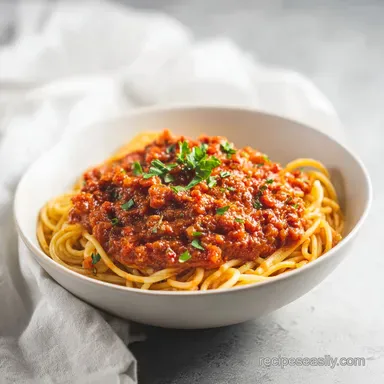
Authentic Homemade Spaghetti Sauce

- Time: 15 minutes prep, 6 hours simmer
- Flavor & Texture: Thick, rich, and savory
- Perfect for: Family meals or batch prepping
Homemade Spaghetti Sauce
Ever wonder why some red sauces taste like a fancy restaurant while others just taste like canned tomatoes? It usually comes down to how the vegetables are handled before they hit the pot. If you just dump everything in, you get a boiled flavor.
If you brown the meat and sauté the aromatics, you get a deep, savory base.
Making spaghetti sauce this way gives you that slow-cooked taste without needing to hover over a stove for hours. It's a low-stress process that lets the ingredients meld together while you do other things.
You can expect a thick, rich result that clings to the pasta. It's a hearty recipe that feels comforting and filling, especially when topped with a bit of salty cheese.
How It Comes Together
- Low Heat Mellowing: Simmering for hours breaks down the sharp acid in the tomatoes. This creates a natural sweetness so you don't have to rely on piles of sugar.
- Sautéed Base: Browning the beef and softening the carrots and celery first concentrates the flavors. This prevents the sauce from tasting "watery" or raw.
| Method | Time | Texture | Best For |
|---|---|---|---|
| Slow Cooker | 6-8 hours | Thick and fused | Set it and forget it days |
| Stovetop | 2 hours | Slightly brighter | When you're in a hurry |
Recipe Specs
The timing here is key for the beef. Use a meat thermometer to ensure it hits 160°F before adding the vegetables. This ensures food safety and a better sear.
For the tomatoes, hand-crushing the whole peeled ones gives the sauce a rustic, chunky feel. If you prefer a smooth texture, you can pulse them in a blender for a few seconds first.
Ingredients and Swaps
For the Savory Base
- 1 lb ground beef Why this? Provides the core savory depth and fat
- 2 tbsp olive oil
- 1 medium yellow onion, chopped small
- 3 cloves garlic, minced
- 1 medium carrot, shredded finely Why this? Balances the acidity with natural sweetness
- 1 stalk celery, finely chopped
For the Tomato Blend
- 28 oz crushed tomatoes
- 28 oz whole peeled tomatoes
- 6 oz tomato paste Why this? Thickens the consistency and intensifies the tomato flavor
For the Seasoning
- 1 tsp granulated sugar
- 1 tbsp dried oregano
- 1 tbsp dried basil
- 1 tsp salt
- 1/2 tsp ground black pepper
- 1/4 tsp red pepper flakes
| Ingredient | What It Does | Best Swap |
|---|---|---|
| Ground Beef | Savory base | Ground turkey (milder, leaner; brown until it reaches 165°F/74°C) |
| Carrots | Natural sweetness | Finely diced red bell pepper |
| Dried Basil | Herbal note | Fresh basil (stir in at the very end) |
Equipment Needed
You'll need a large skillet for the initial browning and a slow cooker (6 quart or larger). If you don't have a slow cooker, a heavy bottomed Dutch oven works great for the stovetop method. A sturdy wooden spoon or spatula is helpful for stirring in the tomato paste.
How to Make It

1. Searing and Aromatics
Warm 2 tbsp olive oil in a pan set to medium-high. Brown 1 lb ground beef until it's well-seared and hits a safe internal temperature of 160°F (71°C). Tip: Avoid overloading the pan to prevent the meat from steaming rather than browning.
Toss in the chopped yellow onion, grated carrot, and celery. Sauté for 5–7 minutes until the veggies soften and become sweet-smelling. Add the minced garlic and sauté for 60 seconds until aromatic.
2. Building the Sauce
Move the meat and vegetable blend into your slow cooker. Mix in 6 oz tomato paste until the beef is thoroughly coated, which allows the paste to caramelize during the cooking process.
Combine 28 oz crushed tomatoes, 28 oz hand-crushed whole peeled tomatoes, 1 tsp granulated sugar, 1 tbsp dried oregano, 1 tbsp dried basil, 1 tsp salt, 1/2 tsp black pepper, and 1/4 tsp red pepper flakes. Stir until well combined.
At this point, the spaghetti sauce begins to take on that traditional appearance and aroma.
3. The Slow Simmer
Cover the pot and set to Low for 6 to 8 hours (or High for 3 to 4 hours). For a stovetop method, simmer on the lowest heat for 2 hours with the lid slightly open until the sauce thickens. A thin layer of oil appearing on the surface indicates the flavors have fully melded.
Avoiding Kitchen Disasters
If your sauce feels off, it's usually a balance issue. Tomatoes vary in acidity depending on the brand and season. A tiny bit of baking soda can neutralize a sharp taste instantly without adding sweetness.
If the garlic is added too early or the heat is too high, it can turn bitter. Always add it last in the sauté phase.
Sauce is too acidic
If the flavor is too sharp, stir in 1/4 tsp of baking soda. It will bubble slightly, which is normal. This balances the pH of the tomatoes.
Sauce is too thin
Leave the lid off for the last hour of cooking. This lets moisture escape and thickens the consistency.
Garlic tastes bitter
This happens if the garlic burns. To fix it, you can't remove the bitterness, but adding a pinch more sugar or a splash of cream can mask it.
| Problem | Root Cause | Solution |
|---|---|---|
| Too acidic | High tomato acidity | Add 1/4 tsp baking soda |
| Too watery | Excess moisture | Simmer without lid |
| Bitter taste | Burnt garlic | Add a pinch of sugar |
Pairing Ideas
I like serving this over a thick pasta like rigatoni or pappardelle to hold the meat. For a side, a simple arugula salad with lemon and olive oil cuts through the richness of the beef. A toasted piece of garlic bread is basically mandatory here.
Freezing and Reheating Guide
Store the leftovers in a sealed jar in the refrigerator for 5 days. Honestly, the flavor is better on day two once the herbs have had more time to steep.
This sauce freezes well. Pour it into freezer-safe bags or containers, but leave an inch of headspace at the top so it doesn't expand and crack the lid. It stays good for up to 6 months.
To reheat, thaw the sauce overnight in the fridge. Warm it in a saucepan over medium-low heat until it reaches 165°F (74°C) throughout. If it looks too thick, stir in a splash of water or beef broth to loosen it up.
When reheating cooked leftovers, check with a food thermometer that the centre reaches 165°F (74°C); the appliance temperature and time alone do not confirm this.
Easy Flavor Tweaks
Creamy Tuscan
Stir in 1/2 cup of heavy cream and a handful of fresh spinach just before finishing. This gives the sauce a luxurious, creamy consistency similar to what you'd find in a restaurant.
Spicy Arrabbiata
For a bolder flavor, double the red pepper flakes and stir in 1 tsp of smoked paprika. This adds a zesty, smoky edge to the classic spaghetti sauce.
Garden Vegetable
Substitute 1 lb of mixed zucchini and mushrooms for the ground beef to create a filling vegetarian alternative. Keep in mind that mushrooms release significant moisture, so a longer simmering time may be necessary to thicken the sauce.
Fresh Tomato Version
If you prefer fresh ingredients, use 3 lbs of diced, peeled, and blanched fresh tomatoes instead of canned. Because fresh tomatoes contain more water, let the sauce simmer for one additional hour to achieve the same consistency.
High in Sodium
854 mg of sodium per serving (37% DV)
Guidelines from the American Heart Association suggest that most adults keep their daily sodium intake under 2,300 mg.
Tips to Reduce Sodium
-
Select No-Salt-Added Tomatoes
Swap the crushed and whole peeled tomatoes for no salt added options to eliminate the main source of hidden salt.
-
Change the Tomato Paste
Use no salt added tomato paste instead of the regular kind to further lower the sodium levels.
-
Cut Back on Salt
Reduce or entirely omit the 1 tsp of salt, as the tomato-based ingredients usually provide ample seasoning.
-
Add a Touch of Acidity
Stir in a teaspoon of red wine vinegar or lemon juice at the end of cooking to brighten the taste without needing extra salt.
-
Boost the Herbs
Increase the amount of dried basil and oregano, or add fresh parsley, to create a deep flavor profile that reduces the reliance on sodium.
Before You Start Cooking
Can I use a slow cooker for this sauce?
Yes, it is a primary method. Cook the mixture on Low for 6 to 8 hours or on High for 3 to 4 hours for a thick, fused texture.
How to prepare this homemade spaghetti sauce?
Brown the ground beef in olive oil. Sauté the vegetables, add garlic, and then simmer the mixture with the tomato ingredients in a slow cooker or on the stovetop.
Does this American-style sauce work on a stovetop?
Yes, it does. Simmer on the lowest setting for 2 hours with the lid slightly ajar until the sauce has thickened.
Where should I store the finished sauce?
Keep it in the refrigerator. This is required because the recipe contains cooked beef.
Why is browning the beef important?
It creates a deep, savory base. Sautéing the meat and aromatics prevents the sauce from tasting watery or raw.
Could I prepare this sauce a day in advance?
Yes, this is recommended. Cooking the sauce the day before allows the flavors to meld and become even deeper.
Slow-Cooked Spaghetti Sauce