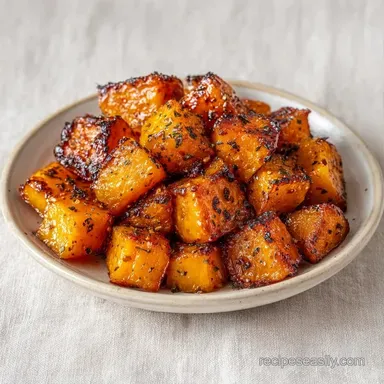
Easy Cinnamon Roasted Butternut Squash: Caramelized
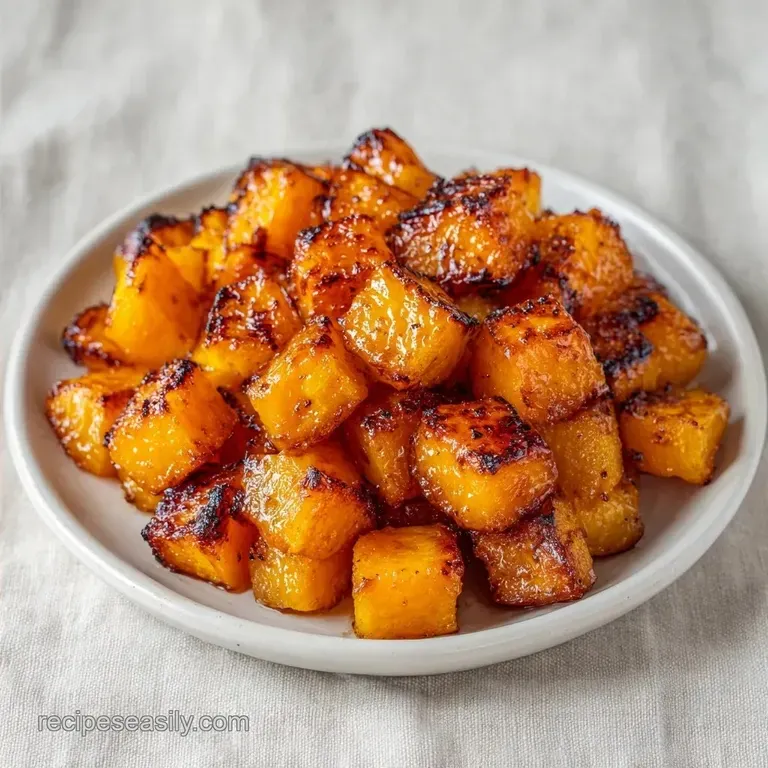
- Time: 10 min active + 45 min roasting
- Flavor/Texture Hook: Caramelized edges with smooth, tender centers
- Perfect for: Holiday side dishes, meal prep, or a sweet treat
- Simple Cinnamon Roasted Butternut Squash
- The Importance of Pan Space
- Quick Overview of the Bake
- The Ingredient List and Swaps
- Tools for a Fast Prep
- Step by Step Roasting Guide
- Troubleshooting Your Roast
- Ways to Change the Flavor
- Adjusting the Batch Size
- Common Squash Myths
- Storage and Reheating Tips
- Best Pairings for Squash
- Recipe FAQs
- 📝 Recipe Card
The smell of cinnamon and maple syrup hitting a hot oven is basically autumn in a scent. For many of us, squash is more than just a side dish, it's a connection to the "Three Sisters" tradition of indigenous North American agriculture.
Corn, beans, and squash were grown together to help each other thrive, and that legacy of harmony still shows up on our dinner plates today.
I remember the first time I tried roasting squash for a family gathering. I crowded the pan, thinking it would save space, and ended up with a soggy, steamed mess that looked nothing like the pictures. It was a total letdown until I realized that air is actually an ingredient in roasting.
Once I figured that out, Cinnamon Roasted Butternut Squash became my go to. It’s that rare dish that feels fancy enough for a guest but is easy enough to throw together on a random Tuesday when you just need something comforting.
Simple Cinnamon Roasted Butternut Squash
The goal here is to get those edges a deep mahogany brown while keeping the inside tender. This isn't a slow roast situation, it's a over high heat operation. You want the maple syrup to bubble and tighten around the squash, creating a thin, sugary crust that tastes like a treat.
Most people treat squash like a vegetable, but when you add cinnamon and maple, it leans toward dessert. It’s a versatile bridge between a savory main and a sweet finish. Trust me, once you try the addition of a tiny bit of cayenne, you'll never go back to the plain version.
The Importance of Pan Space
Getting the roast right comes down to how the heat moves. If the cubes are touching, they trap steam between them, which prevents the edges from browning. You want the hot air to circulate around every single side of each cube.
- High Heat
- 400°F evaporates the surface moisture quickly, which lets the sugars brown instead of boiling.
- Sugar Coating
- The maple syrup creates a glaze that hardens slightly, locking in the moisture of the squash.
- Uniform Cubing
- Keeping pieces at 1 inch ensures they all finish at the same time so you don't have some burnt and some raw.
| Squash Type | Prep Effort | Texture Result | Best For |
|---|---|---|---|
| Fresh Whole | High | Hearty and dense | Traditional feasts |
| Pre cut Cubes | Low | Slightly softer | Quick weeknights |
Quick Overview of the Bake
Before we get into the weeds, here are the markers you need to hit. I've found that relying on a timer is okay, but relying on your eyes is better.
- Oven Temp: 400°F (200°C).
- Cube Size: Exactly 1 inch.
- Visual Cue: Mahogany edges and a slight shrink in size.
The Ingredient List and Swaps
Don't overthink the ingredients, but do get a decent maple syrup. The real stuff has a depth that imitation syrup just can't touch.
- 1 medium butternut squash (approx. 2-3 lbs), peeled and cubed Why this? Balanced sweetness and firm texture
- 2 tbsp olive oil Why this? High smoke point for 400°F
- 2 tbsp maple syrup Why this? Natural sugar for caramelization
- 1 tsp ground cinnamon Why this? Classic warm autumn flavor
- 1/2 tsp salt Why this? Balances the sugar
- 1/4 tsp black pepper Why this? Subtle earthiness
- 1/4 tsp cayenne pepper Why this? Tiny kick to cut the sweetness
| Ingredient | What It Does | Best Swap |
|---|---|---|
| Maple Syrup | Adds sweetness and glaze | Honey (adds floral notes) |
| Olive Oil | Conducts heat/prevents sticking | Melted Coconut Oil (adds nuttiness) |
| Cinnamon | Provides warm aroma | Nutmeg or Allspice (more pungent) |
Tools for a Fast Prep
You don't need a professional kitchen for this. A few basic tools make the process much faster. I use a sturdy Y peeler for the squash because the skin is tough. If you have a large mixing bowl, use it, otherwise, you'll be tossing squash all over your counter.
Parchment paper is non negotiable here. Maple syrup is basically liquid candy, and if it burns onto your pan, you'll be scrubbing for an hour. A large, rimmed baking sheet is the best bet to ensure you have enough room to spread the cubes out.
Step by step Roasting Guide
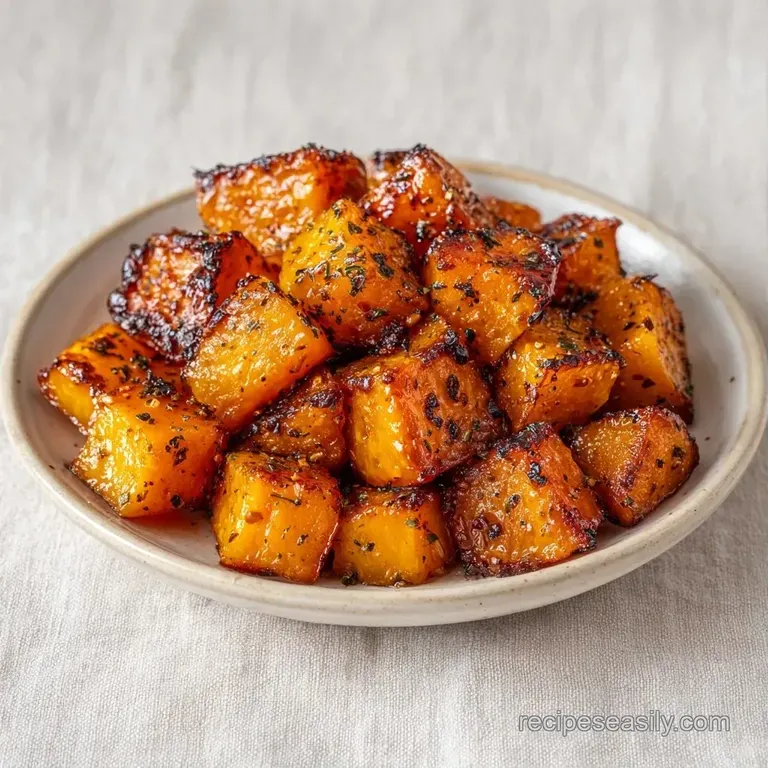
Right then, let's get this moving. The process is straightforward, but the timing is everything.
- Preheat your oven to 400°F (200°C). Line a large baking sheet with parchment paper.
- Peel the butternut squash, remove the seeds, and dice the flesh into uniform 1 inch (2.5cm) cubes. Note: Keep them equal so they cook evenly
- In a large mixing bowl, combine the olive oil, maple syrup, ground cinnamon, salt, black pepper, and cayenne pepper.
- Add the squash cubes to the bowl and toss until every piece is glossy and evenly coated in the glaze.
- Spread the squash in a single layer on the prepared baking sheet, ensuring there is space between the cubes to prevent steaming.
- Roast for 20-22 minutes.
- Toss the cubes with a spatula to flip them.
- Roast for another 20-23 minutes until the edges are mahogany colored and the centers are velvety.
Troubleshooting Your Roast
Even with a plan, things happen. Usually, it's a matter of moisture or heat distribution.
Dealing with Mushy Squash
If your squash feels more like mashed potatoes than roasted cubes, you likely crowded the pan. When the pieces are too close, they release steam that they can't escape, which boils the vegetable instead of roasting it. Next time, use two pans if you have to.
Preventing Burned Glaze
Maple syrup can go from "caramelized" to "burnt" in a few minutes. If you see the edges turning black too quickly, your oven might run hot. Slide a baking sheet on the rack below the squash to deflect some of the direct heat from the element.
Stopping the Sticking
If the squash is gluing itself to the pan despite the oil, your parchment might be too thin or your oil ratio is too low. Always ensure the cubes are fully coated in the oil syrup mixture before they hit the metal.
| Problem | Root Cause | Solution |
|---|---|---|
| Soggy texture | Overcrowded pan | Use a larger sheet or two pans |
| Burnt edges | Oven too hot | Lower temp by 25°F or move rack |
| Uneven cooking | Different cube sizes | Use a ruler or be more precise |
Ways to Change the Flavor
Once you've got the base down, you can play around with the additives. If you want a more savory experience, swap the maple syrup for melted butter and brown sugar.
The Holiday Twist
For a festive version, make Cinnamon Roasted Butternut Squash with Cranberries. Toss in a handful of dried cranberries during the last 10 minutes of roasting. The berries plump up and get slightly tart, which cuts through the sugar.
The Savory Sweet Swap
Try adding a pinch of smoked paprika or a drizzle of balsamic glaze after the squash comes out of the oven. This moves the dish away from dessert territory and makes it a great side for pork or chicken. If you're feeling adventurous, try making some butternut squash fritters with the leftovers.
Vegan and Paleo Option
This recipe is naturally vegan and paleo, provided you use pure maple syrup and olive oil. Avoid using honey if you're sticking to a strict vegan diet.
The Whole Squash Lover
If you don't want to peel and cube, try Cinnamon Roasted Butternut Squash Halves. Cut the squash lengthwise, scoop out the seeds, and fill the cavity with the glaze. Roast at 400°F for about 50-60 minutes until the flesh is tender.
Adjusting the Batch Size
Scaling this recipe is easy, but the physics of the pan change as you add more.
- Cutting it in half: Use a smaller baking sheet. You can usually reduce the roasting time by about 5-10 minutes since there's less mass in the oven.
- Doubling or Tripling: Do not just use a bigger pan. Use multiple sheets. If you crowd a single pan with 6 lbs of squash, you'll get that soggy texture again.
- Spice Scaling: Only increase the salt and cayenne to 1.5x when doubling. Spices can become overwhelming when scaled linearly.
Common Squash Myths
You'll hear a lot of advice about squash, but some of it is just noise.
One myth is that you have to peel the skin for the squash to be edible. While the skin of a butternut is tough, it's actually edible if you roast it long enough. However, for this specific glaze, the peel prevents the syrup from sticking, so peeling is still the better move here.
Another one is that you need to blanch squash before roasting. Honestly, don't bother. Blanching adds too much moisture, which is exactly what we're trying to avoid to get those brown, caramelized edges.
Storage and Reheating Tips
Roasted squash keeps surprisingly well. Store it in an airtight container in the fridge for up to 4 days. If you're planning to keep it longer, it freezes well for about 3 months.
To freeze, let the squash cool completely and spread the cubes on a tray first so they don't freeze in one giant clump. Once frozen, move them to a freezer bag.
When reheating, avoid the microwave if you can. The microwave makes them mushy. Instead, pop them back in the oven at 350°F for 10 minutes or toss them in an air fryer for 5 minutes. This brings back that slight exterior crispness.
For zero waste, don't toss the seeds! Clean them, toss them with a bit of oil and salt, and roast them at 325°F for 15 minutes for a healthy snack.
Best Pairings for Squash
This dish is quite sweet, so you need something salty or acidic to balance it out. It works beautifully alongside roasted Brussels sprouts with lemon or a sharp arugula salad.
If you're looking for a heartier meal, this makes a great side for a roast turkey or a grilled pork chop. For something even more indulgent, you can serve it alongside some butternut squash mac cheese for a double squash feast.
It also works as a topping for a grain bowl. Pile it on top of quinoa, add some feta cheese, and a drizzle of tahini. The saltiness of the feta against the Cinnamon Roasted Butternut Squash is a winner every time.
Recipe FAQs
How do you roast butternut squash with cinnamon?
Toss cubed squash with olive oil, maple syrup, cinnamon, salt, pepper, and cayenne. Roast at 400°F for 40–45 minutes, tossing once halfway through, until edges are mahogany and centers are velvety.
Does cinnamon go with butternut squash?
Yes, it is a classic pairing. The warm, woody notes of cinnamon enhance the natural sweetness of the squash, especially when caramelized with maple syrup.
Is it true that butternut squash is just another name for pumpkin?
No, this is a common misconception. While both belong to the Cucurbitaceae family, butternut squash is a specific variety of winter squash with a distinctively nuttier flavor and denser texture.
Can diabetics have butternut squash?
Yes, in moderation. It is a nutrient-dense vegetable, though those managing blood sugar should be mindful of the maple syrup used in the glaze.
Is there an easy way to cut up a butternut squash?
Slice the squash lengthwise first. Cut off the top and bottom to create a flat base, then slice it in half vertically to remove the seeds before peeling and cubing into 1-inch pieces.
What seasoning is good on roasted butternut squash?
Combine cinnamon, salt, and a pinch of cayenne for a sweet-heat balance. If you prefer a savory profile, you can use a lemon butter garlic approach to contrast the natural sugars.
How do you prepare squash for eating?
Peel the outer skin and remove the seeds. Dice the flesh into uniform 1-inch cubes to ensure they roast evenly at 400°F without some pieces burning while others stay raw.
Cinnamon Roasted Butternut Squash: Baked