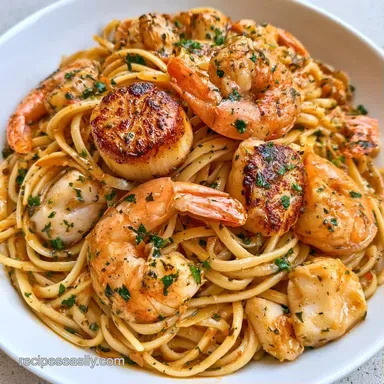
The Best Seafood Pasta with Shrimp and Scallops
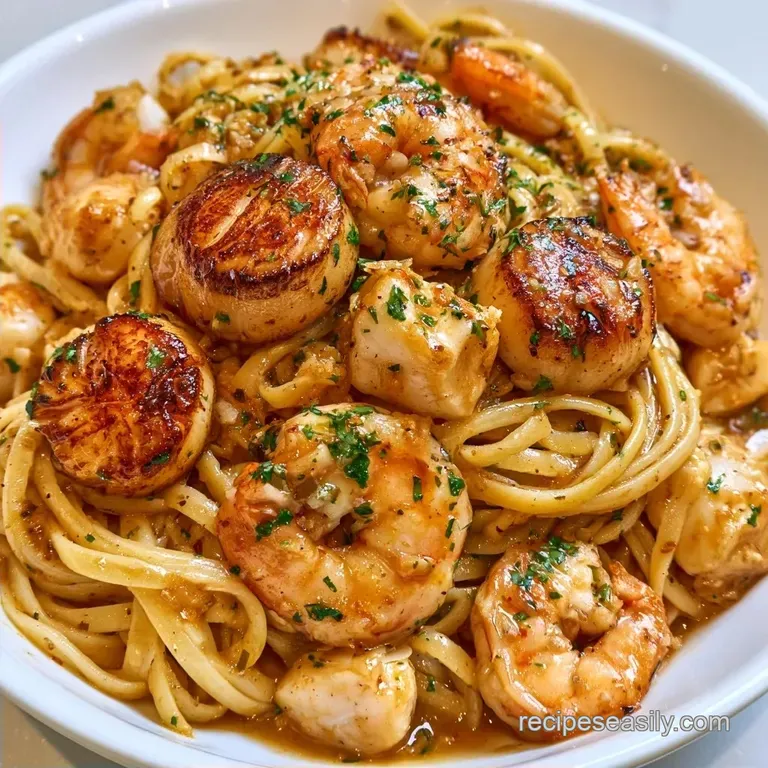
- Time: 10 min active + 20 min cooking
- Flavor & Texture: Rich, buttery, and smooth
- Perfect for: Date night or a fancy weekend dinner
Imagine that sound of scallops hitting a hot pan, that aggressive sizzle that tells you a brown crust is forming. It's the kind of meal that makes your kitchen smell like a high-end Italian bistro, but it actually comes together in about half an hour.
This isn't about simmering everything in one pot until it's mushy. We're focusing on high heat and timing so the shrimp stay snappy and the fish stays tender.
You can expect a gold hued sauce that actually clings to the noodles instead of puddling at the bottom of the bowl. Using this method makes The Best Seafood Pasta a reality at home, even if you aren't a pro.
The Texture Trick
Dry Searing: Patting the seafood bone dry prevents steam from forming, which lets the butter brown the surface for a savory crust.
Starch Bridge: Reserved pasta water contains starch that acts as a binder, keeping the butter, cream, and cheese from splitting.
| Premium Ingredient | Budget Substitute | Impact | Savings |
|---|---|---|---|
| Sea Scallops | Bay Scallops | Smaller size, slightly less sweetness | $8-12 |
| Cod Chunks | Tilapia or Pollock | Softer texture, milder flavor | $5-7 |
| Fresh Linguine | Dried Spaghetti | More "bite" to the noodle | $2-3 |
Honestly, the difference between a home-cooked seafood dish and a restaurant one is usually just the moisture level of the shrimp before they hit the pan.
Ingredients and Swaps
| Ingredient | What It Does | Best Swap |
|---|---|---|
| Heavy Cream | Adds richness and body | Full-fat coconut milk (adds nuttiness) |
| Parmesan | Provides salty, umami depth | Pecorino Romano (saltier/sharper) |
| Lemon Juice | Cuts through the fat | White wine vinegar (approximation) |
The Seafood & Pasta 450 g linguine or spaghetti 15 ml olive oil Salt for boiling water 450 g large shrimp, peeled and deveined 225 g sea scallops, patted dry 225 g firm white fish chunks (cod)
The Sear & Sauce 30 g unsalted butter Why this? For the initial high heat sear 3 g salt 1 g black pepper 42 g unsalted butter Why this? For the creamy garlic base 20 g garlic, minced (4 cloves) 240 ml heavy cream 50 g freshly grated
Parmesan cheese 15 ml fresh lemon juice 1 g red pepper flakes (optional) 8 g fresh parsley, chopped
Equipment Needed
You don't need a massive arsenal here, just a few basics. A 12 inch skillet is a must, as crowding the pan will cause the seafood to steam instead of sear. You'll also need a large pot for the pasta and a whisk for the sauce to keep it smooth.
The Cooking Process
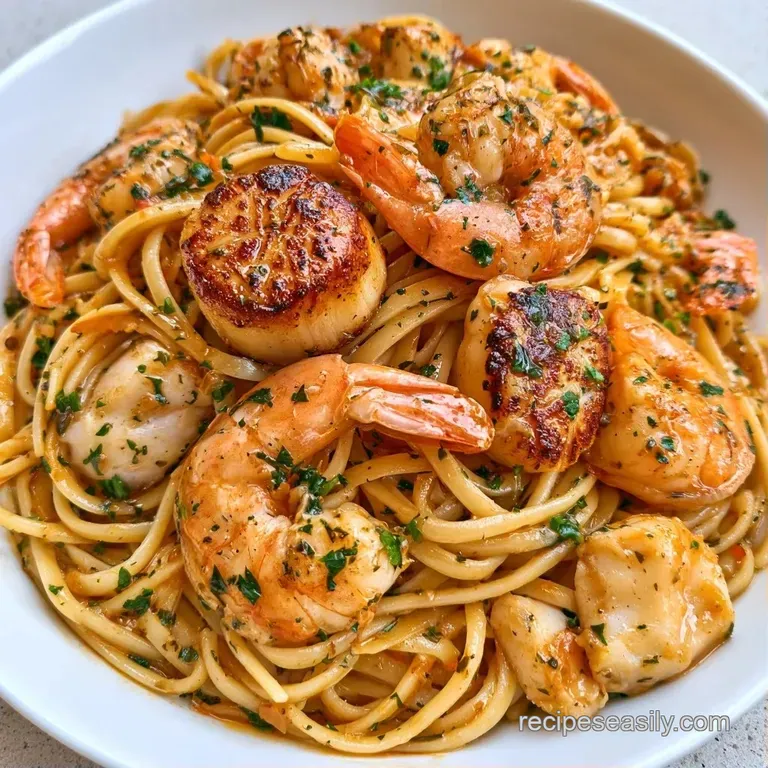
Phase 1: The Foundation
- Bring a large pot of heavily salted water to a boil. Add the pasta and cook 1-2 minutes less than the package directions, until al dente.
- Before draining, reserve 240 ml of the pasta water. Drain the pasta and set aside. Note: This cloudy water is the key to a glossy sauce.
Phase 2: Searing for Maximum Flavor
- Pat the shrimp, scallops and fish completely dry with paper towels.
- Melt 30 g butter in a 12 inch skillet over medium-high heat until it bubbles.
- Add the seafood in a single layer, cooking in batches if it does not fit. Cook undisturbed for 2 minutes until a golden brown crust forms.
- Flip and cook 1-2 minutes more until just opaque. Shrimp should curl into a C shape, not an. Fish must reach 145°F/63°C internally.
- Transfer the seafood to a plate and set aside.
Phase 3: Emulsifying the Sauce
- In the same pan, melt 42 g butter. Add the garlic and red pepper flakes and sauté for 1 minute until fragrant.
- Pour in the heavy cream and simmer gently for 3-4 minutes until slightly thickened.
- Stir in the Parmesan and lemon juice. Whisk until smooth and glossy.
- Add the cooked pasta and seafood back to the pan. Toss over low heat, adding the reserved pasta water one splash at a time, until the sauce coats the noodles.
- Stir in the parsley and serve immediately.
Troubleshooting Guide
Fixing a Grainy Sauce
If the sauce looks broken or oily, the heat was likely too high, causing the fats to separate. Lower the heat immediately and whisk in two tablespoons of the reserved pasta water. The starch helps pull the emulsion back together.
Preventing Rubbery Seafood
Rubbery shrimp happen when they are overcooked. Pull them off the heat the second they turn opaque and form that C shape. If they curl into a tight , they've gone too far.
Handling Watery Pasta
If the sauce is too thin, let it simmer for another minute before adding the pasta. If it's still too watery after tossing, just keep it on low heat for 60 seconds while stirring; the pasta will absorb the excess liquid.
Dietary Adaptations
For those who want something a bit lighter, you can swap the heavy cream for a Lemon Butter Garlic Pasta Sauce. It gives you that zesty hit without the heaviness of the cream.
If you're avoiding dairy, use a full-fat coconut milk and a nutritional yeast blend for the Parmesan. Keep in mind that coconut milk adds a tropical note, so increase the lemon juice to balance the sweetness.
Storage and Freshness
Keep leftovers in an airtight container in the refrigerator for up to 3 days. Warm them gently on the stovetop over low heat, adding a bit of water or milk to thin the sauce, since the pasta absorbs most of the liquid over time.
Do not freeze this dish. The cheese and cream in the sauce often separate or become grainy upon thawing, which destroys the texture. If you want a similar creamy meal without the seafood, this Silky Mushroom Sauce is an excellent choice.
| Prep Method | Result | Why It Happens |
|---|---|---|
| Patted Dry | Golden Crust | Direct heat hits the protein |
| Wet Seafood | Grey/Steamed | Water boils before searing |
To minimize waste, zest your lemon before juicing it. You can either sprinkle it over the plated meal or store it in a small jar in the refrigerator for later recipes.
Serving Suggestions
I prefer serving this in warmed bowls so the sauce doesn't thicken as fast. Finish with a sprinkle of fresh parsley and a lemon wedge. A piece of crusty sourdough or a crisp arugula salad with vinaigrette balances out the richness of the cream.
Recipe FAQs
Which pasta is best for seafood?
Linguine or spaghetti work best here. These long noodles hold onto the creamy sauce while complementing the shapes of the shrimp and scallops.
What sauce is best with seafood pasta?
A creamy Parmesan and lemon sauce balances the richness of the seafood. You can use a homemade spaghetti sauce if you prefer a tomato base instead of cream.
How to store the leftovers?
Keep leftovers in a sealed container in the refrigerator for 3 days. Reheat gently on the stove over low heat with a splash of water to loosen the sauce.
Can this dish be frozen?
No, freezing is not recommended for this recipe. The cream and cheese in the sauce tend to break and grain up, which ruins the texture.
The Best Seafood Pasta in 30 Minutes