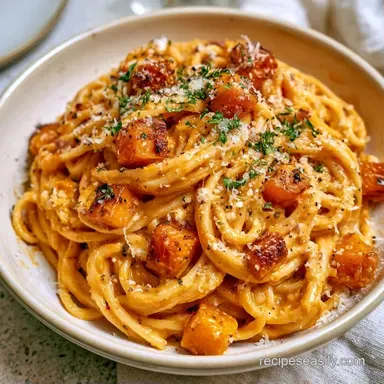
Creamy Butternut Squash Pasta

- Time: 10 min active + 35 min cooking
- Flavor/Texture Hook: Creamy, golden sauce with a hit of fresh sage
- Perfect for: Cozy weeknight dinners or autumn meal prep
Why do some squash sauces taste like a basic puree while others have a professional bistro quality? I used to simply boil my squash, which often left the final dish tasting flat and diluted. Everything changed when I started roasting the squash, onion, and garlic together on a single sheet pan.
That intense heat caramelizes the edges of the squash, adding a complexity that boiling water simply cannot produce. It transforms the sauce from a simple accompaniment into the main attraction.
This Butternut Squash Pasta is my favorite choice for a meal that seems elegant without requiring hours of effort in the kitchen. It is a warm, soothing bowl that is absolutely perfect for a chilly evening.
Why This Squash Sauce Works
- High Heat Roasting: Roasting at 425°F caramelizes the natural sugars in the squash. This creates a concentrated flavor that gives the Butternut Squash Pasta a rich taste without requiring excessive cream.
- Starchy Pasta Water: A splash of the salty, starchy water from the pot acts as a binder. It helps the blended sauce adhere to the noodles so it doesn't simply slide off.
| Method | Time | Texture | Best For |
|---|---|---|---|
| Boiling | 20 mins | Thin/Watery | Quick soups |
| Roasting | 35 mins | Rich/Dense | Butternut Squash Pasta |
Next, let's cover the tools. You don't need a vast array of gear, but a quality blender is essential. If you prefer an immersion blender, just ensure your pot is deep enough to avoid splashing hot puree on the ceiling.
Tools You'll Need
- Large sheet pan
- High speed blender or food processor
- Large pasta pot
- Colander
- Tongs or a large spoon
The Grocery List
| Ingredient | Role | If You Don't Have It |
|---|---|---|
| Butternut Squash | Base flavor and body | Pumpkin puree (adds more sweetness) |
| Vegetable Broth | Thins the sauce | Water + a pinch of salt |
| Parmesan Cheese | Salty, umami finish | Pecorino Romano (saltier) |
| Fresh Sage | Earthy aromatic | Dried sage (use 1/3 the amount) |
For the full build, you'll need: 1.5 lb butternut squash, peeled and cubed into ½ inch pieces 2 tbsp extra virgin olive oil ½ tsp kosher salt ¼ tsp cracked black pepper 3 cloves garlic, peeled ½ small yellow onion, roughly chopped ½ cup vegetable broth, low sodium ¼ tsp ground
Nutmeg Why this? Adds a subtle warmth that cuts the sweetness 1 tbsp fresh sage, finely chopped ½ cup grated Parmesan cheese 1 lb rigatoni or penne pasta Why this? Ridges hold the thick sauce better 1 tbsp unsalted butter ½ cup reserved pasta
Cooking water
| Original Ingredient | Substitute | Why It Works |
|---|---|---|
| Rigatoni (1 lb) | Fusilli (1 lb) | Similar surface area. Note: Spirals trap sauce well |
| Butter (1 tbsp) | Olive Oil (1 tbsp) | Provides fat for emulsion. Note: Lacks the creamy dairy finish |
| Parmesan (½ cup) | Nutritional Yeast (¼ cup) | Adds a nutty, cheesy flavor. Note: Makes the dish Vegan |
I've found that using a small cube size for the squash is the real trick. If the pieces are too big, they take forever to roast. Keep them around a half inch so they brown quickly.
Quick Recipe Details
- Prep time:10 minutes
- Cook time:35 minutes
- Total time:45 minutes
- Yield: 4 servings
Making Butternut Squash Pasta
Phase 1: The High Heat Roast
Set your oven to 425°F (218°C). Toss the cubed butternut squash, chopped onion, and garlic cloves on a sheet pan with olive oil, salt, and pepper. Arrange them in a single layer. Roast for 20–25 minutes until the squash is tender and the edges have browned.
Phase 2: Blending the Golden Sauce
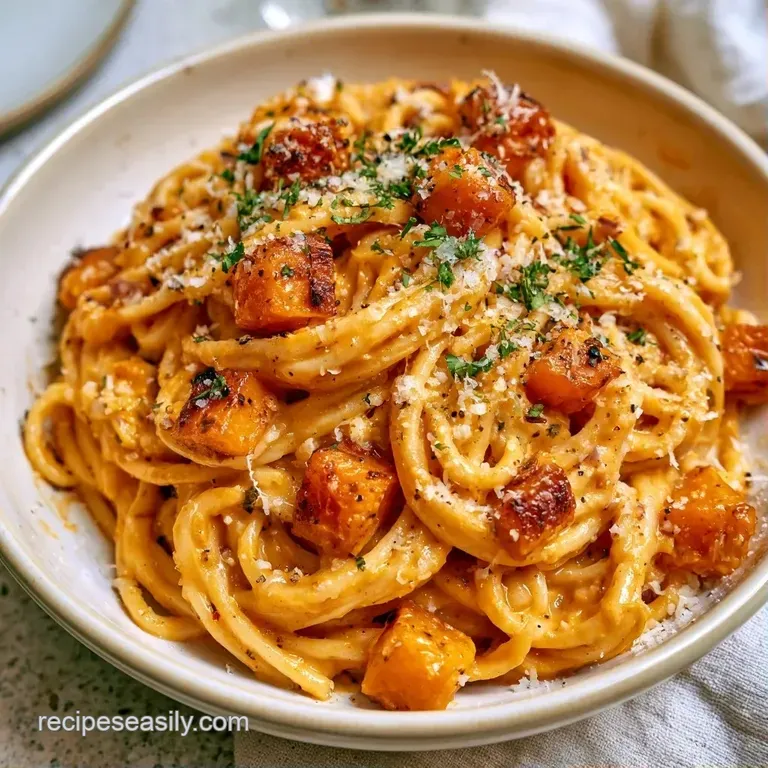
Move the roasted vegetables into a blender. Mix in the vegetable broth, ground nutmeg, and chopped sage. Blend on high speed until the consistency is completely smooth and velvety. If the sauce seems too thick, stir in another splash of broth. This is where the Butternut Squash Pasta gets its signature color.
Phase 3: The Final Emulsion
Cook the pasta in salted water until it's just shy of al dente. Reserve ½ cup of the pasta water, then drain.
Put the pot back on low heat and melt the butter. Pour in the blended squash sauce. Add the pasta and the Parmesan cheese. Stir constantly for 1–2 minutes, adding reserved pasta water a tablespoon at a time until the sauce is glossy and clings to the pasta.
Chef's Note: Avoid overcooking the pasta in the water. Because it simmers in the sauce for a few minutes at the end, taking it out early prevents it from becoming mushy.
Fixing Common Sauce Issues
Sauce Too Thick
Roasted squash varies in moisture levels. If your Butternut Squash Pasta sauce feels overly thick, stir in the reserved pasta water one tablespoon at a time. The starch in the water allows the sauce to thin without breaking the emulsion. If the pasta water is gone, a splash of vegetable broth or milk will also work.
Squash Not Brown
Pale vegetables often mean the pan was too crowded, leading the squash to steam instead of roast. For a better result, use two pans to ensure the Butternut Squash Pasta has a deep, caramelized flavor. To save time, you can place the pan under the broiler for 2-3 minutes to force some browning.
Sauce Breaking
The sauce may separate if the heat is too high when stirring in the cheese. Keep the pot on low. If you notice the oil splitting, add a tablespoon of pasta water and stir vigorously to restore the emulsion. It is similar to how a creamy mushroom sauce depends on a slow emulsion to remain smooth.
Saving and Reheating
This Butternut Squash Pasta stays fresh in the refrigerator for as long as 4 days. Use an airtight container to ensure the sauce doesn't dry out.
When you're ready to reheat, avoid using the microwave on its highest setting. Since the sauce often thickens during storage, stir in a teaspoon of water or a small knob of butter before warming. This loosens the texture and restores that glossy finish.
To reduce waste, save your squash seeds. Simply rinse them, pat them dry, and roast with a pinch of salt at 325°F for 15 minutes. They make a perfect crunchy garnish for the dish.
Different Ways to Serve
Adding More Protein
To make this a heartier meal, toss in some grilled chicken or sautéed shrimp. Crispy pancetta or crumbled sausage also pairs well with the sweetness of the squash. If you're looking for something different, this pasta goes great alongside a Squash Soup with Apple recipe for a full autumnal feast.
Making it Vegan
This is an easy swap. Replace the butter with a vegan butter substitute or more olive oil. Instead of Parmesan, use nutritional yeast or a store-bought vegan parmesan. The Butternut Squash Pasta remains just as creamy because the squash does most of the heavy lifting.
Turning it into a Bake
You can turn this into a Butternut Squash Pasta Bake. Toss the finished pasta in a baking dish, top with extra mozzarella and breadcrumbs, and broil for 5 minutes. It adds a crispy layer that contrasts the smooth sauce.
| Goal | What to change |
|---|---|
| More Tang | Add 1 tsp lemon juice |
| Spicier | Add ½ tsp red pepper flakes |
| Nuttier | Top with toasted walnuts |
Plating Your Pasta
Instead of simply scooping Butternut Squash Pasta into a bowl, use tongs to twirl the noodles into a nest. This technique prevents the sauce from gathering at the bottom.
The Final Touch
Garnish each portion with a few sage leaves, flash fried in butter for 30 seconds until crisp and aromatic. A final sprinkle of fresh Parmesan and a pinch of cracked black pepper will give the dish a professional, restaurant quality finish.
Perfect Pairings
A light arugula salad with lemon vinaigrette is the ideal accompaniment to cut through the richness of the Butternut Squash Pasta, as the bitter greens balance the sweet roasted squash. For a more filling side, serve it with a piece of toasted sourdough rubbed with a raw garlic clove.
And there you have it. This Butternut Squash Pasta is all about the harmony between the earthy sage and the sweet, roasted base. It's a comforting, simple meal that turns out perfectly every time. Don't skip the roasting it's absolutely essential for the best result.
Recipe FAQs
How to achieve a velvety sauce texture?
Blend the roasted vegetables on high. Use a high powered blender to ensure the butternut squash, onion, and garlic are completely smooth.
Which pasta shapes work best here?
Use rigatoni or penne. These tubular shapes capture the thick sauce inside the noodles better than long strands.
Is it true that boiling squash produces a richer sauce?
Not true. Roasting at 425°F caramelizes the natural sugars, creating a depth of flavor that boiling simply cannot achieve.
What prevents the sauce from sliding off the noodles?
Mix in the saved pasta water. The starch helps the sauce cling to the pasta, creating a smooth, glossy finish. To apply this same emulsion technique elsewhere, try our authentic homemade spaghetti sauce.
Can I thin the sauce if it is too dense?
Add an extra splash of vegetable broth. Incorporate it during the blending stage until you reach your preferred consistency.
Why roast the vegetables at 425°F specifically?
High heat concentrates the flavor. This temperature browns the edges of the squash quickly, preventing the sauce from tasting watery.
Does nutmeg complement the savory squash?
Yes, it enhances the earthiness. A small amount of ground nutmeg cuts through the richness of the butter and Parmesan.
Should I roast the garlic whole?
Yes, toss the peeled cloves with the squash. This allows the garlic to soften and sweeten without burning during the 20 25 minute roast.
Creamy Butternut Squash Pasta